

首页/文章/ 详情

【船舶】船舶设计的全尺寸CFD模拟

4月前浏览360

白皮 书

船舶设计的全尺寸CFD模拟


计算流体力学 (CFD) 在船舶设计中应用广泛。它通常在模型级别运行,以便与试验槽验证数据进行比较。本白皮 书探讨有关运行全尺寸CFD的一些常见顾虑,旨在鼓励真实运行条件下的全尺寸设计分析。在很多情况下,全尺寸模拟都比其他备选方案更加准确而可靠,因而也更有助于理解设计性能。


船舶行业的很多资深用户已经时常成功开展全尺寸条件下的CFD模拟。目前的趋势已经明朗,那些仍然持有观望态度的用户,现在不妨开始全尺寸模拟吧!通过创建真实系统的数字化双胞胎,实现在真实运行条件下执行完整系统的全尺寸分析目标。

Marine_16x9_cover_full_tcm60-26536.jpg

高层摘要

计算流体力学 (CFD) 在船舶设计中应用广泛。它通常在模型级别运行,以便与试验槽验证数据进行比较。本白皮 书探讨有关运行全尺寸 CFD 的一些常见顾虑,旨在鼓励真实运行条件下的全尺寸设计分析。在很多情况下,全尺寸模拟都比其他备选方案更加准确而可靠,因而也更有助于理解设计性能。

米洛万 · 佩里奇 (Milovan Perić) 教授

目录


摘要...............................................................................3

壁面边界层 ....................................................................4

雷诺数对于流体特征的影响............................................7

缩尺对于空泡的影响 ......................................................9

缩尺对于节能和流量控制设备的影响............................11 

全尺寸验证数据 ...........................................................12

结论.............................................................................13

参考信息......................................................................13

摘要

基于雷诺平均纳维 - 斯托克斯 (RANS) 方程的流体仿真在很多行业已经广为所用,包括造船和近海工程。这种方法被称为 CFD,尽管严格说来,基于势流理论的仿真方法也属于 CFD。尽管在其他众多行业中, CFD 已经在很大程度上取代了模型实验(例如在汽车和航空航天工程中), 但在海事行业, CFD 仍未达到与全尺寸应用相同的信任程度。

大量 CFD 和模型缩尺的测量数据之间的比较结果表明,仿真能够可靠地预测船身阻力、螺旋桨推力、空泡形态、波浪附加阻力、波浪与结构的相互作用等。但是,如果要应用全尺寸 CFD,仍然会有很多顾虑。其中一些人质疑,如果雷诺数太高,则无法在仿真中足够准确地处理壁面边界层;其他人有所怀疑,是因为全尺寸测量能够用于验证的测试数据有限。


本白皮 书的宗旨是鼓励在全尺寸模拟中使用 CFD。我们坚信,正确执行的全尺寸 CFD 预测精度并不比模型缩尺精度差,而且结果的可靠性也并不比从模型缩尺到全尺寸的插值可靠性差。在很多情况下,全尺寸预测都更加准确而可靠。这种自信来源于通过西门子的 Simcenter ™ STAR-CCM+ ™软件进行的实验。

壁面边界层

RANS 方程数值求解的质量主要取决于两个因素:1) 数值网格的质量和保真度;2) 湍流模型与壁面边界的处理。由于 Simcenter STAR-CCM+ 提供生成高质量网格所需的所有必要工具和功能,此问题不会详细处理。Simcenter STAR-CCM+ 还 提 供 大 量 RANS 湍 流模 型(k- ε 和 k- ω 涡流粘度模型的几种变型,包括从层流到湍流状态建模过渡的变型;雷诺应力模型的几种变型以及大涡模拟 (LES) 模型和两种方法的结合,即分离涡模拟 (DES) 变型。对于壁面处理,所谓的低雷诺数方法(这种方法需要网格求解边界层直到黏性底层)、高雷诺数壁面函数以及两种方法的混合(称为“all-y+ 壁面处理”)均可用。

只要可行,最好都求解边界层,以便使用低雷诺数方法。合适的网格在壁面附近需要很多棱柱层(通常在 20 个左右), 如果要避免单元数量过大, 这些棱柱层单元就必需很薄,达到很大的宽高比。这种薄单元在平面上没有问题,但如果壁面是弯曲的,则壁面切向网格必须细化,原因包括以下两个方面:1) 当网格线与壁面曲率不一致时,单元就会翘曲;但从精确度和稳定性这两方面原因考虑,翘曲都不能太大;2) 在弯曲壁面上,速度和压力都会在壁面切向上显著变化,而这种变化必须适当予以解决。图 1 显示集装箱船缩尺模型后部棱柱层的翘曲薄单元,壁面法向网格细致(导致 y+  ≈ 1), 但在壁面切向不够细致:单元厚度为 0.03 mm,横向单元大小约为 18 mm,宽高比约为650;在半个船舶模型的大约两百万个单元中有 20 个棱柱层。如果在壁面切向细化网格,使得宽高比降低到大约200,翘曲会明显减少,因而也使网格质量达到可接受的水平,但是单元数量却增加到大约一千万个。

对于全尺寸,雷诺数比缩尺模型高很多;如果求解黏性底层(这一层相对较薄,因为随船舶长度缩放的边界层厚度比缩尺模型小),倘若壁面法向单元大小相对船舶长度的量级相同,则近壁棱柱层宽高比必然增加。由于上述原因,需要在壁面切向细化大量网格,从而将宽高比降低到可接受的数值(200 或更少),因而产生大量单元(大约 1 亿个)。尽管在有些工业应用中,单元数量不再异常(考虑到这一趋势,在未来几年里,这样大量的网格仍将非常普遍),但在设计阶段或从优化角度而言,这一数量对于仿真而言仍然过多。
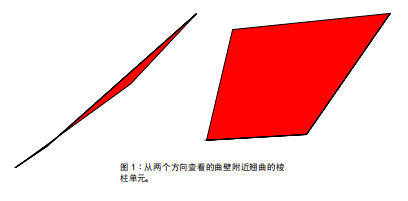
image.png

壁面处理的另一方法就是使用所谓的壁面函数:网格仅求解边界层的对数部分,而不求解黏性底层和过渡层(参见图 2 边界层壁面法向的典型速度曲线)。通过一些额外的假设(严格说来,只适用于某些情况,并不适用于整个船身), 可以根据壁面附近的单元中心变量值计算壁面剪切应力。实验表明,如果第一个单元中心与壁面之间的无量纲距离,即所谓的 y+  在 50 到 100 之间, 则模型缩尺研究(实验提供足够的验证数据) 可以获得不错的结果。例如,韩国现代重工集团已经对模型缩尺计算了大约 200 个船形的船体阻力并与实验结果进行比较;在大多数情况下,预测值与测量值的差别不到 2%。

根据以上讨论,壁面函数是全尺寸分析可以选择的方法,因为黏性底层的求解需要非常细化的网格(也就是,y+  的值在第一个棱柱层中心为 1)。但是,即使实现 50 到 100之间的 y+ 值,仍然会产生很高的宽高比和翘曲的单元。只是增加模型缩尺分析所用的网格比例,会导致第一个单元中心的 y+ 值约为 10,000,这一数值显然太高。因此,很多人认为,全尺寸 CFD 成本太高,因为需要极为细化的网格,才能使近壁单元中心的 y+ 值处于模型缩尺研究认为可靠的范围内。

让我们来进行一项简单的分析,看看在使用壁面函数时,全尺寸和模型缩尺是否真的需要同样的 y+ 值,结果才能实现同样的可靠性。注意:在海事工程中,模型实验是通过强制使用相同的弗劳德数进行的。
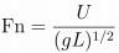

image.png


其中,U 为船速,g 为重力加速度,L 为船舶长度。因此,对于按 s 因子缩放的船舶模型,模型长度与全尺寸船舶长度的关系如下:
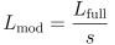
image.png

船速比例如下:

image.png

因此,全尺寸雷诺数比模型缩尺中的雷诺数大很多(当流体、水和空气相同时,无法实现近似的弗劳德数和雷诺数):


image.png

其中, v 代表水的运动粘度。

现在,我们来看一下,如果雷诺数与边界层不匹配,会造成哪些结果。由于我们只关注定性评估,因此只考虑相对简单的平板几何体。平板上的边界层厚度增长关系如下:


image.png

其中, Rex  是基于板长 x 的雷诺数。因此,边界层厚度比例如下:

image.png

这就意味着,全尺寸船舶的边界层比模型船舶相对较薄。表面摩擦系数 Cf  比例关系大致如下:
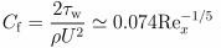
image.png

其中,TW  为壁面剪切应力,ρ 为水密度。因此,全尺寸和模型船舶的壁面剪切应力与边界层厚度关系相同,均为:

image.png

如果最佳模型缩尺网格只要通过 s 因子就能获得全尺寸网格, 那么 y+ 值会怎样? y+  与壁面剪切应力、与壁面距离的平方根成比例,关系如下:
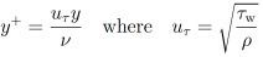
image.png

其中,y 是与壁面的距离。根据上述壁面剪切应力与距离因子 s 的关系可以得出:

image.png

例如,如果比例因子 s = 50,这就意味着,如果模型缩尺近壁第一个单元的 y+mod = 50,对于全尺寸(如果网格只根据 s 因子放大),则 y+full  = 9,830。这一数值确实太大:如果要使 y+full = 50(与模型缩尺相同),则近壁单元厚度必须以大约 200 的因子缩小,这样才能在因子相同时,全尺寸的宽高比大于模型缩尺的宽高比。

但是,要求 y+ 值在模型缩尺和全尺寸下相同却没有必要。不管雷诺数大小如何,速度曲线的对数范围基本以同一 y+值开始,但随着雷诺数的增加,y+ 值会增大很多。这在直接数值模拟 (DNS) 中显而易见:求解所有湍流的各时间步网格计算对于空间和时间都起作用。图 2 显示 DNS 模拟中四种不同雷诺数对应的平面通道中的速度曲线。

尽管由于计算资源有限,直接数值模拟无法应用于高雷诺数,但我们仍然可以清晰地看出,最大雷诺数的对数范围是如何最高增加至 y+ = 2,000(显示的雷诺数是根据摩擦速度 ur 定义的,最大的雷诺数对应于通道高度和平均速度 250,000)。普林斯顿大学超级圆管实验的数据(包括实验室进行的最大可行雷诺数流体研究)显示对数范围可扩大至 y+  ≈ 100,000。有关对数律的详细研究,请参见Wosnik 等 人 (2000)1  以 及 Lee 和 Moser (2015)2  攥写的论文。

上述信息表明,全尺寸和模型缩尺中近壁第一个计算点放置在距离壁面同样的无量纲距离,这不太实际也没有必要(例 如,50 ≤ y+  ≤ 100)。唯 一 重要的是,对数范围内的计算点数量相同。对于模型缩尺模拟, 如果雷诺数不太大,则对数范围较小,因此应从 y+ 值较小的区域开始。对于全尺寸,对数范围扩展到较大的 y+  值,因此可以从大于1,000 的值开始。对于模型缩尺和全尺寸, 在对数范围内放置同样数量的计算点,并以同样的方式相对于总体对数范围分布计算点,较为合适。如上例所示,全尺寸对数范围扩大到的 y+ 值约比模型缩尺中的值高出两个数量级。

如果全尺寸和模型缩尺采用边界层中同一相对位置的点,则 y+ 值的比率为:

image.png

在上述示例中 (s = 50), 如果 y+mod  = 50,则相应的全尺寸 值 应 为 y+full = 3,040。 因 此, 对 于 边 界 层 中 分 布 类 似的计算点,全尺寸近壁单元应比模型缩尺中放大的单元薄3.23 倍。 如 果 比 例 因 子 s = 30,, 则 比 率 应 为 2.77。 这意味着,全尺寸中的棱柱层如果要比模型缩尺中多两到三倍,则从全尺寸缩小的近壁单元厚度大约应比模型缩尺中最佳单元厚度小三倍。

当然,只要全尺寸中的 y+ 值在对数范围内,使用较小的数值就没有错。例如,在模型缩尺中求解黏性底层的网格如果放大到全尺寸,则会导致 y+ 值在大约 200 的范围内;只要网格在曲面切向足够细化,这就毫无问题。对于较粗糙的网格,应使用较大的 y+ 值,以避免太大的单元宽高比或过多翘曲。
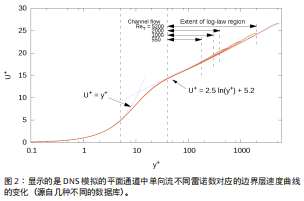
image.png

雷诺数对于流体特征的影响

随着雷诺数的增加(由于速度或几何尺寸的增加), 流体特征可能会显著变化。已知的示例就是从层流过渡到湍流状态。对于全尺寸船舶,层流边界层仅涉及一部分球鼻艏。这一部分的大小取决于表面光滑度:粗糙度会导致提前过渡到湍流状态。在模型缩尺中,四分之一的光顺、新建模型可能会处于层流状态。这也让使用从模型缩尺流体中获得的实验数据插值来预测全尺寸流体变得不切实际。这 一问题通过使用挡环得以解决:边界层在恰当的船首位置强制变为湍流,以使绝大部分的船体曲面处于湍流边界层。但是,此方法需要仔细校准,因为实验室使用不同的挡环装置(从砂纸或激紊线到尺寸和长度不同的特殊类型的销钉)以及外推方法。

尽管此方法往往非常适用于标准船形(过去已经存在大量海上试航数据和验证), 每一种新式船形都存在挑战, 因为最佳边界层挡环不仅依赖于船形,还依赖于雷诺数。

在 CFD 中,全尺寸模拟比模型缩尺问题少:湍流边界层可以涵盖整个壁面,这种假设完全合理,这样就消除了层流到湍流过渡的相关不确定性。对于模型缩尺,模拟含有独立边界层的零件(例如螺旋桨叶、节能装置和其他附体)上的流体,需要对湍流过渡进行建模,而非应用挡环。尽管 Simcenter STAR-CCM+ 包含层流到湍流过渡模型, 这通常却是整个链中最薄弱的关联,因为过渡依赖于很多因素(比如自由湍流、表面粗糙度、压力梯度等)。

流体特征中另一项重要变化发生在很多非流线体中,此时在边界层变为湍流并分离之前,存在湍流尾流的层流分离(低雷诺数时获得)转换为湍流分离。这造成了所谓的“阻力激变”,已知的示例就是圆柱和球体周围的流体。图 3 显示光滑和粗糙表面球体阻力系数大小的变化,阐释阻力激变及其与表面粗糙度的依赖性。圆柱结构和其他非流线体也存在类似变化。
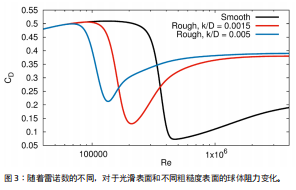
image.png

如果对于模型缩尺进行试验以强制近似的弗劳德数(由于自由表面和波动现象的原因), 则雷诺数会比全尺寸模拟小很多。如果模型缩尺的雷诺数处于亚临界区(在阻力激变之前), 要找到能够正确预测全尺寸状态的可靠插值不太可行或者至少格外困难。通过调整表面粗糙度,可以提前触发湍流过渡, 这样可以将阻力激变移至较低的雷诺数范围,从而使得流体在模型缩尺中就可以达到超临界水平(参见图 3)。但从图 3 可以看出,表面粗糙度提高了摩擦对于阻力的影响,因此在表面光滑时,阻力仍然比雷诺数的超临界区高出很多。这就使得从模型缩尺实验外推到全尺寸流体变得异常困难。为了从模型缩尺实验预测全尺寸属性,需要通过可用的全尺寸数据校准外推方法。问题在于,从新建船舶海上试航获得的数据有限;对于船舶结构,适合校准的数据更少。此外,数量不同,需要的校准也不同:即使如果将插值调整为与船舶阻力匹配,尾流和附体周围的速度场也并不一定以同样方式缩放。

即使不存在阻力激变,模型缩尺和全尺寸的流体特征也可能大不相同。光滑表面的流体分离通常对于雷诺数的依赖程度极高,因而难以放大。如果雷诺数大幅增加,分离区的长度和宽度都可能发生很大的变化,导致船体后面的尾流出现差异。通常阻力也会显著变化。模型缩尺中的流体与全尺寸流体的相似程度可能不够,导致雷诺数空间外推困难。

这种现象的示例如图 4 所示。它研究了两种雷诺数下的圆形前沿的方柱周围空气湍流:500,000 和 5,000,000。两种情况下的平均流速均为 12.5 m/s;通过同一因子放大几何体,第二种情况下的雷诺数大 10 倍。在第一种情况下,圆柱的宽度为 0.6 m 而曲率半径为 5 mm;第二种情况下,这两个对应值分别为 6 m 和 50 mm。随着雷诺数的增加,流态发生大幅变化:雷诺数较低时(表示模型缩尺实验),流体在圆形前沿分离得更早,比雷诺数较高时(表示全尺寸流体)形成的角度更大。结果是,模型缩尺中前沿分离的回流区与圆柱后面的回流区连接在一起,而这些回流区在全尺寸流体中是相互分离的。低雷诺数的阻力系统 (1.1)几乎是高雷诺数阻力系数 (0.66) 的两倍;圆边周围的最大速度比全尺寸时高出很多:29.1 m/s 比 23.4 m/s。这明确显示,对于这种类型的流体,基于模型缩尺实验预测全尺寸流体行为极为困难。
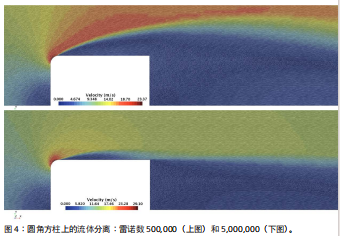
image.png

根据以上讨论,显而易见的是,无法匹配弗劳德数和雷诺数一直是实验结果的一个显著问题,尤其是在分析全新设计时(不存在类似形状方面的经验) 。另一方面,全尺寸CFD 模拟与模型缩尺模拟一样简单。两种情况下的不确定性来源相同:1) 网格质量和求解(离散误差)以及 2) 湍流建模(建模错误)。建模错误在两种情况下的类型和量级可能相同。为了避免同一量级的离散误差,需要优化近壁棱柱层,正如之前章节列出的。

缩尺对于空泡的影响

空泡是另一种需要建模的物理现象,因为我们无法求解计算网格中的每一个汽泡。使用空泡模型,也为模拟引入了更多的建模错误。但是,空泡实验分析也有问题,并且基于空泡试验筒数据预测全尺寸行为并不总是可靠。正如前面章节讨论的,原因在于无法获取模型缩尺和全尺寸流体的完全相似性。实验通常都是在没有自由表面的空泡试验筒中进行的,而现实情况却是,螺旋桨上面存在凹凸不平的自由表面。船舶在波浪中前进时,如果螺旋桨旋转低于临界水平,则时常会出现渗气情况,这在空泡试验筒中难以模拟。为了考虑不存在自由表面的原因,通常会将船舶模型附加到平面高于设计静水位的试验筒顶壁并且相对倾斜于该平面,这样可以有效地改变吃水和桨距角。有关如何进行这些调整以便最好地预测全尺寸螺旋桨性能,并不存在明确的公式;每个船模试验池都有自己的经验方法。

这些实验面临的其中一个问题就是模型和全尺寸螺旋桨的几何保真度。尽管真实的螺旋桨直径约为 10 m,但模型直径一般约为 0.2 m。前缘和后缘叶片边的曲率以及叶片粗糙度在模型缩尺中很难精确复 制。从层流过渡为湍流状态是另一大问题。但是,其中一个最大的问题是,由于模型螺旋桨直径较小,它比全尺寸螺旋桨旋转快很多(10 到20 倍)。此外,随着全尺寸深度的变化,静水压力会出现大约一巴的变化,而这种变化在模型缩尺中可忽略不计。因此,模型缩尺和全尺寸的空泡形态完全不同。图 5 显示模型缩尺和全尺寸模拟获得的相同螺旋桨蒸气体积分数大于 5% 的区域。在模型缩尺模拟中,所有叶片几乎一直受到空泡影响;但在全尺寸模拟中,空泡只存在于一部分求解过程的螺旋桨叶片上。在这两种模拟中,模型缩尺的边界条件与实验设置中的相同,而对于全尺寸模拟,螺旋桨环境条件也被考虑在内,因为自由表面变形的船舶移动所带来的螺旋桨旋转也被纳入计算。因此,模拟中另一个唯一的不确定性来源于空泡模型:考虑自由表面(不管是平面还是曲面)和船舶运动并不会产生问题或带来额外负担。
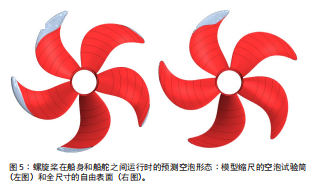
image.png

只有在离散误差变小许多并且存在有关真实流体的可靠信息时,才能评估建模错误。对于螺旋桨上的空泡,模型缩尺和全尺寸模拟中都存在大量的流体可视化数据,从而帮助显示空泡区。另一方面,螺旋桨附近的非空泡流体实现了模拟和测量之间的一致结果,而网格相依性研究一直建议,进一步细化网格并不会给推力和扭矩带来显著改变。但是,将相同网格应用到空泡流体时,并不会在梢涡形成空泡。直到最近,人们一直认为这是由于空泡模型不足引

起的。近期的一些研究表明,只要网格局部足够细化, Simcenter STAR-CCM+ 中的空泡模型就能正确预测梢涡空泡形态。图 6 显示通过适合非空泡流的网格和通过局部细化网格的剖面以捕获梢涡中的空泡。
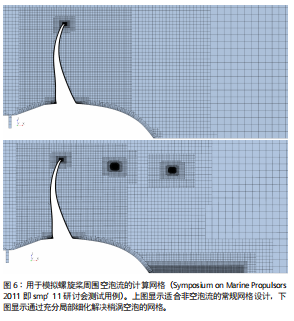
image.png

如果局部网格细化不够充分,就无法捕获梢涡中的空泡,如图 7 所示。但是,如果根据涡度大小阈值标识的狭窄螺旋区域中的网格局部足够细化,则梢涡中的空泡很容易显示出来。对于图 7 的情况, 梢涡中的单元大小量级为 0.2 mm(对于直径 D =250 mm 的模型螺旋桨,此单元大小小于D/1,000)。在全尺寸模拟中,梢涡直径较大,因此网格间距不必那么小,但相对于螺旋桨直径,当然需要在类似的量级上。
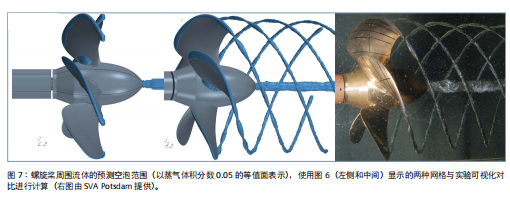
image.png

缩尺对于节能和流量控制设备的影响

节能和流量控制设备相比船舶整体而言只是比较小的零件,船舶的其他附体以及船舶结构的小型几何体细节通常也比主体结构(例如立管、管道、线缆和近海平台的其他小型零件)小几个量级。这些小型几何特征可以对流体产生显著影响,只要设计得当,就能节能、防止旋涡脱落和结构振动等。

此类小型零件的问题在于,当它们凸出到流体中时,基于其特性长度的雷诺数在模型缩尺中可能达到亚临界值。例如,在模型缩尺中,船舶结构的圆柱部分可能会形成大湍流尾流的层流分离(这正是圆柱周围亚临界流的特性);而在全尺寸模拟中,边界层在分离之前就会变为湍流,因而产生的回流区小很多。如果鳍板、支柱或其他类似水翼结构应该与流体一致,并且模型缩尺可以实现这种一致性,则在全尺寸模拟中,流体可能会从吸入侧分离,因为来水流量的方向可能会随着雷诺数的增加而改变。因此,使用缩尺模型分析、尤其是优化节能设备和类似小型零件,难度较大。尽管全尺寸实验可能比较困难, 但对于模拟而言,工作量几乎是相同的,不管流域大小如何。实际上,基于模型缩尺实验而没有按照预期执行全尺寸模拟的几项设计问题已经通过全尺寸模拟解决。

通过实验进行模拟的最大一项优势就在于,它始终可以提供有关流体的完整信息:即使只需计算船身的阻力,也会获得整个解域的速度和压力场,以及有关湍流和其他引申量(例如涡度或其他涡流识别标准)的信息。流体可视化功能(如今甚至可以使用虚拟现实工具)经常可以帮助工程师理解问题出现的原因或是知晓如何改进产品。图 8 使用剪切应力矢量分布显示壁面附近的流体可视化。图 9 显示螺旋桨后面的旋涡结构及其与船舵的相互作用。如果要设计并优化节能设备,则此类全尺寸流体分析是必不可少的。目前市场上的一些设备是在获得全尺寸流体模拟用户分析数据之后发明的。
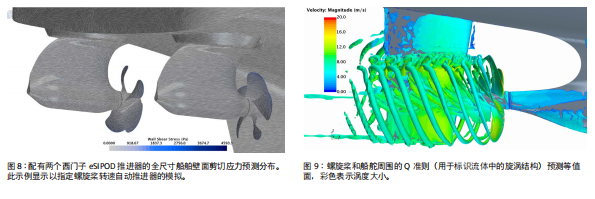
image.png

全尺寸验证数据

全尺寸船舶结构获得的数据数量有限。劳氏船级社最近公开了他们对于中型船舶开展的众多全尺寸测量中的一次测量数据。2016 年 11 月,劳氏船级社组织了一场研讨会;其间,超过 20 家公司展示了模拟结果与该测量数据的比较结果。这项活动的宗旨是预测三种运行条件下的自动推进点。大约 60% 的测试用例提交是通过 Simcenter STAR- CCM+ 进行的。与实验数据最接近的结果(差别不超过 1%)也是使用 Simcenter STAR-CCM+ 获得的。有关此研讨会及成果方面的更多信息,可以参见相关会刊 3。研讨会展示内容包括:如果由富有资质的工程师使用最先进的 CFD 工具进行模拟,他们可以预测全尺寸船舶性能。需要更多的全尺寸数据,才能让人们更加相信,模拟能够预测全尺寸流体。如果实验数据有限,则仍有必要验证 CFD 结果。例如,在新船舶交货之前的海上试航期间,常常需要收集船速之类数据,用作螺旋桨转数和海况函数。这对于验证大有帮助。

从实验和模拟中,人们都已经认识到,在平静的海面条件下优化的船舶在波浪中运行状态并不最佳。因此,要点在于,不仅要执行全尺寸模拟,而且要在分析中囊括真实运行条件。如图 10 所示,哪怕仅存在微小振幅波浪,船舶周围的波形也会显著改变。这会影响船舶阻力,因而会造成速度损失(在两种模拟中, 螺旋桨转速相同)。了解船舶通常在哪种环境下运行,工程师才能在设计和优化船舶时将运行条件考虑在内。
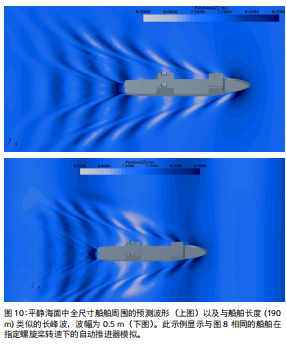
image.png

结论

本白 皮书研究了 CFD 模拟在全尺寸而非模型缩尺中的一系列应用,目的在于缓解人们对于在船舶行业全尺寸模拟中使用 CFD 的常见顾虑。对于壁面边界层要求和雷诺数效应的分析显示,执行全尺寸模拟并不比模型缩尺耗费更多计算资源,而对于结果精度的信心也不比全尺寸模型试验的插值低。在很多情况下,全尺寸预测比缩尺模型实验更加可靠,尤其是在亚临界雷诺数下进行预测。

尽管用于比较和验证的全尺寸测量数据有限,但 2016 年11 月劳氏船级社研讨会的成果显示, 有几家集团公司已经实现了自动推进器模拟预测速度 / 功率曲线与实验数据差异不到 2% 的目标。在另一个示例中, Pakozdi 等人在全尺寸条件下执行的自升式平台甲板波浪载荷预测 (2015)4也与模型缩尺条件下获得的缩尺实验数据实现协调一致。

船舶行业的很多资深用户已经时常成功开展全尺寸条件下的 CFD 模拟。目前的趋势已经明朗,那些仍然持有观望态度的用户,现在不妨开始全尺寸模拟吧!使用 Simcenter STAR-CCM+,可以通过创建真实系统的数字化双胞胎,实现在真实运行条件下执行完整系统的全尺寸分析目标。

参考信息

1.   Wosnik, M., Castillo, L., George, W.K.:“A theory for turbulent pipe and channel flows,”Journal of Fluid Mechanics., vol. 421, pp. 115–145

(2000).

2.    Lee, M., Moser, R.D.:“Direct numerical simulation of turbulent channel

flow up to Reτ 5200,”Journal of Fluid Mechanics., vol. 774, pp. 395–415 (2015).

3.   劳氏船级社研讨会会刊链接 :http://info.lr.org/l/12702/2017- 0220/3m372v/12702/156863/Proceedings.zip

4.    Pákozdi, C., Östeman, A., Stans berg, C.T., Peric, M., Lu, H., and

Baarholm, R.;“Estimation of wave-in-deck load using CFD validated against model test data,”Paper No. ISOPE-I-15-586, ISOPE2015

Conference, Hawaii, 2015.


免责声明:


本页面/内容部分素材来源于互联网公 开 信 息,旨在传递更多信息,不代表本平台立场。

版权归原作者或机构所有,如涉及侵权,请通过平台联系我们,我们将在核实后第一时间处理。

本平台对转载内容的真实性、准确性不作任何保证,用户需自行判断并承担使用风险。

船舶试验Star-CCM+
著作权归作者所有,欢迎分享,未经许可,不得转载
首次发布时间:2026-04-30
最近编辑:4月前
仿真支持爱好者
在仿真的路上越走越远
获赞 333粉丝 22文章 318课程 0
点赞
收藏
作者推荐

可编程数字信号处理器在移动通信中的应用-电子书-391页

可编程数字信号处理器在移动通信中的应用(TheApplicationofProgrammableDSPsinMobileCommunication)摘要:本书聚焦可编程DSP在移动通信中的工程应用,系统阐述2G/3G移动终端与基站的DSP实现方案。全书围绕DSP架构演进、低功耗设计、指令集优化及电源管理展开,详解双模终端架构、软硬件划分、协处理器设计与接触定义。同时覆盖天线阵列处理、MIMO信号提取、软件无线电挑战、多媒体应用、Java虚拟机适配、生物识别与安全机制等关键技术,结合OMAP平台、C55x系列处理器与典型案例,提供从算法、架构到工程实现的完整方法,为移动通信终端的低功耗、高性能DSP开发提供权威参考。TheApplicationofProgrammableDSPsinMobileCommunicationsEditedbyAlanGathererandEdgarAuslanderBothofTexasInstrumentsInc.,USACopyrightq2002byJohnWiley&Sons,LtdBaffinsLane,Chichester,WestSussex,PO191UD,EnglandNational01243779777International(+44)1243779777e-mail(forordersandcustomerserviceenquiries):cs-books@wiley.co.ukVisitourHomePageonhttp://www.wiley.co.ukorhttp://www.wiley.comAllRightsReserved.Nopartofthispublicationmaybereproduced,storedinaretrievalsystem,ortransmitted,inanyformorbyanymeans,electronic,mechanical,photocopying,recording,scanningorotherwise,exceptunderthetermsoftheCopyrightDesignsandPatentsAct1988orunderthetermsofalicenceissuedbytheCopyrightLicensingAgency,90TottenhamCourtRoad,London,W1P9HE,UK,withoutthepermissioninwritingofthePublisher,withtheexceptionofanymaterialsuppliedspeci-ficallyforthepurposeofbeingenteredandexecutedonacomputersystem,forexclusiveusebythepurchaserofthepublication.Neithertheauthor(s)norJohnWiley&SonsLtdacceptanyresponsibilityorliabilityforlossordamageoccasionedtoanypersonorpropertythroughusingthematerial,instructions,methodsorideascontainedherein,oractingorrefrainingfromactingasaresultofsuchuse.Theauthor(s)andPublisherexpresslydisclaimallimpliedwarranties,includingmerchantabilityoffitnessforanyparticularpurpose.Designationsusedbycompaniestodistinguishtheirproductsareoftenclaimedastrademarks.InallinstanceswhereJohnWiley&Sonsisawareofaclaim,theproductnamesappearininitialcapitalorcapitalletters.Readers,however,shouldcontacttheappropriatecompaniesformorecompleteinforma-tionregardingtrademarksandregistration.OtherWileyEditorialOfficesJohnWiley&Sons,Inc.,605ThirdAvenue,NewYork,NY10158-0012,USAWILEY-VCHVerlagGmbHPappelallee3,D-69469Weinheim,GermanyJohnWiley&SonsAustraliaLtd,33ParkRoad,Milton,Queensland4064,AustraliaJohnWiley&Sons(Canada)Ltd,22WorcesterRoadRexdale,Ontario,M9W1L1,CanadaJohnWiley&Sons(Asia)PteLtd,2ClementiLoop#02-01,JinXingDistripark,Singapore129809BritishLibraryCataloguinginPublicationDataAcataloguerecordforthisbookisavailablefromtheBritishLibraryISBN0471486434TypesetinTimesbyDeerparkPublishingServicesLtd,Shannon,Ireland.PrintedandboundinGreatBritainbyT.J.InternationalLtd,Padstow,Cornwall.Thisbookisprintedonacid-freepaperresponsiblymanufacturedfromsustainableforestry,inwhichatleasttwotreesareplantedforeachoneusedforpaperproduction.BiographiesAlanGathererreceivedhisBEngdegreeinElectronicandMicroprocessorEngineeringfromStrathclydeUniversity(Scotland)in1988.HethenmovedtoStanfordUniversityandobtainedMSandPhDdegrees,bothinElectricalEngineeringin1989and1993.HejoinedTexasInstrumentsin1993.Since1993,Dr.Gathererhasworkedondigitalcommunicationsresearchanddevelopmentintheareasofdigitalsubscriberline,cablemodemandwireless.Presentlyheisadistinguishedmemberoftechnicalstaffandmanagerofsystemsdevelop-mentwithinWirelessInfrastructureatTexasInstrumentswhereheleadsateaminvolvedinthedevelopmentoftechnologyforthirdgenerationcellulartelephony.Hepresentlyholds11patentsinthefieldofdigitalcommunications.EdgarAuslanderistheWorldwideStrategicMarketingDirectoratTexasInstrumentsWirelessCommunicationsBusinessUnit,Dallas,Texas,workingforthegeneralmanagerofthebusinessunitandTexasInstruments’seniorvice-president.SomeofthestrategicplanshehaswrittenhaveresultedinTexasInstrumentsacquiringorinvestingincompanies.HefirstworkedatTexasInstrumentsinNice,France,asEuropeanproductmarketingmanagerfortheTMS320digitalsignalprocessorsproductlinein1990.Mr.AuslanderbecameTexasInstruments’WorldwideGSMmarketingmanagerin1993priortohiscurrentposition.HeobtainedhisMEEngandMBAdegreesfromCornellUniversityandColumbiaBusinessSchoolin1988and1990,respectively.WhileatCornell,heheldseveralteachingassistantpositionsinsignalprocessinganddigitalcommunicationscourses.WhileatColumbiaBusi-nessSchool,hewasateachingassistantinstatisticsandworkedattheOfficeofScienceandTechnologyDevelopment,sellingColumbiaTelecommunicationsResearchCenter’spatentsrights.1IntroductionEdgarAuslanderandAlanGathererThisbookisabouttwotechnologiesthathavehad,andwillincreasinglyhave,asignificantimpactonthewaywealllive,learnandplay:personalwirelesscommunicationsandsignalprocessing.Whenitcomestobothmarkets,historyhasshownthatrealityhasoftensurprisedthemostoptimisticforecasters.WedrawontheexperienceofexpertsfromMIT,Berkeley,UCLA,WorcesterPolytechnicInstitute,INRIA,Authentec,Radioscape,GeovectorandTexasInstruments,togiveadescriptionofsomeoftheimportantbuildingblocksandimplementationchoicesthatcombinebothtechnologies,inthepastandinthefuture.Wehighlightdifferentperspectives,especiallyregardingimplementationissues,intheprocessingofspeech,audio,video,futuremultimediaandlocation-basedservicesaswellasmobilecommerceandsecurityaspects.Thebookisroughlydividedintothreesections:†Chaptersdescribingapplicationsandtheirimplementationsonwhatmightbedescribedas‘‘today’s’’technology.Bythis,wemeantheuseofprogrammableDigitalSignalProces-sors(DSPs)andASICsinthemannerinwhichtheyarebeingusedfortoday’sdesigns.Inthesechapters,wehighlighttheapplicationsandtheroleofprogrammableDSPsintheimplementation.†Chaptersthatpresentchallengestothecurrentdesignflow,describingnewwaysofachievingthedesireddegreeofflexibilityinadesignbymeansotherthanprogrammableDSPs.WhetherthesenewapproacheswillunseattheprogrammableDSPfromitsperchremainstobeseen,asthecommercialvalueoftheseapproachesislesscertain.ButtheygiveadetailedoverviewofthedirectionsresearchersaretakingtoleapbeyondtheperformancecurveoftheprogrammableDSPapproach.†Weconcludewithapracticalyetinnovativeapplicationexample,apossibleflavoroftheexcitingnewpersonalcommunicationsservicesenabledbydigitalsignalprocessing.Inthisintroduction,weoverviewtheaspectsofmobilecommunicationsthatmakeitauniquetechnology.Wedescribehowtheapplicationsassociatedwithmobilecommunica-tionshaveevolvedfromthesimplephonecallintoaslewofpersonaltechnologies.Thesetechnologies,andtheirimplementation,aredescribedinmoredetailinthesubsequentchap-ters.1.1It’saPersonalMatterThesocialimpactsandbenefitsofpersonalwirelesscommunicationsarealreadyvisible.Whenphoneswerenotportableandusedtoonlysitonadeskathomeoratwork,peoplewouldcallplaces:workorhome;butwhenphonesbecameportableandaccessibleanywhere,peoplebegantocallpeopleratherthanplaces:today,whenwecallpeopleweevenoftenstartbyasking‘‘Hello,whereareyou?’’.Themobilephonehasbecomeasafetytool:‘‘IwillbringthephonewithmeincaseIneedtocallforanemergency,ifanxiousfamilymemberswanttoreachme,orifIamlost’’.Themobilephonehasbecomeasocialtool,enablingmorefiexiblepersonallifeplanning:‘‘IdonotknowwhereIwillbeat2p.m.andwhereyouwillbe,butIwillcallyouonyourmobileandwewillsync’’.Arecentsurveyhasshownthatwhenpeopleforgettheirmobilephoneathome,avastmajorityiswillingtogobackhometogetit,evenwhenitimpliesa30-minutedrive.Themobilephonehasbecomeapersonalitemyoucarrywithyoulikeyourwallet,yourdrivers’license,yourkeys,orevenwear,likeawatch,apen,orglasses:itmadeittothelistofthefewitemsthatyoucarrywithyou.Ifyouareateenager,agamingdeviceoranMP3playeralsomadetheirroominyourpocket,andifyouareabusyexecutiveapersonalorganizerismaybemorelikelytohavethisprivilege.Figure1.1illustratestheintegrationofnewfeaturestrend;conversely,thewirelesscommunicationtechnologywillbepervasiveindifferentend-equipmentsandcreatenewmarketsforwirelessmodulesembeddedincarsforexample.Tosome,theuseofamobilephoneinpublicplacesisanannoyance.Peerpressure‘‘dictates’’youhaveamobilephonetobereachable‘‘anywhereanytime’’;nothavingamobilephonebecomesanti-socialinScandinaviancountriesforexample,wherepenetrationishigherthan70%ofthewholepopulation.Likeforeverydisruptivetechnologywidelyused,anewetiquettehastobeunderstoodandagreedupon,e.g.phoneshavetobeturnedofforputinsilentmodeatconcertsorinrestaurants.Phonesarenowprogrammedwithdifferentringingprofilesthatare‘‘environmentfriendly’’(e.g.meetingmoderingsonlyonceandmakesthephonevibrate).Inthefuture,wemightseephonesthatareenvironmentaware,withsensorsthatdetectifthephoneisinabagandneedstoringlouderforexample.Inthepast,Matra-AEG,nowNokiaMobilePhones,introducedaGSMphonethathadaninfra-redsensorthatservedasaproximitydetectorsoastoputthephoneautomaticallyonoroffhands-freemode.Ringingprofileshavealsootherniceapplications:pairedwithCallerID,theyenableuserstohavedifferentringingtonesfordifferentcallers(friends,family,businesspartners,unknown…).1.2TheSuperPhone?Tothevastmajority,themobilephoneistheultimatetelecommunicationtool,viavoiceorshortmessages,soontobecomemultimediamessagesormultimediacommunications.Forsome,itisaforegoneconclusionthatwirelessterminalswillcontinuetheirmutationfromfairlysimple,voice-orienteddevicestosmarterandsmartersystemscapableofincreasinglymorecomplexvoiceanddataapplications.TheargumentgoesthatwirelessphoneswilltakeonthecapabilitiesofPersonalDigitalAssistants(PDAs)andPDAswillsubsumemanyofthevoicecommunicationscapabilitiesofmobilephones.Thislineofreasoningproclaimsthatthehandsetsofthefutureeventuallywillbecomesomesortofsuper-phone/handheldcomputer/PDA.Butintheend,themarketplaceisnevernearlyasneatandtidyasonemightimagine.Ratherthananinexorablequestforaone-size-fits-allsuper-phone,thefractiousforcesofthemarket,basedastheyareoncompletelyillogicalhumanemotions,nodoubtwillleadhandsetmanufacturersdownanumberofavenuesinsupportof2.5Gand3Gapplications(2.5and3Grefertocomingphonestandardgenera-tionstobedescribedlaterinthisbook).Manymobilehandsetswillbecapableofconvergedvoice/dataapplications,butmanywillnot.Instead,theywillfulfillaperceivedconsumerneedorperformacertainspecializedfunctionverywell.Ratherthanahomogenousmarketofconvergedsuper-phones,theterminaldevicesfornextgenerationapplicationswillbeasdiverseastheyaretoday,ifnotmoreso.Andtheywillbeasdiverseastheapplicationsthatwillmakeupthe2.5Gand3Gmarketplace.MobiledeviceOEMsmustbepreparedtomeetthechallengeofadiverseandsegmentedmarket.Figure1.2illustrateshowwirelessphoneservicestartedtobeaffordabletoafewprivilegedbusinessprofessionalsandhowitdiversifiedintimetobecomeaconsumeritem.Thehigh-endphoneoftodayistheclassicphoneoftomorrowasfashionandtechnologyevolveandaspeoplebecomeusedtoinno-vationsbroughttothem.Webelievethattheincreasingneedforfunctiondiversificationwilldrivetheprogram-mableDSPintoanevenmoreintegratedrolewithinthemobiledevicesoftomorrow.Non-programmableDSParchitectureswillhavetotakeonmanytraitsoftheprogrammableDSPinordertocompetewithit.ThelaterchaptersofthisbookhighlightthatthefutureofprogrammableDSPsinmobileapplicationshingesontheirabilitytobringtherightlevelofflexibility,alongwithlowpowerperformance.Overthelastseveralyears,themarketforterminalsfirstbecamepolarizedandthenstratified.Themarketfirstpolarizedatthehighandlowendsofthespectrum.Asmorefeaturesandfunctionscouldbeaddedtohandsets,theywereandthismadeupthehighend.Buttoattractnewsubscribers,wirelesscarriersstillwantedlow-end,low-costyetrobustmobilephones.Infact,fortheserviceproviderofferingfreehandsetstoeachnewsubscriber,thelowerthecostofthehandset,thebetterofftheserviceproviderwouldbe.Inthelastfewyearsthough,themarkethasshownthatitwillsplinterandstratifywithseveraldifferentlayersormarketsegmentsbetweenthepoles.Someofthedistinctsegmentsthatareemergingcanbedefinedas:†Data-centricdevices:evolvingfromthePDA,theseadvancedpalmtopcomputerswillbeintegratedwithcellularvoiceandretainorevenexpandupontheircomputingcapabilities.Data-centricdevicescanalsobemodemcards(nokeyboard,nodisplay!)thatcanbepluggedintolaptops.†Smart-phones:migratingfromthecellulartelephonesegmentoftoday’smarket,smart-phoneswillperformtheirvoicecommunicationsfunctionsquiteeffectively,buttheyalsowillbeequippedwithlargerdisplayscreenssotheycanbegintoperformnewapplicationslikee-mailaccess,Internetbrowsingandothers.†Fashionphones:thesedeviceswillusefashiontechniquestoappealtoseveralsegmentsofconsumers.Thebusinessperson,forexample,willbeattractedtoacertainlookandfeeltomakeafashionstatement.Youngerconsumerswillhavequitedifferenttastes.Althoughtheywillcrossseveraldemographicmarketsegments,thesetypesofphoneswillappealtobuyerswhoarefashion-consciousandwhowillusefashiontomakeastatementabouttheirlifestyles.†Classicmobilephones:foruserswhoarelookingforaworkhorsemobilephone,theclassichandsetwillbesmallandeasy-to-handle,anditwillperformeffectivelythemostfrequentlyusedcommunicationsfeatures.†Low-endphones:serviceproviderswillcontinuetoofferfreephoneswithservicecontracts.Thesesmall,lightandrobustphoneswillremainamainstayinthemarketbecausetheyperformaveryvaluablefunction.Theyoftencomewithapre-paidcallingplanbundle.Theyattractfirst-timeusers.Inthefuture,wemightseesuchphoneswithoutakeyboardoradisplay(tosavecost):phonecallswouldbemadeviaanoperatorsittinginacallcenteroravoicedialing/recognitionsystem,mostlikelyinthenetwork.†Bluetooth-enabledphones:Bluetoothisashortrange,low-cost,lowpowerwirelesstech-nologyoperatinginthe2.4GHzunlicensedband.Bluetooth-enabledphonescanbeanyoftheabovecategories,buttheformfactorsmaychangedramaticallyasthephonewillnowbedistributedaroundyourbody.ThetypesofhandsetsthatcanbeidentifiedareillustratedinFigure1.3(conceptphonescourtesyofNokia).Whatisnotknowniswhattomorrowmayholdandtheeffectsnewapplicationswillhaveonthesize,shapeandfunctionoffutureterminaldevices.Onethingisforcertain:newtechnologieswillbedevelopedthatwillaltertheformfactorsinusetoday.Forexample,aBluetooth-enabledphonemaybeabelt-attachedcontroller/gatewaydevicelinkedtoanearpiecethatcommunicatesaudioinformation.Adisplayunitofsomesortcouldbeconnectedtotheuser’seyeglassesforcommunicatingvisualdata.Andbeyondthesefairlynewapplications,medicalsensorscouldbedeployedtomoni-tortheperson’sheartbeatorothervitalfunctions.Asmallbox,comparabletoafiatpagerinsize,willincorporatecellularandBluetooth(oranothertechnologysuchasIEEE802.11BorIEEE802.15)functionalitiescombined,tocommunicatewithacollectionoffashionableaccessories;theaccessories,ofthesizeandweightofapen,orafiatscreenforexample,willformapersonalareanetworkofthinclientscommunicatingviaBluetoothwiththesmallbox,thePersonalMobileGateway(Figure1.4,courtesyofIXIMobileInc.).Thatwaythe‘‘all-in-one’’terminal,oftentoobigtobeaphoneandtoosmalltobeaPDA,willbecomeacollectionofsmartyetthin,fashionableandlowcostdevices.Theconceptwouldappealtobothmobileprofessionalsandteenagers,theprimarytargetfortheeverincreasingreplacementmarket.1.3NewServicesWehavediscussedwirelessdevices,butwhatusersreallycareaboutaretheservicesthosedeviceswillbringtothem,andindustryplayerscareabouthowmoneywillbemade.Beforedescribingthenewservicesthatarelikelytobeofferedthankstopersonalmobileterminals,alittlehistorylessonwillbeusefulandremindustobehumble,especiallywhenitcomestopredictingthefuture!Whenthetelephonewasinvented,itwasoriginallytoimprovethetelegraphsystem.ThefundamentalideaoftheelectricaltransmittingofsoundwaspublishedbyCharlesBourseulfirstin1854inthemagazineL’IllustrationdeParis.AlexanderGrahamBellpatentedhistelephoneonthe14February1876,just3hoursbeforeElishaGray.Nobodywasinterestedinhisinventionfirst.WhenheaskedtheWesternTelegraphCompanyin1877tobuyhispatentfor$100,000,theresponsewas‘‘Whatshallwedowithatoylikethat?’’.Therewassomedoubtastotheusetowhichtelephonesmightactuallybeputinpractice.Demonstrationsoftenincludedspeech,songandmusic,anditwasnotuncommonforthemusicaldemonstrationstobetechnicallythemostsuccessful.‘‘Themusicaltelephone’’wasamajorattractionattheInternationalElectricalExhibitioninParisin1881,wheretheFrenchengineerClementAderdemonstratedstereophonictransmissionbytelephonedirectfromthestagesoftheParisOperaHouseandtheCome,dieFranaise.Itwasbelievedtobethemajorapplicationoftelephony.In1890,acommercialcompany,CompagnieduTheatro-phone(Figure1.5),wasestablishedinParis,distributingmusicbytelephonefromvarioustheatrestospecialcoin-operatedtelephonesinstalledinhotels,cafes,etc.andtodomesticsubscribers.Theservicecontinueduntil1932,whenitwasmadeobsoletebyradiobroad-casting.Thephonehascomealongwaysincethen,andthefirstmassmarketapplicationissimply…talkingwithotherpeople.WiththeadventoftheInternetandwirelessdataservices,anewrealmofpossibilitiesarealreadyoffered,thatgofarbeyond‘‘justtalkingwithotherpeople’’,aswitnessedbytherecentsuccessofNTTDoCoMo’sI-modeserviceinJapan.Servicecategoriesofthenearfuturewillencompasspersonalizedinformationdeliveryfornews,location-dependantservices,travel,bankingandpersonalhobbies;itwillalsoincludeproductivity-relatedservicessuchasVirtualPrivateNetwork(VPN)withtheofficeorthefamily,personalassistant,agendas,andaddressbooks;extendedcommunication,includinge-mail,postcardtransmission,andofcourseentertainment.Nokiahasalreadyintroducedphoneswithgamessuchas‘‘thesnake’’,butthefuturewillbringmuchmoreexcitinggames(on-lineaswellasoff-line,puzzles,gambling)andnewformsofentertainment:music(ringtones,clipsandsongs),TV(schedules,clips),chatgroups,astrology,datingservicesandwhatissometimescalled’’adultentertainment’’.Figure1.6showssomeoftheservicecategories.Thesuccessfuldeploymentoftheserviceswilldependoneaseofuse,convenience,pertinence,andclearaffordablebilling.Thepertinenceoftheservicewillrequirepersona-lization;profilingtechnologycanbeusedtomatchcontenttotheneedsoftheusers.Loca-tion-basedserviceswillenableorfacilitatesuchprofiling.Ofcourselocalizationwillhavetobevolunteeredand‘‘legally-correct’’information.Mostmobilelocation-basedservicestodayusepositioningbasedonCellofOrigin(COO),buttheprecisionisoftenmediocre,linkedtocellsize;insomecases,thisisacceptableenough.Anothermethod,knownasEnhancedObservedTimeofDifference(EOTD)isusedinsomeGSMnetworks.TimeofarrivalsignalsfrombasestationsaremeasuredbythephoneandwhatiscalledaLocation-MeasurementUnit(LMU).InfutureUMTSsystems,asimilartechniquewillbeusedthatisknownasObservedTimeDifferenceofArrival(OTDOA).ThelocationmethodswejusttalkedaboutonlyusethenetworkandLMUsasameanstogetlocationinformation;theuseofGlobalPositioningSystem(GPS)givesbetterresults,butthecostofaGPSreceiverhastobeaddedtothephone.Anillustrationofaninnovativewaytoexploitandpresentlocation-basedservicesisgiveninthelastchapterofthebook.1.4TheCurseandOpportunityofMoore’sLawMoore’slawpredictedtherapidincreaseintransistordensityonsiliconchips.Alongwiththisincreaseintransistordensity,cameanincreaseinclockspeed,chipsize,andcomponentdensityonboards.Allthishasgiventhesystemdesigneranexponentiallyincreasingamountofprocessingpowertoplaywithinhisorherquestformoreandmoresophisticatedsystems.Thedesigncommunityhasreactedtothisexplosionbymakinglessandlessefficientuseofthetransistorsofferedtoit.Thishasbeentruesincewefirstmovedfromhandlaidouttransistorstologicgates.Thelatterislessefficientintermsofsiliconareaandspeedoptimization,butismuchmoreefficientintermsofamorepreciousresource:humanintel-lect.FromlogictoRTLtomicroprocessors,thedesignerhasmovedtoanincreasinglyhighlevelofabstractioninordertodesignmoreandmorecomplexdevicesinreasonabletime-frames.Despitethis,designerscontinuetolagbehindprocessengineersintheirabilitytoconsumethetransistorsbeingmadeavailabletothem.ThiscanbeclearlyseeninFigure1.7whichplotstheabilityofadesignertousetransistorsagainsttheavailabilityoftransistorsthatcanbeused.Thistrendmakestheuseofprogrammabledeviceswithinmobilecommu-nicationssystemsinevitablefortheforeseeablefuture.Theonlyquestionis,whatwilltheseprogrammabledeviceslooklike?ProgrammableDSPsareprogrammabledevicesthatincludefeaturesthatenableefficientimplementationofsystemswithinthespecialclassofsignalprocessingproblems.ByfocusingonsignalprocessingDSPdesignershaveputprogrammableDSPsattheheartofmanyconsumerdevices,includingmobilecommunicationsystems.RecentlyDSPshavebeenspecializedtoperformspecificallyinthedomainofsignalprocessingformobilecommunications(moredetailsaregiveninChapter2).ThebalancebetweenspecializationandflexibilityisimportantforanyDSPtosucceed.AsDSPsareprogrammable,theyarenot‘‘justpiecesofsilicon,’’theycomewithadevelopmentenvironment.Intheearly1980s,DSPwasconsideredblackmagic,usedbyguruswhowroteallapplicationsinassemblylanguage.Now,powerfuldevelopmenttoolsincludingapplicationboards,emulators,simulators,debuggers,optimizingHighLevelLanguage(HLL)compilers,assemblers,linkers,blockdiagramenvironments,codegenerators,real-timeoperatingsystems(enablingeasiermultitasking,preemptivescheduling,highspeedcontextswitching,lowinterruptlatency,andfast,flexibleintertaskcommunication)aswellasmanyDSP-relatedbooksandapplicationnotesandinnovativevisualtoolshavemadeDSPtechnologyatoolforrapiddesignofincreasinglycomplexsystems.IncompetitiontoDSPs,‘‘siliconcompilers’’havearisen.Thesecompilerspromisetotakehighleveldescriptionsofasystem,andoutputadesignreadyforsynthesis,usuallywithacertainamountofuserfeedbackalongtheway.Thoughsuchtoolshaveshownsomesuccessandarenodoubtausefultoolinadesignersarsenal,theydonotprovideawaytomodifyasystemonceithasbeenfabricated.Thisisbecominganincreasinglyimportantrequirementbecausesystemsevolvequicklyandareincreasinglydifficulttospecifyatdesigntime.Forinstance,amobilehandsetmaynotbefullytesteduntilithasbeenusedinthefield.Theincreasingcostofmasksetsforthefabricationofchipsmeansanychangethatcannotbedonebyreprogrammingmaycostmillionsofdollarsandmonthsoftime.Thisisunacceptableintoday’smarketplace.更多内容见附件免责声明:本页面/内容部分素材来源于互联网公开信息,旨在传递更多信息,不代表本平台立场。版权归原作者或机构所有,如涉及侵权,请通过平台联系我们,我们将在核实后第一时间处理。本平台对转载内容的真实性、准确性不作任何保证,用户需自行判断并承担使用风险。
有附件
未登录
还没有评论
课程
培训
服务
行家
VIP会员 学习计划 福利任务
下载APP
联系我们
帮助与反馈

