
逐级加深型滑坡复活变形特征及机理——以中国贵州省红寨滑坡为例

论文题目
Deformation characteristics and mechanis m of reactivation for stepwise‑deepening landslides: a case study of the Hongzhai Landslide in Guizhou Province, China
a State Key Laboratory of Geohazard Prevention and Geoenvironment Protection, Chengdu University of Technology, Chengdu 610059, China
研究内容
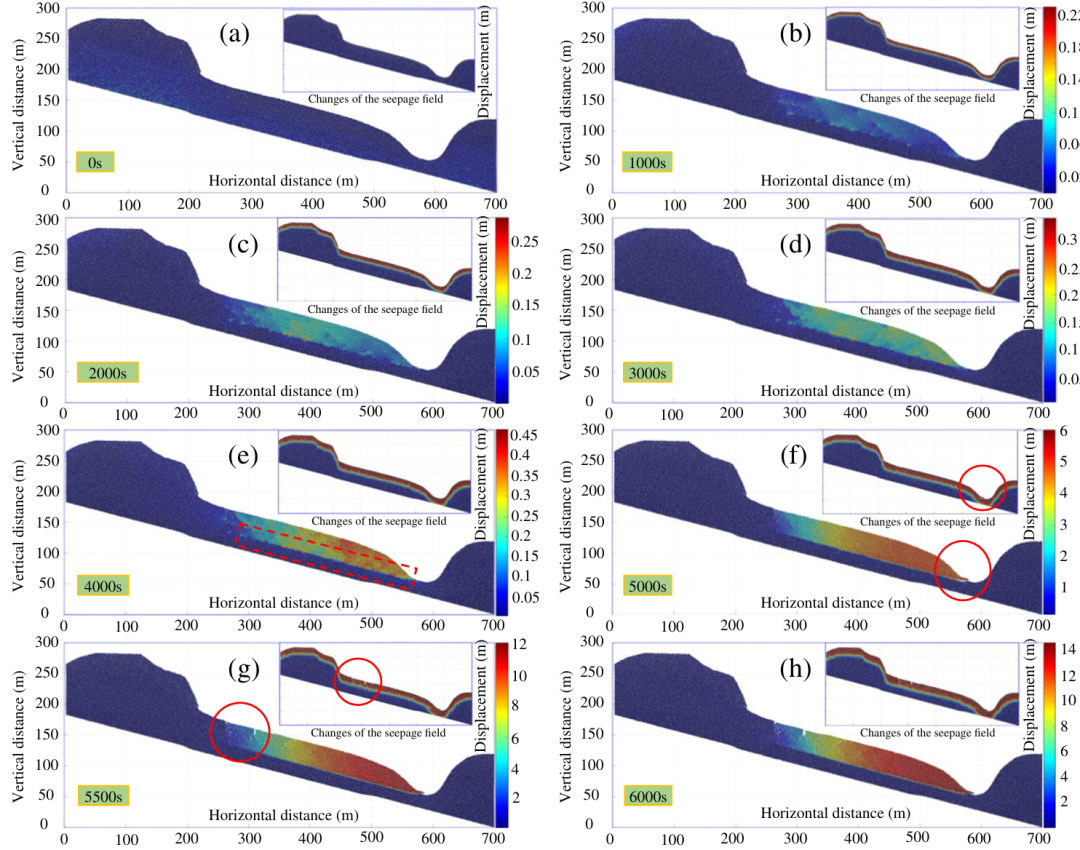
Abstract: The reactivation of ancient landslides has garnered sig nificant research attention in the context of major engineering pro jects in recent years. Investigation into the triggering mechanis ms and deformation behavior of the Hongzhai landslide in Qinglong County, Guizhou Province, reveals that it represents a case of ancient landslide reactivation with a relatively complex develop mental history. This landslide is characterized by the progressive deepening of the sliding surface and multiple reactivation events along the pre-existing slip zone. Survey data indicate that the Hong zhai landslide has a volume of approximately 6.25 million cubic meters and is classified as a deep-seated large-scale landslide. It can be divided into four distinct zones based on deformation fea tures, failure patterns, and stress trans mission directions. Reac tivation was facilitated by the combined effects of steep terrain, complex rock mass structures, weak engineering rock units, and persistent surface water infiltration. Historical an alysis suggests that the ancient landslide underwent three major deformation–fail ure events, with the slip zone progressively deepening over time. InSAR-based surface deformation monitoring indicates that most displacement occurred prior to the major failure event, with only minor movement detected afterward. Numerical simulations using MatDEM show that the frontal and middle sections experienced greater movement than the rear section, with a maximum displace ment of 14 m at the front, consistent with field observations. The Hongzhai ancient landslide serves as a typical example of multi phase reactivation of ancient landslides. Its deformation evolution offers valuable insights for the an alysis of similar landslide hazards.
Keywords: Ancient landslide;Deformation characteristics;Evolution process;Numerical simulation;MatDEM
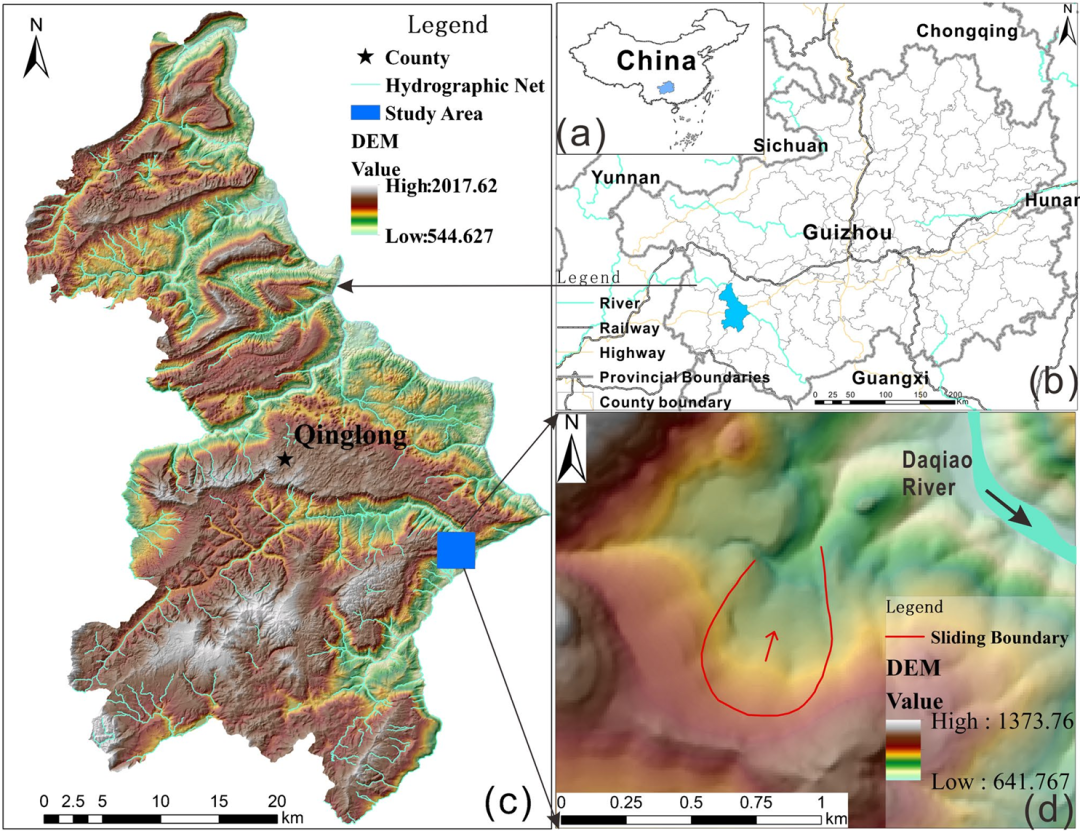
Fig.1 a The location of Guizhou province in China; b the location of Qinglong County in Guizhou province, China; c the location with the DEM of the study area; d topography and river of the study area
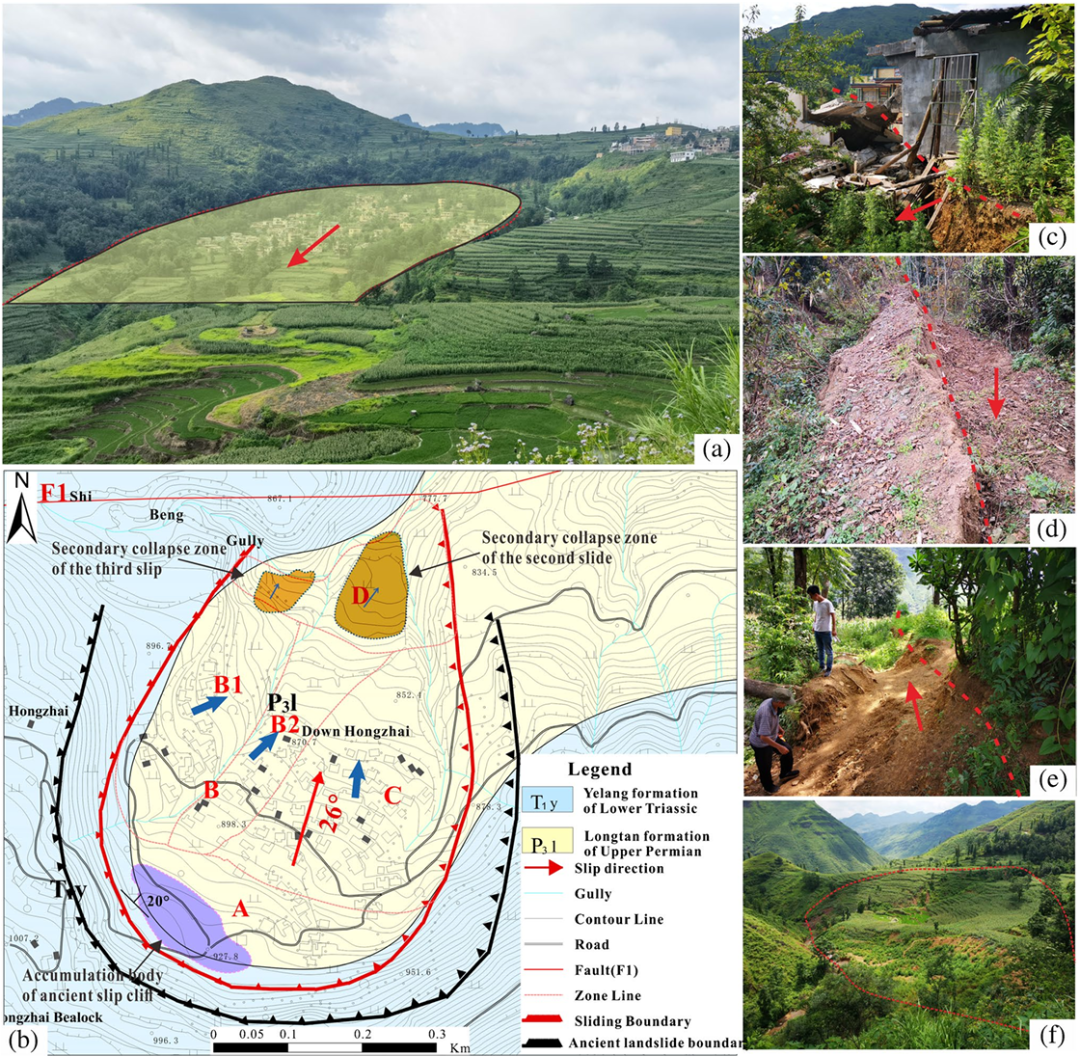
Fig.2 a The location and physiognomy of Hongzhai landslide; b geological map and landslide zoning characteristics of the Hongzhai land slide study area; c the stretched fracture at the left rear margin of the landslide; d the extrusion ridge of zone B1 and Zone B2 in the gully; e the compressive side ridge in the shear dislocation zone of Zone B2 and Zone C; f the frontal bulge deformation area of the Hongzhai land slide in Zone D
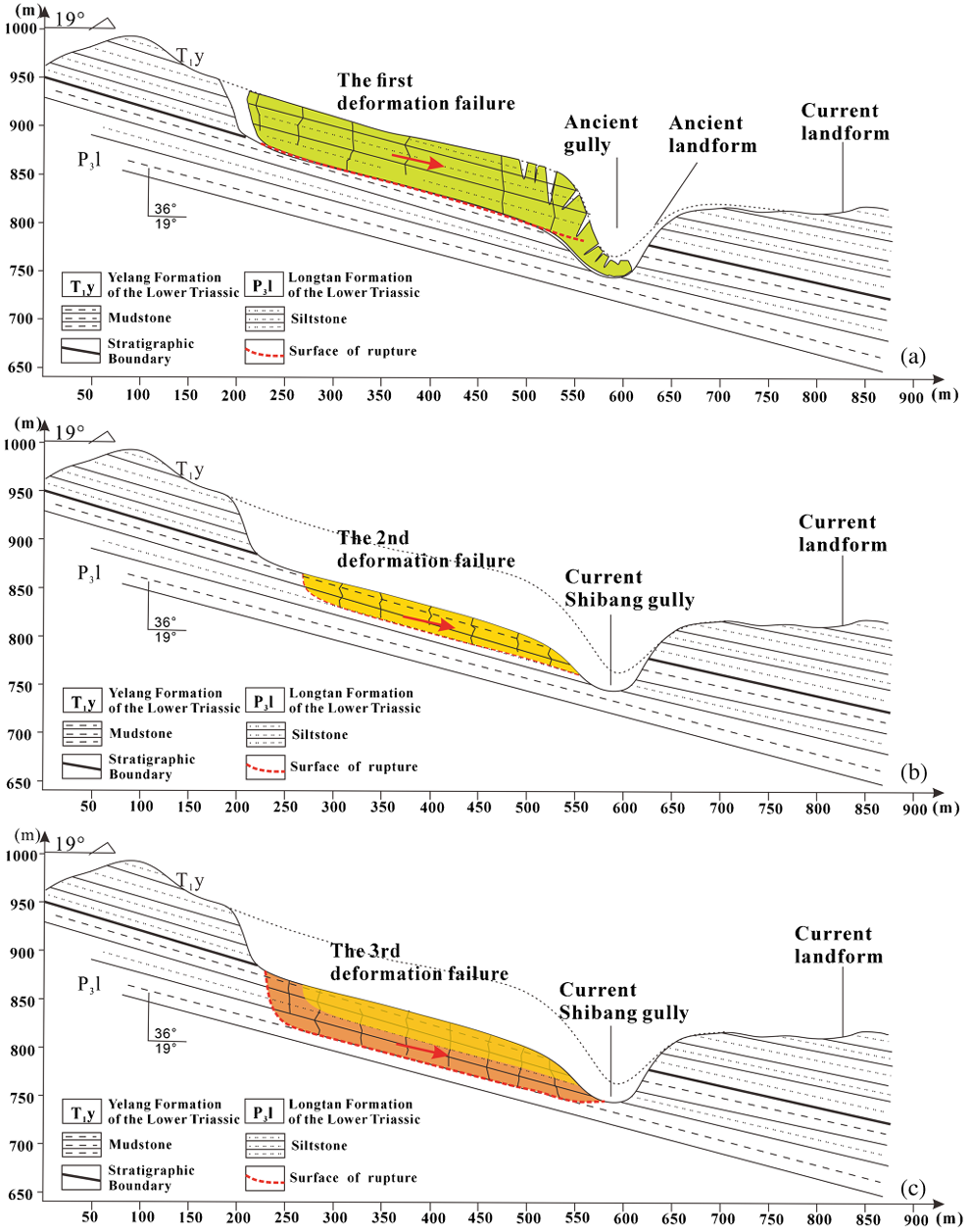
Fig.4 Evolution process of the Hongzhai ancient landslide: a the first slip deformation section; b the 2nd slip deformation section; c the 3rd slip deformation section
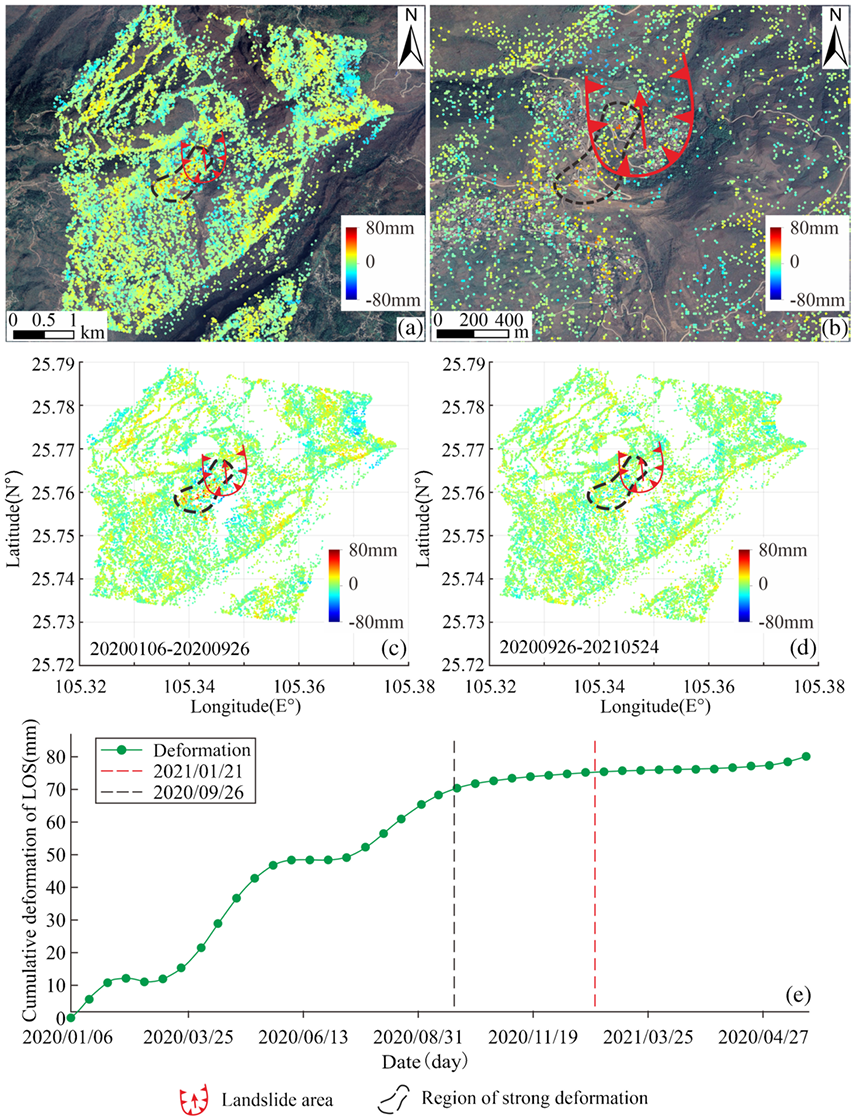
Fig.5 InSAR deformation monitoring of the Hongzhai landslide
了解详情
Dang J, Dai L, Yan L, et al. Deformation characteristics and mechanis m of reactivation for stepwise-deepening landslides: a case study of the Hongzhai Landslide in Guizhou Province, China[J]. Landslides, 2026: 1-15.