摘要:本文为《CombustionPhysics》第1、2章核心内容,系统讲解燃烧热力学与化学反应动力学两大基础板块。热力学部分推导化学平衡判据、平衡常数、生成焓与绝热火焰温度,结合图表分析当量比、压力对火焰温度、产物组分的影响;动力学从质量作用定律切入,介绍可逆/多步反应稳态、部分平衡简化手段,详述阿伦尼乌斯公式、碰撞理论、过渡态理论、RRK单分子反应模型,区分直链与支链链式反应机理,完整给出自由基生成、消耗路径,配套反应速率推导与能量势能曲线,为燃烧数值模拟、反应机理简化提供完整理论框架。COMBUSTIONPHYSICSInthepastseveraldecades,combustionhasevolvedfromascientificdisciplinethatwaslargelyempiricaltoonethatisquantitativeandpredictive.Thesead-vancesarecharacterizedbythecanonicalformulationofthetheoreticalfoun-dation;thestronginterplaybetweentheory,experiment,andcomputation;andtheunifieddescriptionoftherolesoffluidmechanicsandchemicalkinetics.Thisgraduate-leveltextincorporatestheseadvancesinacomprehensivetreatmentofthefundamentalprinciplesofcombustionphysics.Thepresentationemphasizesanalyticalproficiencyandphysicalinsight,withtheformerachievedthroughcomplete,thoughabbreviated,derivationsatdifferentlevelsofrigor,andthelatterthroughphysicalinterpretationsofanalyticalsolutions,experimentalob-servations,andcomputationalsimulations.Exercisesaredesignedtostrengthenthestudent’smasteryofthetheory.Implicationsofthefundamentalknowledgeonpracticalphenomenaarediscussedwheneverappropriate.Thesedistinguish-ingfeaturesprovideasolidfoundationforanacademicprogramincombustionscienceandengineering.ChungK.LawistheRobertH.GoddardProfessorofMechanicalandAerospaceEngineeringatPrincetonUniversity.HeobtainedhisdoctorateinengineeringphysicsfromtheUniversityofCaliforniaatSanDiegoin1973.Hisresearchinterestsareincombustion,propulsion,heatandmasstransfer,andissuesonenergyandtheenvironment.Forhisresearchaccomplishments,hereceivedtheCurtisW.McGrawResearchAwardoftheAmericanSocietyforEngineeringEducation(ASEE)in1984foroutstandingearlyachievementinresearch,asil-vermedaloftheCombustionInstitutein1990,thePropellantsandCombustionAwardoftheAmericanInstituteofAeronauticsandAstronautics(AIAA)in1994,theHeatTransferMemorialAward,inscience,oftheAmericanSocietyofMechanicalEngineers(ASME)in1997,theEnergySystemsAwardandthePendrayLiteratureAwardoftheAIAAin1999and2004,respectively,andsev-eralawardsforbestconferencepapers.HeisanoriginalmemberoftheHighlyCitedResearchersdatabaseoftheInstituteforScientificInformation(ISI).ProfessorLawisaformerpresidentoftheCombustionInstitute,aFellowoftheAIAAandtheASME,andamemberoftheU.S.NationalAcademyofEngineering.PrefaceSincethemid-1970stherehasbeentrulysignificantadvancementincombustionsci-ence,spurredbythedualsocietalconcernsforenergysufficiencyandenvironmentalquality,andenabledbytherapidincreaseinthesophisticationofmathematicalanalysis,computationalsimulation,andexperimentaltechniques.Consequently,wehavewitnessedtheevolvementofcombustionfromascientificdisciplinethatwaslargelyempiricaltoonethatisquantitativeandpredictive,leadingtoitsusefulapplicationsincombustion-relatedengineeringdevicesandpractices.Thistextreflectsmydesiretoincorporatetheseadvancesinmylecturesoncombus-tion.Asaresult,itspreparationhasbeenguidedbythethreedistinguishingthemescharacterizingrecentdevelopmentsincombustionresearch,namelythecanonicalformulationofthetheoreticalfoundation;thestronginterplaybetweenexperiment,theory,andcomputation;andthedescriptionofcombustionphenomenafromtheunifiedviewpointoffluidmechanicsandchemicalkinetics.Thetextalsoemphasizesanalyticalproficiencybypresentingcomplete,albeitab-breviated,derivationsthatcanbefollowedbythestudentwithamodesteffort.Alternatesolutionsaresometimespresentedtodemonstratethataphenomenoncanoftenbeanalyzedusingdifferentapproachesandatdifferentlevelsofrigor.Ihopethatthroughthisgentleguidancethestudentcanacquiretheneededconfidencetotacklemoredifficultproblemsonhisorherown.Thistextgrewoutofthelecturematerialpreparedforaone-yeargraduatecoursethatIhavegivenatseveralacademicinstitutions.Noprerequisiteinmathematics,fluidmechanics,andchemistryisexpectedapartfromtheusualundergraduateed-ucationinthephysicalsciencesormechanical,aerospace,orchemicalengineering.Thetextconsistsofthreeparts:Chapters1through4coverthebasiccomponentsrequiredtodescribechemicallyreactingflows,namelythermodynamics,chemicalkinetics,andtransportphenomena;Chapters5through10coverdescriptionsofthebasiccombustionphenomena—thoseofgoverningequations,nonpremixedandpre-mixedflames,thelimitphenomenaofignition,extinction,andflamestabilization,andtheaerodynamicsofflames;Chapters11through14covercombustioninthefourmajorclassesofflows,namelyturbulent,boundary-layer,two-phase,andsupersonicflows.Sincetheamountofmaterialtreatedinthistextissubstantial,theinstructormaybemoreselectiveinthechoiceoftopics.Forexample,discussiononreactionmechanisms,especiallymostofChapter3,canbeomittedifchemistryisnotempha-sizedinthecourse.Similarly,muchofthematerialsthatrequireextensivemathemat-icalderivations,especiallythoseofChapter9,canbeomittedifstrongmathematicalexperienceisnotintended.Furthermore,aone-semestercoursecanbestructuredbyabstractingmaterialsfromindividualchapters,leavingtherestofthetextfortheenrichmentofindividualstudents.Whileaseriousattemptwasmadetomakethetextcomprehensiveinitscover-age,itisneverthelessinevitablethatsomeimportanttopicswereeitherexcludedorinadequatelypresented.Feedbackfromreadersonpossibleimprovementsinfutureeditionswillbeverymuchappreciated.Similarly,becauseoftheextensiveliteratureinexistence,itisalsounavoidablethatimportantreferenceswereinadvertentlyleftout.Forbearanceoftheauthorsofthesearticlesisrequested.InthepreparationofthistextIhavebeenablyassistedbymanyofmypresentandformergraduatestudentsandresearchassociates.Inparticular,Iacknowledgewithappreciationthefollowingwhohavecontributedsubstantiallyinthiseffort:JohnK.Becktold,Beei-HuanChao,PeckCho,Suk-HoChung,FokionN.Egolfopoulos,HongG.Im,TianfengLu,AtsushiMakino,MateiI.Radulescu,Chih-JenSung,HaiWang,HeyangWang,andDelinZhu.ThemanuscriptwasreadinpartorinwholebyProfessorCraigT.BowmanofStanfordUniversity,ProfessorSau-HaiLamofPrincetonUniversity,andProfessorFormanA.WilliamsoftheUniversityofCaliforniaatSanDiego.Theircommentshavebeensubstantialandmostuseful,andIthankthemsincerelyfortheircollegialityandgenerosity.ItwasbychancethatIbecameastudentofProfessorFormanA.Williamsinthespringof1970.Hisinfluenceonmyintellectualandprofessionaldevelopmenthasbeenprofound.Iamimmenselythankfulforhismentorship.Ireservemymostheartfeltappreciationformywife,HelenKwan-mei,forhavingtranscribedthefirstdraftsofthistext,forconstantlyencouragingmetobringittofruition,andforherpatienceandloveovertheyears.ChungK.LawPrinceton,NewJerseryJanuary2006Introductionustionscienceandtechnologyand,assuch,coversnotonlythebasiclawsandphenomenarelatedtothephysicsandchemistryofcombustion,butalsotheimplicationsofthefundamentalunderstandinggainedthereintotheprinciplesbehindthepracticalcombustionphenomenaaffectingourdailylives.Itpresentsthediverseknowledgerequiredofcombustionscientistsandengineers,thechallengestheyface,andthesatisfactiontheyderiveinprovidingtheproperlinkagebetweenthefundamentalandthepractical.InSection0.1weidentifythemajorareasofpracticalcombustionphenomena,illustratedbysomespecificproblemsofinterest.InSection0.2wediscussthescientificdisciplinescomprisingthestudyofcombustion,andinSection0.3wepresenttheclassificationsoffundamentalcombustionphenomena.AnoverviewofthetextisgiveninSection0.4.0.1.MAJORAREASOFCOMBUSTIONAPPLICATIONItisfairtosaythattheabilitytousefireisanimportantfactorinusheringthedawnofcivilization.Todayourdependenceontheserviceoffireisalmosttotal,fromheatingandlightingourhomestopoweringthevariousmodesoftransportationvehicles.Usefulasitis,firecanalsobemenacingandsometimesdeadly.Wildlandandurbanfirescausetremendouslossofpropertyandliveseveryyear;thenoxiouspollutantsfromautomotiveandindustrialpowerplantspoisontheveryenvironmentinwhichwelive;andtheuseofchemicalweaponscontinuestobeanagentofdestructionwithevergreaterefficiency.Combustioniscertainlyonebranchofsciencethataffectsalmosteveryaspectofhumanactivities.Practicalcombustionproblemscanberoughlydividedintothefollowingfivemajorcategories,ineachofwhichwecitesomeexamplesofcurrentinterest.EnergyandCombustionDevices:Despitethelargevarietyofalternateenergysourcesavailable,suchasnuclear,solar,wind,hydroelectric,geothermal,andOTEC(oceanthermalenergyconversion),chemicalenergyderivedfromburningfossilfuelssuppliesadisproportionatelylargefractionofthetotalworldenergyneeds—around85percentatpresent.Thistrendwillcontinueintheforeseeablefuturebecauseofitsconvenience,high-energydensity,andtheeconomics.Combustionenergyismainlyusedtogenerateheatandpower.Examplesofthisapplicationaredomesticheating,firingofindustrialfurnaces,andtheoperationofautomotiveenginesandgasturbines.Hencethedesignandoperationofheatandpowerdevicesandenginesiscloselyrelatedtotheissueofefficientenergyutiliza-tion.Becauseoftheimportanceoftransportationvehiclesasamajorconsumerofpetroleumfuelsandcontributorofairpollution,therehasbeenextensivedevelop-mentsincetheearly1970sformoreefficientandcleanerburninginternalcombustionenginesforautomobiles.Forexample,thedieselengineofferssubstantialadvantageoverthemorewidelyusedgasolineengines,forseveralreasons.First,eventhoughitscombustioncycleefficiencyislessthanthatofthegasolineengineforthesamecompressionratio,itismoreefficientoverallbecauseitoperatesathighercompres-sionratios.Furthermore,unlikethegasolineengine,whichrequireshighlyrefinedfuelswithnarrowspecifications,thedieselengineisveryfueltolerant.Thusdieselfuelrequireslessrefiningthangasolineand,consequently,resultsinanetsavinginprocessingenergyattherefinerystage.Thispropertyoffueltolerancealsoimpliesthatthedieselengineisagoodcandidatefortheuseofunconventionalorlow-gradefuels.Thedieselengine,however,doeshavethepotentialdisadvantagesofbeingrelativelynoisierandaheavyemitterofsootandoxidesofnitrogen(NOx);bothproblemshavetheirorigininitsoperationalprincipleandthereforerequirefunda-mentalcombustionresearch.Itisneverthelessgratifyingtonotethatmuchprogresshasbeenmaderecentlyinalleviatingtheseproblems.Animportantconceptinenginedevelopmentisthatofstratifiedchargecombustion.Thebasicideaisthatthecombustionofleanmixtureshasthepotentialofsimultaneouslyincreasingthecombustionefficiencyandreducingtheformationofmostpollutants.Leanmixtures,however,arehardtoignite.Therefore,thecon-ceptofstratifiedchargecombustionistostratifyanoverallfuelleanmixturefromrelativelyrichtoultralean.Sincetherelativelyrichportioncanbeignitedeasier,thehotcombustionproductssogeneratedcaninturnignitetheultraleanportionofthecharge.Thusbycombiningthemeritsofhigh-pressurecombustion,directfuelinjectionforuniformcylinder-to-cylinderchargedistributionandcontrolledfuelvaporization,sparkignitionforcontrolledignitionevent,andstratifiedchargecombustion,therehasbeenconsiderabledevelopmentonhigh-compression-ratio,direct-injection,spark-assisted,stratifiedchargeengines.Incontrasttostratifiedchargeengines,thereisalsoconsiderableinterestinthedevelopmentofHCCI(homogeneouschargecompressionignition)engines.Conceptually,byhavingreactiontakingplacehomogeneouslywithintheentireen-ginecylinder,insteadofbeingconfinedtolocalized,high-temperatureregionscon-stitutingtheflames,theformationofsootandNOxcanbesubstantiallyreduced.Furthermore,highercompressionratiosandhencehigherefficiencycanbeattainedwithcompressionignition.Thefactthatimprovementsintheengineperformancecanbepursuedthroughtheoppositeconceptsofstratifiedandhomogeneouschargesnotonlydemonstratesthecomplexityofthecombustionphenomenaunderlyingsuchtechnologicalprocesses,butitalsohighlightstherichnessofthepossibleavenuesthatcanbeexploredforoptimization.Fuels:Combustionneedsfuel.Furthermore,thesatisfactoryoperationofdifferentheatandpowerenginesusuallydependscriticallyonthecompatibilityofthefuelused.Examplesaretheunsuitabilityofdieselfuelforuseingasolineenginesbecauseitisrelativelylessvolatile,andthenarrowcompositionalspecificationsofgaseswhichcanbeusedindomesticgasstovesinordertomaintainflamestabilizationbyavoidingblowoffandflashback.Theimportanceoffuelincombustionhasbeenreceivingincreasedinterestbe-causeoftheconcernovertheshortageandreliabilityofpetroleumsupply.Thus“energycrisis”issimplya“fuelcrises.”Sincetheworld’spetroleumsupplyispro-jectedtobeseverelydepletedwithinthiscentury,thelongtermsolutionforthenextfewcenturiesintermsoffossilfuelsappearstolargelydependontheburningofcoal,eitherthroughdirectutilizationorascoal-derivedfuels.Twoapproachesfordirectcoalutilizationarebeingactivelypursued.Thefirstisfluidized-bedcombustion,inwhichairisintroducedthroughthebottomofabedofcoalparticlesatasufficientlyfastratesuchthattheparticlesarelevitated,thatis,fluidized.Thisapproachhastheadvantagesthatthecoalparticlesareindirectcontactwiththeoxidizingairsuchthattheirburningratesaremaximized,thatneutralizationofoxidesofsulfur(SOx)canbefacilitatedbymixinglimestonewiththecoalparticles,andthattheproductionofNOxcanbeminimizedbycontrollingthefluidizationrate.Thesecondapproachfordirectcoalutilizationistheburningofcoal–waterslurries.Here,finelycrushedcoalparticlesofsizesrangingbetween40–70μmaremixedinwaterandsprayeddirectlyintothecombustionchamberofindustrialfurnaces.Theadvantagesarethatthephysicalprocessesofcoalcrushingandmixingarelessenergyexpensivethanthechemicalprocessofcoalliquefaction,andthattheslurriescanbetransportedthroughpipelinesandsubsequentlydirectlyburnedinconventionaloil-firedcombus-tors.Thisrequiresminimumhardwaremodification,andtherebycapitaloutlayandcombustordowntime.Slurriesupto70percentcoalcontenthavebeensuccessfullyburned.Oilcanalsobederivedfromcoal.Thesecoal-derivedoilshavehigherboilingpoints,widerboilingpointranges,andhighercontentsofaromaticsandnitrogen-containingcompounds.Consequently,theytendtoproducemoresootandNOx.Variousalternateandhybridfuelshavealsobeenformulated.Prominentamongthesearemethanol,ethanol,andmixturesofethanolwithoil.Methanolcanbederivedfromnaturalgasandcoal,whilebothmethanolandethanolcanbeproducedfrombiomass.Alcoholshavesmallerheatsofcombustionbecauseoftheextraoxygenatominthemolecule.However,theyhavehigherknockratingsingasolineenginesandproducelessNOxandsoot.Blendsofethanolandgasoline,andmethanolandgasoline,havebeensuccessfullymarketed.Coal,ofcourse,canalsobegasifiedinthepresenceofair,withorwithoutsteam,toproduceacombustiblegaseousfuelthatconsistsofhydrogenandcarbonmonoxide.Coalgasificationbecomesprogressivelymoreattractiveasasourceofcleanfuelwiththedwindlingsupplyofnaturalgas.PollutionandHealth:Themajorpollutantsfromcombustionaresoot,SOx,NOx,unburnedhydrocarbons(UHC),andcarbonmonoxide(CO).Asjustmentioned,sootisexpectedtobeaseriousproblemwiththeburningofcoal-derivedfuelsandthelarge-scaledeploymentofhigh-compressionenginessuchasthediesel.Sootnotonlyisunsightlybutcanalsobecarcinogenicduetothecondensationandtherebypresenceofcarcinogenicliquidcombustionproductsontheparticlesurface.ThemainsourceofSOxisfromburningcoal.Whencombinedwithwaterintheatmosphere,theemittedSOxformssulfuricacidandprecipitatesasacidrain,withdevastatingeffectsonaquaticlifeandsoilerosion.NOxcanbeformedfromeithertheN2intheatmosphereorthenitrogenatomsinthefuelmolecules,withtheformerproducedunderhigh-temperature,intensecombustionsituationsbecauseoftheneedtodissociatethenominallyinertN2intheair.Fuel-boundNOxislesstemperaturesensitiveandcouldbeamajorcontributorofNOxemissionfromburningcoalorcoal-derivedoils.WhenitreactswithUHCandozoneinthepresenceofsunlight,NOxformssmogthatisdetrimentaltotherespiratorysystem.Aproblemofpotentialconcernisindoorpollution.Withhousesbeingbetterinsu-latedtoconserveenergy,thetracepollutants(CO,NOx,UHC),fromsuchdomesticheatingdevicesasthegasstove,furnace,andkeroseneheater,mayexistatsufficientlyhighlevelsastobeinjurioustohealth.Thereisalsointerestinapplyingcombustiontechnologyinthemanagementofmunicipal,munition,andchemicalhazardouswastesthroughincineration.Theprob-lemswithburningthesewastesaretheuncertaintyofthetoxicityofthecombustionintermediatesandproductsandthefactthatsomeofthechemicalsarehalogenatedcompounds,whichcanberesistanttoefficientburningbecauseofthescavengingofthecrucialhydrogenatombythehalogenradicalsintheoxidationprocess.Aserious,andpotentiallycatastrophic,environmentalproblemisglobalwarmingcausedbytheincreasedamountofanthropogenicCO2intheatmosphere.SinceCO2isaby-productofhydrocarboncombustion,suggestionshavebeenmadetousehydrogenastheprimaryfuelsource.Intheeventthathydrogenisderivedthroughtheconversionofhydrocarbons,CO2isstillproducedduringconversionandneedstobesequesteredproperlyinordertopreventitsreleaseintotheatmosphere.Adiscussionontheadverseeffectsofcombustiononhealthwouldnotbecompletewithoutmentioningthewell-establishedcancer-causingconsequenceofcigaretteSafety:Thistopiccanbedividedintothreecategories,namelyfires,explosions,andmaterials.Fires,bothstructuralandwildland,arecostlyintermsofhumansufferingaswellasfinancialloss.Problemsofinterestincludeimprovingfiredetectiontech-nologyandunderstandingthedynamicsoffirepropagationinconfinedspacessuchasbuildingsandaircraftcabins.Explosionsareofconcerntosafetyinminegalleriesandgrainelevators,asacon-sequenceofLNG(liquefiednaturalgas)spillsorrupturingofpressurizedhydrogenstoragetanksinurbanareas,andinnuclearreactoraccidents.Inthelastexample,hydrogengasisgeneratedandcouldaccumulateinsufficientquantitytocauseanexplosion.Thiswouldinturnrupturethereactorcontainmentstructure,causingthereleaseofradioactivegasesintotheenvironment.Sincetheinhalationofsmokeandthetoxicproductsofcombustionisacauseoffatalityinfires,thechoiceofmaterialsforstructureanddecorationisalsoanimportantconsiderationintheoverallstrategyforfirecontrol.Astrategytowardthepreventionoffiresandexplosionsinaircraftandcombatvehicles,suchastanks,isthedevelopmentoffire-safefuelswhich,whileburningwellwithintheengine,willnotcatchfireuponspillage.Forexample,dieseloilemulsifiedwithasmallamountofwaterhasbeenfoundtobefireresistant.DefenseandSpace:Thevariousdefenseestablishmentsareinterestedinthefor-mulationofhigh-energymunitionsandpropellants;thesuppressionofcombustioninstabilitywithinjetengines,rocketsandguns;signatureanddetectionvulnerabilityfromtheexhaustsofjetenginesandrockets;andmeasuresatpreventingexplosionoffueltankswhenbeingpenetratedbyprojectiles.ThedevelopmentofchemicallasersasanintensepowersourceandofhypersonicaircraftuptoMach25arealsoofinteresttothenationaldefense.Sincecombustionexperimentsconductedoneartharefrequentlycomplicatedbythepresenceofbuoyantflows,therehasbeenmuchinteresttoconducttheseexper-imentsintheweightlessenvironmentofaspaceshuttleorstation.Theintrusionofbuoyancyisparticularlyproblematicwhentheburningisslowasinthepropagationofaflameinaweakmixture,orforlong-durationphenomenasuchassmoldering.Thepresenceofbuoyancycanalsodistorttheflameconfigurationfromanother-wisesymmetricalone,andhencesignificantlycomplicatesdatareductionaswellastheoreticalanalysisorcomputationalsimulationofthephenomenonofinterest.Firesafetyisofparamountinterestinspaceexploration.Forexample,whileearth-boundsmokedetectorsofincipientfiresareplacedattheceilingofaroominor-dertocapturethebuoyancy-driven,upwardlyrisingsmoke,theyareclearlyinop-erativeintheweightlessspaceenvironment.Furthermore,flammabilitystandardsestablishedonearthmaynothavemuchmeaningforthefiresafetyevaluationofaspacecraft.Recognizingthattheenvironmentwithinaspacecraftisartificialanyway,therehasbeenthesuggestionofcreatinganalmostfire-prooflivingenvironmentsothatfirehazardceasestobeaconcern.Thisconceptisbasedontherecognitionthatwhereasignitionandcombustionintensitydependonthefractionalamountofoxygenintheoxidizinggas,humancomfortdependsonlyontheabsoluteamountofoxygen.Furthermore,itisalsoempiricallyknownthatthecombustibilityofmostorganicmaterialsdecreasesdrasticallywithdecreasingoxygenconcentration.Theybecomehardlyflammablewhentheoxygenconcentrationisreducedtolessthan,say,15molepercent.Thusifwecanreducethecabinoxygenconcentrationtohalfofitsvalueinair,butincreasethecabinpressuretotwoatmospheres,thenacomfortable,butfire-proofenvironmentcanbecreated.原资料见附件免责声明:本页面/内容部分素材来源于互联网公开信息,旨在传递更多信息,不代表本平台立场。版权归原作者部分或机构所有,如涉及侵权,请通过平台联系我们,我们将在核实后第一时间处理。本平台对转载内容的真实性、准确性不作任何保证,用户需自行判断并承担使用风险。




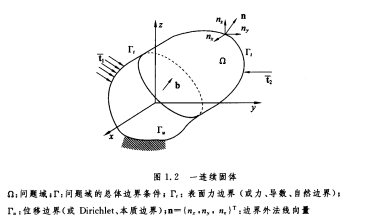
 ,表面边界为
 ,如图 1.2 所示。该固体受任意位置的支承,其所受外力可以分布在体积和 / 或边界上。固体中的应力将引起变形,从而产生位移场,而该位移即是我们所关心的场变量。固体中的位移和应力水平在各点是不相同的,这将取决于该固体的构造、载荷及边界条件。