波浪作用下近海海床基础中压力响应与颗粒运移的孔隙尺度模拟

论文题目
Pore-scale modeling of pressure responses and particle migration in offshore seabed foundations subjected to wave action
Shuyu Zhanga,1,Yang Lua,b,1,Qiang Zhangc,Xingsen Guoa,d,e,Xiaolei Liua,b,*
研究内容
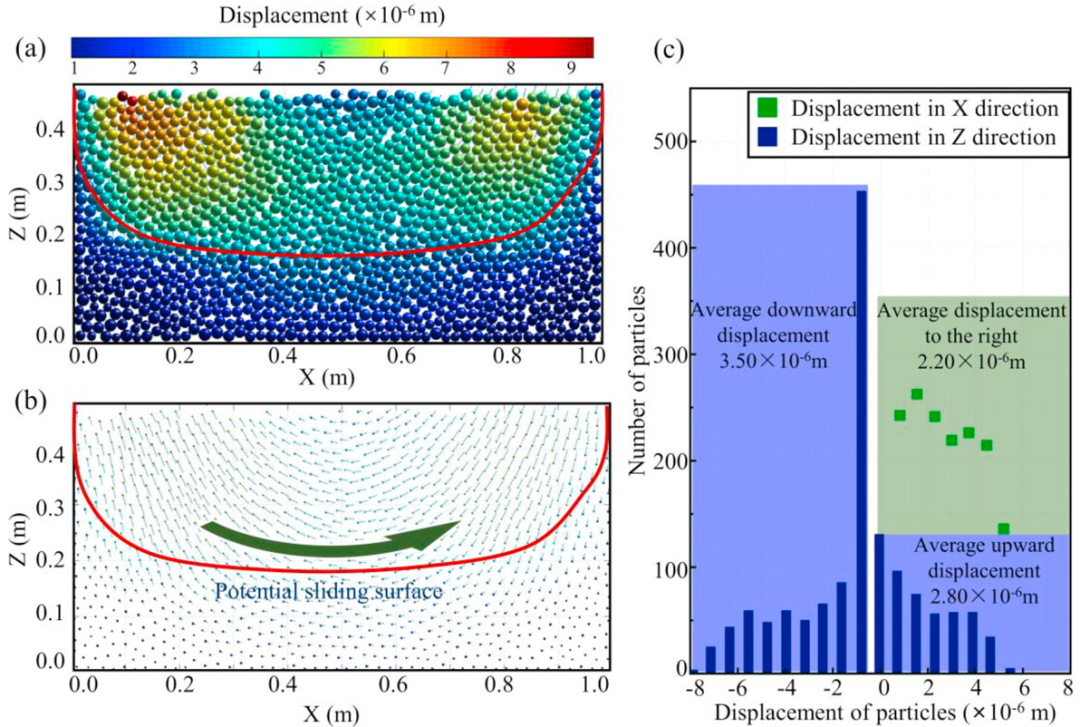
Abstract: The instability of offshore seabed foundations under cyclic wave loading is the dominant factor for structure failures. Pore water pressure responses and particle migration subjected to wave action are the important ele ments to be an alyzed. This study investigates these processes at particle scale employing a modified Discrete Element Method incorporating the Pore Network Model (DEM-PNM) which has been validated by experimental data. The results reveal the characteristics of wave-induced excess pore pressure in seabed. Specifically, within the maximum liquefaction depth, pore pressure accumulation initiates at the seabed surface and propagates downward with exponentially decaying amplitude and progressively increasing phase lag. During the pressure dissipation, the vertical displacement (settlement and uplift) of sediment particles is significantly greater than the horizontal sliding, with a ratio of 1.3–1.6. This demonstrates that vertical seepage-driven particle movement serves as the primary deformation mechanis m in liquefied seabed. Its effect intensity is comparable to that of the wave shear force, and more significant to the particle movement. Under sustained cyclic wave loading, the combined effects of spatially heterogeneous shear-seepage forces ultimately lead to the formation of arcuate failure surfaces within the seabed. These mechanistic insights advance the prediction of wave-induced seabed liquefaction and provide critical references for safeguarding marine foundation structures.
Keywords: Seabed sediments; Pore water pressure; Particle migration; DEM simulations; Pore density flow model
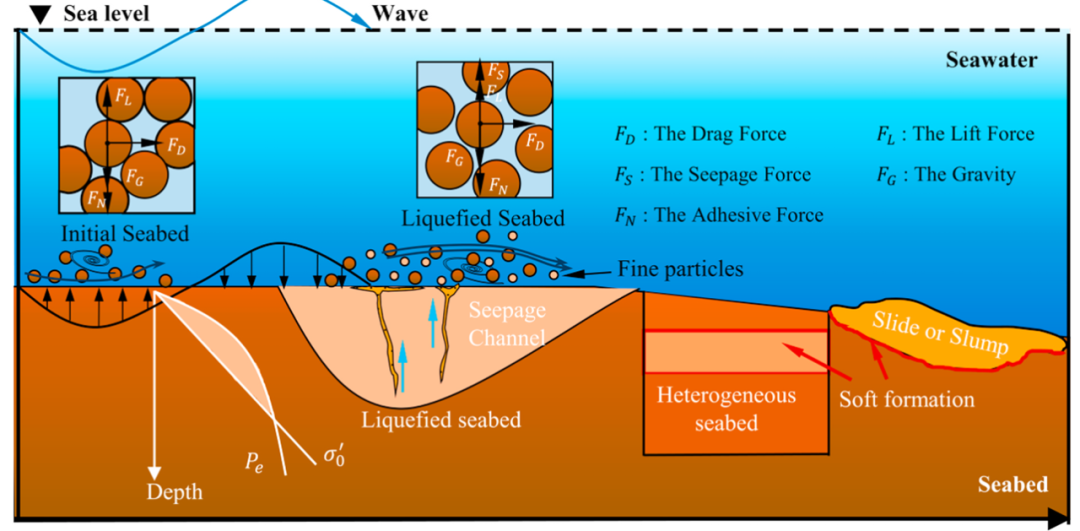
Fig.1 Schematic diagram of seabed instability subjected to the wave action
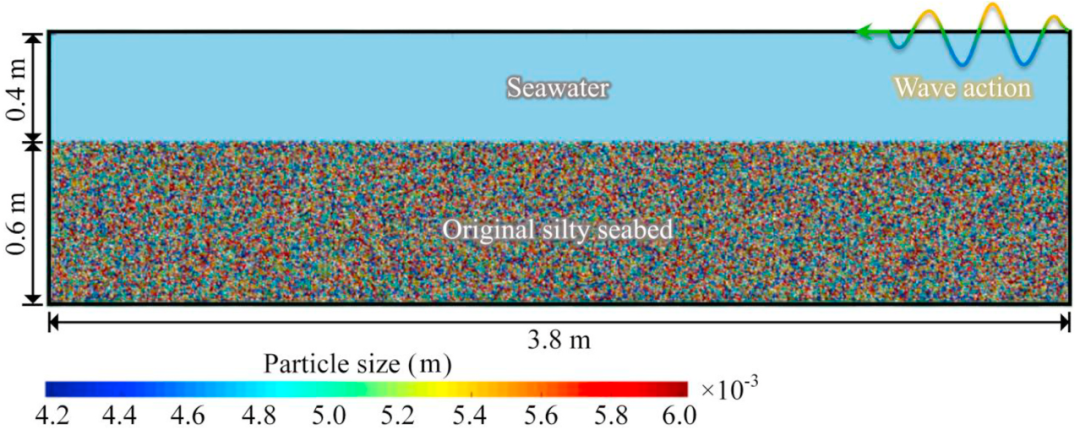
Fig.3 Schematic drawing of the computational set-up of the wave and seabed
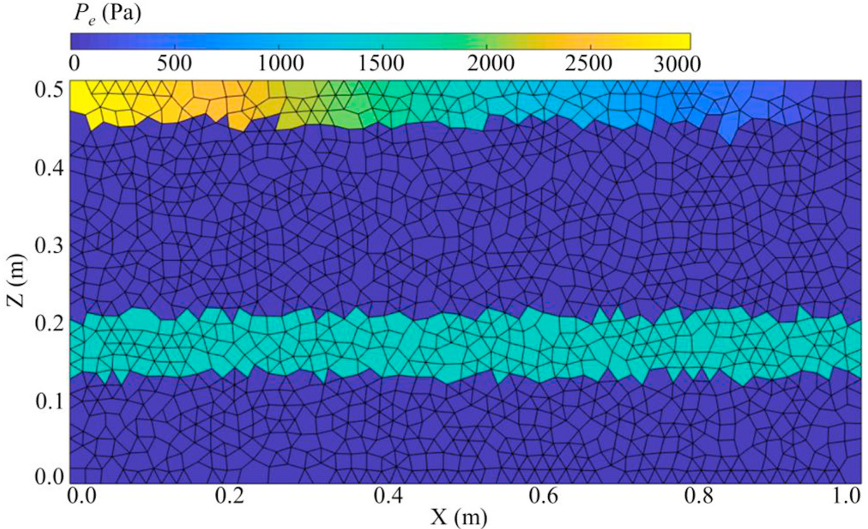
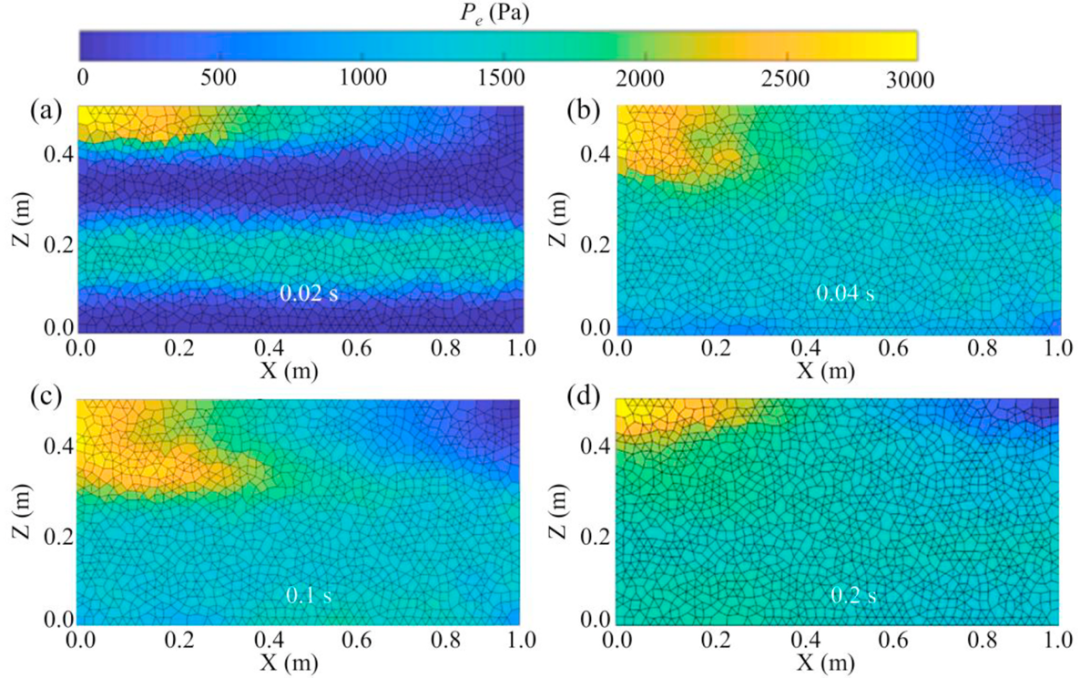
Fig.6 Initial pore water pressure setting of particle migration model
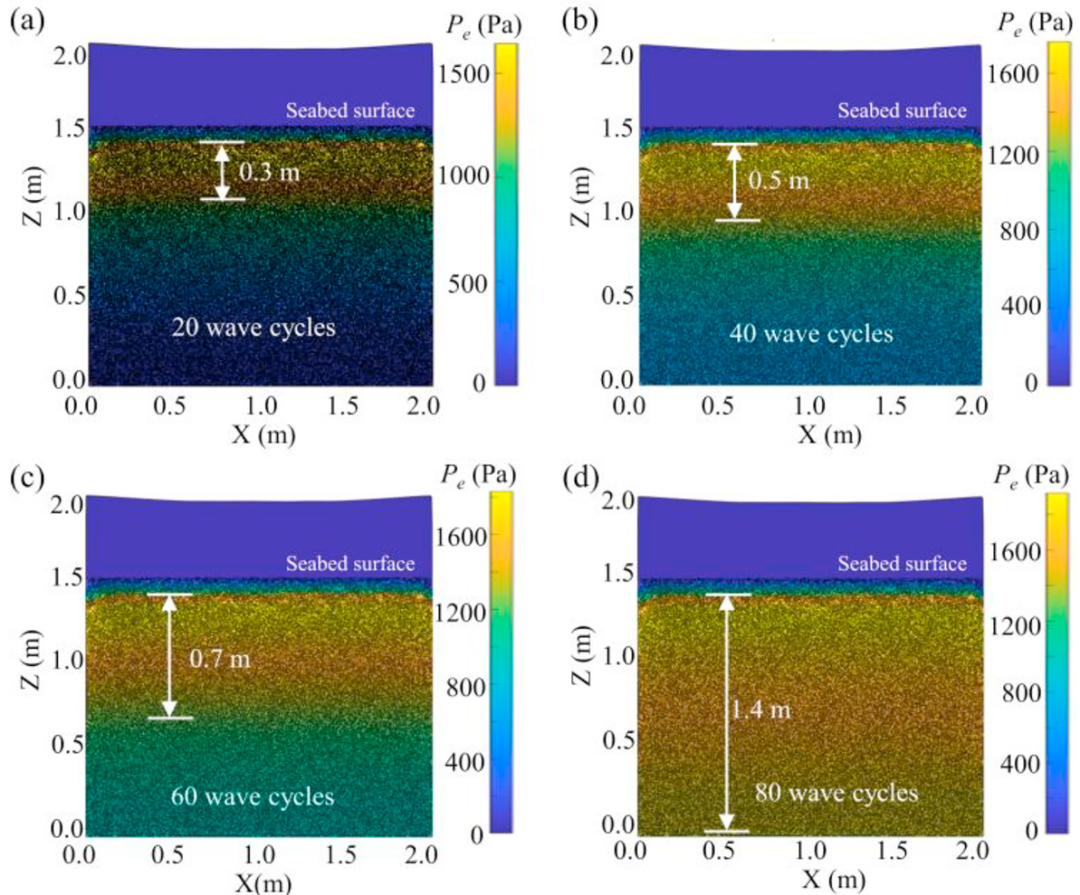
Fig.7 Cumulative distribution of excess pore water pressure under wave loading after a simulation duration: (a) 20 wave cycles; (b)40 wave cycles; (c) 60 wave cycles; (d) 80 wave cycles
了解详情
Zhang S, Lu Y, Zhang Q, et al. Pore-scale modeling of pressure responses and particle migration in offshore seabed foundations subjected to wave action[J]. Soil Dynamics and Earthquake Engineering, 2026, 201: 109979.