首页/文章/ 详情

湍流理论与模拟(研究生力学丛书)-张兆顺_151-289

2月前浏览129

第5章    标量湍流

流动过程的传热和传质是自然环境和工程流动中常见的现象,湍流 脉动强化了流动过程的热能和物质输运。本章讨论不可压缩流体中温 差较低或被输送物质的浓度较小的传热和传质过程,这种情况下,流体 的密度几乎不变,仍然可以近似等于常数。由于温差和浓度较小,它们 的浮力也可以忽略,因此温度和浓度对于不可压缩流动没有任何作用 (既不改变流体的密度,又不改变流体质点上的作用力),仅仅是流体质 点携带标量在流动过程中迁移,因此这种传热和传质问题称做被动标量 的输运过程。也就是说,流体运动是主动的,标量输运是被动的。一部 分大气和水环境流动中的传热和传质可以近似为被动标量的输运。

5.1     均匀湍流中的被动标量输运

5.1.1  被动标量输运的控制方程

在被动标量的近似下,湍流中标量输运的基本方程是
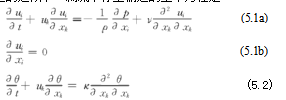
image.png

式(5.1a) 和式(5.1b) 是流动控制方程,在均匀湍流情况下,也是湍流 脉动的控制方程,它们不受标量存在的影响,湍流场按给定的初始场 和边界条件在方程式(5.1a),(5.1b)     控制下发展。方程(5.2)是被动标量的控制方程。如果θ表示温度,κ是热导系数,则 √k=P  称做普朗特数,方 程(5.2)描述湍流场中的温度扩散;如果θ表示浓度,k 是质量扩散系数,则 √k=Sc 称为施密特数,方程(5.2)描述湍流场中的质量扩散。由于被动标量的 控制方程相同,本章以热能输运过程为例讨论标量输运,它们的性质可以直接 应用于质量输运。

标量输运方程(5.2)是线性的,已知湍流速度场,并给定标量场的初始和 边界条件,不难用数值方法确定标量场。虽然标量输运方程是线性的,而且它 和动量输运方程(5.1a) 相仿,主要包括对流和扩散过程;但是标量脉动场的 性质和脉动速度场有明显的差别。例如,具有高斯分布的均匀各向同性脉动 速度场中的均匀脉动温度场具有较大的间歇性( Shraiman  和 Siggia,2000)。 为了对湍流速度场中标量输运性质有一个最基本的了解,介绍均匀标量脉动 场(标量脉动的各阶统计矩在空间是均匀的)的分析方法和它的性质。


5.1.2  谱空间中标量脉动的输运

均匀脉动速度场中的湍流输运过程可用谱分解描述:
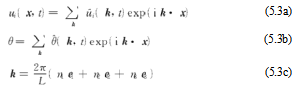
image.png

上式中 n,e,n       是整数。把展开式(5.3a) 和(5.3b) 代入式(5.2),得谱空间中 标量输运方程如下:

image.png

公式右边第一项是脉动速度携带标量的对流输运,第二项是分子扩散。就是 说,湍流场中被动标量输运过程,由两部分组成:随脉动速度的对流和标量本 身的分子扩散。

可以定义标量脉动的谱 Se(k)=B(k)θ(k),               并称它为波数 k 上的标量谱,标量谱在谱空间球面上的积分 Eo(k)=J              So(k)dA(k) 称为标量的拟 能谱,或简称标量能谱。由式(5.4)可导出脉动标量谱的输运方程如下:

image.png

image.png

To(k)=J            TB(k)dA(k)是对流作用在谱空间的贡献,称做标量能量的传输 谱;-2 kk²E(k)    是分子耗散项,它和波数平方及扩散系数成正比。

为了考察标量输运的性质,暂且忽略分子扩散,将标量输运方程简化为

image.png

上式表示,标量跟随流体质点迁移而不改变它的数值。举例来说:某一时刻, 湍流场中有局部均匀的温度分布   x)=  常数( |x|≤R) 。  随着时间的推移, 由于湍流脉动,温度随质点在空间随机游动。从欧拉观点来看,流场中具有随 时间变化的温度分布,它的概率分布取决于脉动速度场,由于速度脉动具有各  种尺度的成分,温度脉动在谱空间也形成分布。可以用流动显示方法来定性  考察标量的湍流输运,例如,在均匀湍流场中注入一滴墨水,由于湍流脉动速  度的迁移,墨迹的边缘愈来愈不规则,形成一种分维形的边界(定性地表示在  图5 - 1(a)) 。 不规则的标量曲折边界,说明初始均匀分布的浓度场,在湍流脉  动速度的迁移下,具有愈来愈多的小尺度脉动成分。图5-1( b) 表示在空间某
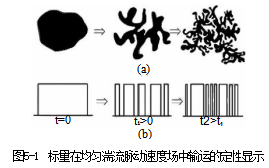
image.png

一方向上浓度的分布,初始局部均匀的浓度分布逐渐演化为不均匀分布,随着 时间的推移,产生愈来愈多的间歇性小尺度脉动。

以上定性的论述说明,湍流脉动速度的迁移作用使标量谱中大尺度成分 向小尺度传递。这一过程类似于湍动能传输链中的惯性输运,为了和湍动能 输运加以区别,标量随速度脉动的迁移称为对流输运;湍流动量传输称做惯 性输运。和脉动运动的动量输运过程类似,对流作用将大尺度的标量脉动“能 量”向小尺度脉动传递。考虑分子扩散时,标量谱方程说明标量“能量”耗散和 波数平方成正比,因此,小尺度的标量脉动消失得很快。如果分子扩散系数很 小,那么就会发生和大雷诺数湍动能输运的类似情况:标量谱的湍流输运中 存在两个可明确分离的尺度,标量的对流尺度和耗散尺度。被动标量的湍流 输运中,它的对流尺度取决于脉动速度的尺度;它的耗散尺度和分子扩散系 数有关。

5.1.3  均匀湍流场中标量输运规律

1. 标量输运的特征

为了对比湍流的动量输运和标量输运,把湍流运动方程和标量输运方程 写成无量纲形式,并加以比较:
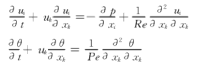
image.png
式中 ,称做贝克来数,它表示标量输运过程中对流输运和扩散输运的 量级比。 Pe>1,   表示对流占绝对优势; Pe<1,    则分子扩散占绝对优势。在 湍流脉动速度场中,Re 数表示动量输运过程中对流(或惯性)和分子扩散的量 级比。速度脉动是多尺度的,在不同尺度的脉动中对流和扩散的量级差别很 大。例如,惯性子区中(》η,速度脉动是惯性占优,而耗散区( Kη    则是粘 性占优。用局部雷诺数来区分这两种情况:

image.png

式中 δu=|6               x+l)—ua)|max,它是给定尺度中脉动速度增量的最大值。 在耗散区,Re≤1,    在惯性子区 Re>1 。 对于标量输运应当用相应的速度尺  度、长度尺度和扩散系数来衡量。定义局部贝克来数 Pe:

image.png

Pe>1    的标量输运过程中对流占优; Pe《1,  扩散在标量输运中占优。

对于不同的流体,它们的粘性系数和扩散系数之比,即普朗特数 Pr, 可能 相差几个量级。例如,常见气体的 Pr~1;     而水的 Pr>1;     液态金属的 Pr<  1。由于普朗特数的不同,动量输运和标量输运中对流和分子扩散的量级会有 很大差别。由式(5.7)和式(5.8)的比值可以很清楚地看到这一差别:

image.png

就是说,普朗特数表示贝克来数和雷诺数之比。于是有以下三种情况,如图5-2。
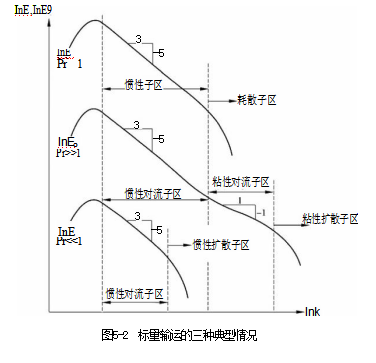
image.png

(1)Pr1

这时 Pe~Re,    无论在哪一尺度下的脉动,局部雷诺数和局部贝克来数  总是同一量级的。所以,当动量输运过程是惯性占优时,标量输运是对流占  优;动量输运是粘性占优时,标量输运是扩散占优。这种情况下,人们推测:

无量纲的温度能谱和脉动速度能谱可能有类似的分布,参见图5-2最上面的 曲线。

(2)Pr<1

Pe《 Re时,无论在哪一尺度下的脉动,局部雷诺数总是远远大于局部贝 克来数。这种情况下,当标量输运处于对流占优的状态时( Pe>1),     动量输运 一定处于惯性占优的子惯性区( Re=Pe/Pr>1);           当标量输运已进入耗散占 优状态时( Pe<1),     动量输运可能仍然属于惯性占优( Re=Pe/Pr>1) 。     也 就是说,标量输运过程中对流占优的子区大大缩小了, 一部分标量扩散占优的 子区处于速度脉动的惯性子区,参见图5-2最下面的曲线。

(3)Pr>1

Pe》Re  时,无论在哪一尺度下的脉动,局部贝克来数总是远远大于局部 雷诺数。当动量输运处于惯性占优的惯性子区时( Re》1),   标量输运也是对 流占优( Pe=Re         Pr》1); 而当动量输运处于耗散占优时( Re<1),     标量输运 仍然可能是对流占优( Pe>1),     即标量的对流子区扩大了,参见图5-2的中间 曲线。

归结起来:在均匀脉动速度场中,各个尺度的标量输运有以下四种过程:

① Re>1    和 Pe》1  的尺度中,标量是惯性对流输运;

② Re>1    和 Pe<1    的尺度中,标量是惯性扩散输运;

③ Re<1    和 Pe》1  的尺度中,标量是粘性对流输运;

④当然,一定有 Re<1   和 Pe<1   的情况,这时动量输运和标量输运分别 属于粘性占优和扩散占优,称做粘性扩散标量输运。

2.  标量能谱的经典理论

下面分别分析各种输运过程的标量能谱。

(1)惯性-对流标量输运的( Re>1    和 Pe>1)    标量能谱

惯性-对流标量输运过程中,动量输运和标量输运的尺度分别大于各自 的耗散尺度,这时脉动速度的能谱服从-5/3律,可以推测脉动标量的能谱也 遵循—5/3次方律。 Obuhkov(1949)   和 Corrsin(1951)  曾独立地提出如下 假定。

image.png

上式中 e 是标量能量耗散率,即image.png 将脉动速度的一5/3次方 谱:E(k)=a²³k-5/3,         代入上式,得温度谱为

E(k)=Coεgε1/3          k⁵/3                                     (5.11)

Co称为Corrsin   系数,式(5.11)称为Obuhkov-Corrsin    谱,由大气边界层的实 测数据确定 Co=0.64 。 还可以从另一角度论证式(5. 11),在惯性对流标量 输运过程中,标量耗散率正比于局部标量“能量”kE(k)   和局部特征时间 τ( k) 之比

image.png

在惯性-对流过程中,脉动速度的特征时间只和波数有关,而和分子粘性和扩 散系数无关,由量纲分析可得

(k)~[kEk]]-1/2~E¹/³k2/3 

将 zfk) 代入前一公式,也可得式(5.11)。

(2)惯性扩散标量输运的( Re》1  和 Pe<1)    标量能谱

惯性扩散标量输运过程需要考虑标量的分子扩散,而不必考虑分子粘 性。就是说,脉动速度的能谱仍然服从-5/3次方律。当标量输运处于扩散 占优的强耗散区时,Batchelor(1959)    假定:①谱空间标量输运方程中的时间 导数项可以忽略;②速度脉动和标量脉动是准正则过程。根据假定①脉动标 量输运方程可简化为

image.png

为了应用假定②,再写出0 k’,t)  的输运方程

image.png

将以上两公式相乘后做系综平均,得

image.png

准正则随机过程中(或称准高斯过程,在第3章的3.8节中已给出它的公式),4 阶矩等于所有2阶矩的乘积。在各向同性湍流中向量和标量乘积的系综平均等 于零(和前面证明各向同性湍流中 R=0    理由相同);于是上式中4阶矩等于

image.png

在对流扩散标量输运过程,脉动速度的能谱满足一5/3次方律,因此,标量输 运的能谱为

image.png

(3)粘性对流标量输运的( Re<1    和 Pe>1)    标量能谱

粘性-对流标量输运过程中,标量输运是对流占优,因此波段 k 中的标量 耗散率正比于该波段中的标量“能量”kE(k);      脉动速度处于耗散区,输运的 特征时间是 Kolmogorov   时间尺度, Ta=(e)-1/2,        于是标量耗散率有以下 关系:

image.png

以上推断是基于量纲分析,并没有从动力学角度予以验证,近年来,大量  直接数值模拟和实验结果对以上的论断提出质疑( Shraiman   和 Siggia, 2000)。①标量脉动具有较大的间歇性,比如,在均匀各向同性湍流中,速度脉  动分量的概率分布几乎是高斯的,而在这种脉动速度场中的标量脉动梯度则 偏离高斯分布;标量耗散率的间歇性也大于湍动能耗散的间歇性,用量纲方  法导出的能谱中,并不考虑湍动能耗散和标量耗散的间歇性;②根据 Kolmogrov  理论和Obukhov-Corrsin    理论,只有当雷诺数和贝克来数很大时, 速度脉动和标量脉动才能有-5/3次的能谱。实验和直接数值模拟结果发现  “异常”的情况:在 Pr1      的流体介质中低雷诺数均匀各向同性湍流的标量输  运过程,由于雷诺数较低,速度脉动的能谱中没有明显的—5/3次方的波段; 而在这一湍流场中的标量脉动的能谱中却有明显的-5/3次方的波段。标量  输运过程中还有其他“异常”情况( Shraiman   和 Siggia,2000;Warhaft,2000)和很有趣的问题。因此标量的湍流输运需要进一步深入研究。


原资料见附件


免责声明:


本页面/内容部分素材来源于互联网公 开 信 息,旨在传递更多信息,不代表本平台立场。

版权归原作者或机构所有,如涉及侵权,请通过平台联系我们,我们将在核实后第一时间处理。

本平台对转载内容的真实性、准确性不作任何保证,用户需自行判断并承担使用风险。

附件

免费Q33-湍流理论与模拟(研究生力学丛书)-张兆顺_151-289.pdf
湍流多尺度控制理论
著作权归作者所有,欢迎分享,未经许可,不得转载
首次发布时间:2026-07-27
最近编辑:2月前
仿真支持爱好者
在仿真的路上越走越远
获赞 333粉丝 27文章 318课程 0
点赞
收藏
作者推荐

流体力学基础(第六版)核心内容整理(Fundamentals of FluidMechanics)

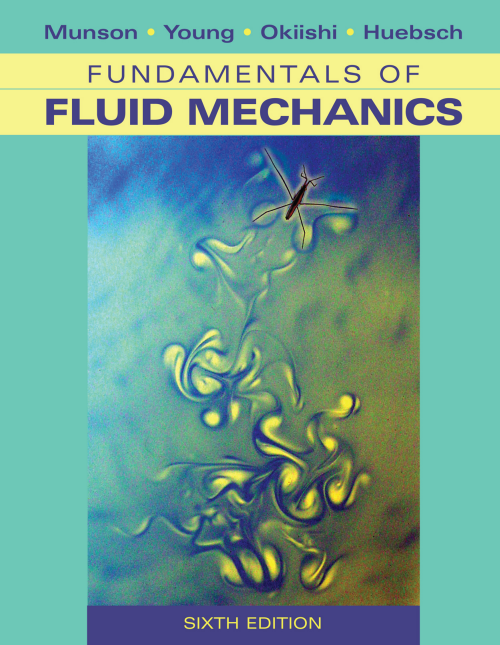
流体力学基础(第六版)核心内容整理(FundamentalsofFluidMechanics)摘要:本文为流体力学经典教材《FundamentalsofFluidMechanics》第六版,面向工科本科入门课程。全书分流体静力学、伯努利方程、控制体积分析、可压缩流、叶轮机械等十二核心章节,系统讲解流体基础物性、量纲分析、边界层、管道流动等核心理论。教材配套159段流体实景视频、超1300道分层习题,创新采用“已知-求解-点评”标准化例题格式,同时提供WileyPLUS线上数字化学习平台,内置交互式动画、自动批改题库与FlowLab简易CFD工具。书中兼顾SI与英制两套单位,结合冰山、水黾、空化等工程实例,兼顾理论推导与工程仿真实操,是流体力学入门权威教学用书。AchievePositiveLearningOutcomesWileyPLUScombinesrobustcoursewithinteractiveteachingandlearningresourcesallinoneeasy-to-usesystem.Ithashelpedoverhalfamillionstudentsandinstructorsachievepositivelearningoutcomesintheircourses.WileyPLUScontainseverythingyouandyourstudentsneed—andnothingmore,including:Theentiretextbookonline—withdynamiclinksfromhomeworktorelevantsections.Studentscanusetheonlinetextandsaveuptohalfthecostofbuyinganewprintedbook.Automatedassigning&amp;gradingofhomework&amp;quizzes.Aninteractivevarietyofwaystoteachandlearnthematerial.Instantfeedbackandhelpforstudents…available24/7.“WileyPLUShelpedmebecomemoreprepared.ThereweremoreresourcesavailableusingWileyPLUSthanjustusingaregular[printed]textbook,whichhelpedoutsignificantly.Veryhelpful...andveryeasytouse.”—StudentVictoriaCazorla,DutchessCountyCommunityCollegeSeeandtryWileyPLUSinaction!DetailsandDemo:www.wileyplus.comWhyWileyPLUSforEngineering?WileyPLUSofferstoday’sEngineeringstudentstheinteractiveandvisuallearningmaterialstheyneedtohelpthemgraspdifficultconcepts—andapplywhatthey’velearnedtosolveproblemsinadynamicenvironment.Arobustvarietyofexamplesandexercisesenablestudentstoworkproblems,seetheirresults,andobtaininstantfeedbackincludinghintsandreadingreferenceslinkeddirectlytotheonlinetext.Studentscanvisualizeconceptsfromthetextbylinkingtodynamicresourcessuchasanimations,videos,andinteractiveLearningWare.SeeandtryWileyPLUSinaction!DetailsandDemo:www.wileyplus.comWileyPLUScombinesrobustcoursemanagementtoolswiththecompleteonlinetextandalloftheinteractiveteaching&amp;learningresourcesyouandyourstudentsneedinoneeasy-to-usesystem.“Ilovedthisprogram[WileyPLUS]andIhopeIcanuseitinthefuture.”—AnthonyPastin,WestVirginiaUniversityAlgorithmicquestionsallowagroupofstudentstoworkonthesameproblemwithdifferingvalues.Studentscanalsoreworkaproblemwithdifferingvaluesforadditionalpractice.MultiPartProblemsandGoTutorialsleadstudentsthroughaseriesofsteps,providinginstantfeedbackalongtheway,tohelpthemdevelopalogical,structuredapproachtoproblemsolving.Or,theycanlinkdirectlytotheonlinetexttoreadaboutthisconceptbeforeattemptingtheproblemagain—withorwithoutthesamevalues.WileyiscommittedtomakingyourentireWileyPLUSexperienceproductive&amp;enjoyablebyprovidingthehelp,resources,andpersonalsupportyou&amp;yourstudentsneed,whenyouneedit.It’sallhere:www.wileyplus.comTECHNICALSUPPORT:AfullysearchableknowledgebaseofFAQsandhelpdocumentation,available24/7LivechatwithatrainedmemberofoursupportstaffduringbusinesshoursAformtofilloutandsubmitonlinetoaskanyquestionandgetaquickresponseInstructor-onlyphonelineduringbusinesshours:1.877.586.0192FACULTY-LEDTRAININGTHROUGHTHEWILEYFACULTYNETWORK:Registeronline:www.wherefacultyconnect.comConnectwithyourcolleaguesinacomplimentaryvirtualseminar,withapersonalmentorinyourfield,orataliveworkshoptosharebestpracticesforteachingwithtechnology.1STDAYOFCLASSANDBEYOND!ResourcesYou&amp;YourStudentsNeedtoGetStarted&amp;UseWileyPLUSfromthefirstdayforward.2-MinuteTutorialsonhowtosetup&amp;maintainyourWileyPLUScourseUserguides,linkstotechnicalsupport&amp;trainingoptionsWileyPLUSforDummies:Instructors’quickreferenceguidetousingWileyPLUSStudenttutorials&amp;instructiononhowtoregister,buy,anduseWileyPLUSYOURWileyPLUSACCOUNTMANAGER:YourpersonalWileyPLUSconnectionforanyassistanceyouneed!SETUPYOURWileyPLUSCOURSEINMINUTES!SelectedWileyPLUScourseswithQuickStartcontainpre-loadedassignments&amp;presentationscreatedbysubjectmatterexpertswhoarealsoexperiencedWileyPLUSusers.Interested?SeeandtryWileyPLUSinaction!DetailsandDemo:www.wileyplus.comSixthEditionFundamentalsofFluidMechanicsBRUCER.MUNSONDONALDF.YOUNGDepartmentofAerospaceEngineeringandEngineeringMechanicsTHEODOREH.OKIISHIDepartmentofMechanicalEngineeringIowaStateUniversityAmes,Iowa,USAWADEW.HUEBSCHDepartmentofMechanicalandAerospaceEngineeringWestVirginiaUniversityMorgantown,WestVirginia,USAToErikandallotherswhopossessthecuriosity,patience,anddesiretolearnPublisher:DonFowleyEditorialAssistant:MarkOwensAcquistionsEditor:JenniferWelterMediaEditor:LaurenSapiraMarketingManager:ChristopherRuelProductionManager:DorothySinclairProductionEditor:SandraDumasSeniorDesigner:MadelynLesureProductionManagementServices:IngraoAssociates/SuzanneIngraoCover:photoshowsthedevelopmentofvorticeswhichthewaterstriderusesformovingonthesurfaceofwaterbythetransferofmomentumfromthemovementofitslegstotheshedvortices(i.e.rowing).Thefluiddynamicsarevisualizedbyaddingthymolbluetothewatersurface.Formoreonwaterstriders,seethefollowinginthistext:Problem1.103inChapter1;FluidsintheNewstitled“Walkingonwater”inSect.1.9;andVideoV10.3“Waterstrider”inChapter10.PhotocourtesyofDavidL.HuandJohnW.M.Bush,MIT.Thisbookwastypesetin10/12TimesRomanbyAptara®,Inc.,andprintedandboundbyR.R.Donnelley/JeffersonCity.ThecoverwasprintedbyR.R.Donnelley/JeffersonCity.Thepaperinthisbookwasmanufacturedbyamillwhoseforestmanagementprogramsincludesustainedyieldharvestingofitstimberlands.Sustainedyieldharvestingprinciplesensurethatthenumberoftreescuteachyeardoesnotexceedtheamountofnewgrowth.Thisbookisprintedonacid-freepaper.∞Copyright©2009,2006,2002,1999,1994,1990byJohnWiley&amp;Sons,Inc.Allrightsreserved.Nopartofthispublicationmaybereproduced,storedinaretrievalsystemortransmittedinanyformorbyanymeans,electronic,mechanical,photocopying,recording,scanningorotherwise,exceptaspermittedunderSections107or108ofthe1976UnitedStatesCopyrightAct,withouteitherthepriorwrittenpermissionofthePublisherorauthorizationthroughpaymentoftheappropriateper-copyfeetotheCopyrightClearanceCenter,222RosewoodDrive,Danvers,MA01923,(978)750-8400,fax(978)646-8600.RequeststothePublisherforpermissionshouldbeaddressedtothePermissionDepartment,JohnWiley&amp;Sons,Inc.,111RiverStreet,Hoboken,NJ07030-5774,(201)748-6011,fax(201)748-6008.Toorderbooksorforcustomerservicecall1-800-CALL-WILEY(225-5945).Munson,BruceR.,Young,DonaldF.,Okiishi,TheodoreH.,Huebsch,WadeW.FundamentalsofFluidMechanics,SixthEditionISBN978-0470-26284-9PrintedintheUnitedStatesofAmerica.10987654321AbouttheAuthorsBruceR.Munson,ProfessorEmeritusofEngineeringMechanicsatIowaStateUniversity,receivedhisB.S.andM.S.degreesfromPurdueUniversityandhisPh.D.degreefromtheAerospaceEngi-neeringandMechanicsDepartmentoftheUniversityofMinnesotain1970.PriortojoiningtheIowaStateUniversityfacultyin1974,Dr.MunsonwasonthemechanicalengineeringfacultyofDukeUniversityfrom1970to1974.From1964to1966,heworkedasanen-gineerinthejetenginefuelcontroldepartmentofBendixAerospaceCorporation,SouthBend,Indiana.Dr.Munson’smainprofessionalactivityhasbeenintheareaoffluidmechanicseducationandresearch.Hehasbeenresponsibleforthedevelopmentofmanyfluidmechanicscoursesforstudiesincivilengineering,mechanicalengineering,engineeringscience,andagriculturalengineeringandistherecipientofanIowaStateUniversitySuperiorEngineeringTeacherAwardandtheIowaStateUniversityAlumniAssociationFacultyCitation.Hehasauthoredandcoauthoredmanytheoreticalandexperimentaltechnicalpapersonhy-drodynamicstability,lowReynoldsnumberflow,secondaryflow,andtheapplicationsofviscousin-compressibleflow.HeisamemberofTheAmericanSocietyofMechanicalEngineers.DonaldF.Young,AnsonMarstonDistinguishedProfessorEmeritusinEngineering,receivedhisB.S.degreeinmechanicalengineering,hisM.S.andPh.D.degreesintheoreticalandappliedmechanicsfromIowaStateUiversity,andhastaughtbothundergraduateandgraduatecoursesinfluidmechanicsatIowaStateformanyyears.InadditiontobeingnamedaDistinguishedProfessorintheCollegeofEngineer-ing,Dr.YounghasalsoreceivedtheStandardOilFoundationOutstandingTeacherAwardandtheIowaStateUniversityAlumniAssociationFacultyCitation.Hehasbeenengagedinfluidmechanicsresearchformorethan35years,withspecialinterestsinsimilitudeandmodelingandtheinterdisciplinaryfieldofbiomedicalfluidmechanics.Dr.Younghascontributedtomanytechnicalpublicationsandistheauthororcoauthoroftwotextbooksonappliedmechanics.HeisaFellowofTheAmericanSocietyofMechan-icalEngineers.TedH.Okiishi,ProfessorEmeritusofMechanicalEngineeringatIowaStateUniversity,joinedthefacultytherein1967afterreceivinghisundergraduateandgraduatedegreesfromthatinstitution.From1965to1967,Dr.OkiishiservedasaU.S.ArmyofficerwithdutyassignmentsattheNationalAeronauticsandSpaceAdministrationLewisResearchCenter,Cleveland,Ohio,whereheparticipatedinrocketnozzleheattransferresearch,andattheCombinedIntelligenceCenter,Saigon,RepublicofSouthVietnam,wherehestudiedseasonalriverfloodingproblems.ProfessorOkiishiandhisstudentshavebeenactiveinresearchonturbomachineryfluiddy-namics.Someoftheseprojectshaveinvolvedsignificantcollaborationwithgovernmentandindus-triallaboratoryresearcherswithtwooftheirpaperswinningtheASMEMelvilleMedal(in1989and1998).Dr.Okiishihasreceivedseveralawardsforteaching.Hehasdevelopedundergraduateandgradu-atecoursesinclassicalfluiddynamicsaswellasthefluiddynamicsofturbomachines.Heisalicensedprofessionalengineer.HisprofessionalsocietyactivitiesincludehavingbeenavicepresidentofTheAmericanSocietyofMechanicalEngineers(ASME)andoftheAmericanSocietyforEngineeringEducation.HeisaLifeFellowofTheAmericanSocietyofMechanicalEn-gineersandpasteditorofitsJournalofTurbomachinery.HewasrecentlyhonoredwiththeASMER.TomSawyerAward.WadeW.Huebsch,AssociateProfessorintheDepartmentofMechanicalandAerospaceEngineer-ingatWestVirginiaUniversity,receivedhisB.S.degreeinaerospaceengineeringfromSanJoseStateUniversitywhereheplayedcollegebaseball.HereceivedhisM.S.degreeinmechanicalengi-neeringandhisPh.D.inaerospaceengineeringfromIowaStateUniversityin2000.Dr.Huebschspecializesincomputationalfluiddynamicsresearchandhasauthoredmultiplejournalarticlesintheareasofaircrafticing,roughness-inducedflowphenomena,andboundarylayerflowcontrol.Hehastaughtbothundergraduateandgraduatecoursesinfluidmechanicsandhasdevelopedanewundergraduatecourseincomputationalfluiddynamics.Hehasreceivedmulti-pleteachingawardssuchasOutstandingTeacherandTeacheroftheYearfromtheCollegeofEngi-neeringandMineralResourcesatWVUaswellastheRalphR.TeetorEducationalAwardfromSAE.HewasalsonamedastheYoungResearcheroftheYearfromWVU.HeisamemberoftheAmericanInstituteofAeronauticsandAstronautics,theSigmaXiresearchsociety,theSocietyofAutomotiveEngineers,andtheAmericanSocietyofEngineeringEducation.PrefaceThisbookisintendedforjuniorandseniorengineeringstudentswhoareinterestedinlearningsomefundamentalaspectsoffluidmechanics.Wedevelopedthistexttobeusedasafirstcourse.Theprinci-plesconsideredareclassicalandhavebeenwell-establishedformanyyears.However,fluidmechanicseducationhasimprovedwithexperienceintheclassroom,andwehavebroughttobearinthisbookourownideasabouttheteachingofthisinterestingandimportantsubject.Thissixtheditionhasbeenpre-paredafterseveralyearsofexperiencebytheauthorsusingthepreviouseditionsforintroductorycoursesinfluidmechanics.Onthebasisofthisexperience,alongwithsuggestionsfromreviewers,col-leagues,andstudents,wehavemadeanumberofchangesinthisedition.Thechanges(listedbelow,andindicatedbythewordNewindescriptionsinthispreface)aremadetoclarify,update,andexpandcer-tainideasandconcepts.NewtoThisEditionInadditiontothecontinualeffortofupdatingthescopeofthematerialpresentedandimprovingthepresentationofallofthematerial,thefollowingitemsarenewtothisedition.Withthewide-spreaduseofnewtechnologiesinvolvingtheweb,DVDs,digitalcamerasandthelike,thereisanincreasinguseandappreciationofthevarietyofvisualtoolsavailableforlearning.Thisfacthasbeenaddressedintheneweditionbytheinclusionofnumerousnewillustrations,graphs,photographs,andvideos.Illustrations:Thebookcontainsmorethan260newillustrationsandgraphs.Theseillustrationsrangefromsimpleonesthathelpillustrateabasicconceptorequationtomorecomplexonesthatillustratepracticalapplicationsoffluidmechanicsinoureverydaylives.Photographs:Thebookcontainsmorethan256newphotographs.Somephotosinvolvesituationsthataresocommontousthatweprobablyneverstoptorealizehowfluidsareinvolvedinthem.Othersinvolvenewandnovelsituationsthatarestillbafflingtous.Thephotosarealsousedtohelpthereaderbetterunderstandthebasicconceptsandexamplesdiscussed.Videos:Thevideolibraryforthebookhasbeensignificantlyenhancedbytheadditionof80newvideosegmentsdirectlyrelatedtothetextmaterial.Theyillustratemanyoftheinterestingandprac-ticalapplicationsofreal-worldfluidphenomena.Therearenow159videos.Examples:Alloftheexamplesarenewlyoutlinedandcarriedoutwiththeproblemsolvingmethodof“Given,Find,Solution,andComment.”Learningobjectives:Eachchapterbeginswithasetoflearningobjectives.Thisnewfeaturepro-videsthestudentwithabriefpreviewofthetopicscoveredinthechapter.Listofequations:Eachchapterendswithanewsummaryofthemostimportantequationsinthechapter.Problems:Approximately30%newhomeworkproblemshavebeenaddedforthisedition.Theyareallnewlygroupedandidentifiedaccordingtotopic.Typically,thefirstfewproblemsineachgrouparerelativelyeasyones.Inmanygroupsofproblemsthereareoneortwonewproblemsinwhichthestudentisaskedtofindaphotograph/imageofaparticularflowsituationandwriteaparagraphdescribingit.EachchaptercontainsnewLifeLongLearningProblems(i.e.,oneaspectofthelifelonglearningasinterpretedbytheauthors)thataskthestudenttoobtaininformationaboutagiven,newflowconceptandtowriteabriefreportaboutit.FundamentalsofEngineeringExam:AsetofFEexamquestionsisnewlyavailableonthebookwebsite.原资料见附件免责声明:本页面/内容部分素材来源于互联网公开信息,旨在传递更多信息,不代表本平台立场。版权归原作者或机构所有,如涉及侵权,请通过平台联系我们,我们将在核实后第一时间处理。本平台对转载内容的真实性、准确性不作任何保证,用户需自行判断并承担使用风险。
有附件
未登录
还没有评论
课程
培训
服务
行家
VIP会员 学习计划 福利任务
下载APP
联系我们
帮助与反馈