首页/文章/ 详情

Altair Hypermesh中文培训初级教程第一天-电子书

6月前浏览287


Altair® HyperMesh® 初级培训 第一天

目录

前言 ………………………………………………………………………………………………………......…  3

第一章:HyperMesh简介………………..............…………...........................................….4

        HyperMesh 窗口界面…………..................................................................…………………..................................  4

        图形区 GraphicsArea....….....................................................................................................…………………....... 5

        表头栏 Header Bar………………………………………………………………………………………………5

        主菜单 Main Menu. ……………………………………………………………………………………………...5

        鼠标的使用 Using the Mouse………........................................................................................................................5

        宏菜单 Macro Menu ……………………………………………………………………………………………..5

        练习1.1: 打开数据文件……………………………..……….................................................................................... 6

        永久菜单 PermanentMenu..……………...................................................................................…..........................6

        Toggles和switches按钮……………………..............................................................................................................8

        练习1.2: 显示单元和几何……………………………………………................................................................... ..8

        使用模型浏览器控制模型的显示………………………………………..............................................................…. 9

        第二级菜单 SecondaryMenu.......………….......................................................................................................... 10

        菜单项目简介 ………………………………………………………………………………………………….  11

        练习1.3: 单元平移 Translating Elements...………………...................................................................................  14

        标准和自定义图形 Standard and Performance Graphics.…............................................................................... 16

        宏菜单介绍 Macro Menu ……… …………………………………………………………………………….. 17

        默认的宏菜单 ………………… ……………......................................................................................................... 18

        Files面板……………………… ………………………………………………………………………………...19

        Collectors面板 …………………………..............................................................................................................…20

        练习1.4: 使用Card面板 ………………………………….....................................................................................  21

        默认的HyperMesh文件 …………………...............................................................................................................22

第二章: 创建有限元分析FEA模型 ………..................................………...........................24

        创建、求解和分析有限元模型 ………………………………........................……..............................................24

        练习2.1: 提取HyperMesh数据文件 ………………………………...................…..............................................  24

        练习2.2: 创建材料集(Material Collectors).………………………........................................................................25

        练习2.3: 创建和编辑组件集(Component Collectors) ..............................…………………………………....... 25

        练习2.4: 用Spline面板创建2维单元 ……………..……………………………..................................................  26

        练习2.5: 用Line Drag面板创建3维单元 …………………………………………..............................................  27

        练习2.6: 清理模型 ………………………………………..................................................................................... 28

        练习2.7: 创建载荷集(Load Collectors)...........................……………………….................................................... 28

        练习2.8: 对模型施加约束 ………………………………………….....................................................................  29

        练习2.9: 创建力 …………………………………….............................................................................................  30

        练习2.10: 创建载荷步 …………………………………........…........................................................................... 32

        练习2.11: 使用OptiStruct求解器求解 ……………………….. ............................................................................ 34

        结果的后处理 …………………………………......................................................................................................34

        练习2.12: 观看变形后的状态 …………………………………............................................................................35

        练习2.13: 观看云图 ………………………………………...................................................................................  35

第三章: 几何清理 ……………………………....................................................................37

        GeometryCleanup面板的功能 ………………………....................................................................................... 37

        练习3.1: 读取HyperMesh文件 …………………………………......................................................................... 38

        练习3.2: 查看模型 …………………………………… .........................................................................................38

        练习3.3: 合并自由边 …………………………………………. ........................................................................... 39

        练习3.4: 删除曲面倒角 ……………………………………................................................................................. 40

        练习3.5: 生成填充曲面 ……………………………………................................................................................. 41

        练习3.6: 压缩(suppress)无必要的细节特征 ........…………………………........................................................ 41

        练习3.7: 寻找和删除孔 ……………………………………….............................................................................  42

        练习3.8: 添加固定点(Fixed Points)…………………............................................................................................ 44

        GeometryCleanup面板的功能 ………………………....................................................................................... 45

        Edges子面板 ……………………….......................................................................................................................  46

        Surfaces子面板 ………………………...................................................................................................................47

        Fixed Points子面板 ………………………............................................................................................................. 47

        Defeature面板的功能 ………………………….................................................................................................... 47

        Surface Edit / Filler Surface子面板 ………………………...................................................................................  48

第四章: 曲面网格划分 …………………............................................................................. 49

        用三角形Tria单元对曲面划分网格 ……………………........................................................................................49

        练习4.1: 创建Component Collector ……………………………………..…………… .................................... 49

        练习4.2: 对模型进行网格自动划分 ………………………................................................................................... 49

        检查单元质量 ……………………………….......................................................................................................... 50

        练习4.3: 检查单元质量 ……………………………………….............................................................................  50

        练习4.4: 检查自由边 …………………………………….....................................................................................  51

        用四面体单元划分实体网格 …………………………………..............................................................................51

        练习4.5: 创建四面体网格 ………………………………….…............................................................................. 51

        练习4.6: 观察模型内部 ……………………………………..................................................................................51

        练习4.7: 删除无必要的组件……….…………………………………..................................................................  52


前言

  • 初级培训面向的对象

初级培训课程是为那些没有使用过HyperMesh而希望利用它来掌握有限元分析技术的工程人员设计的。

这一课程包含了如下的内容: HyperMesh的界面介绍、有限元模型处理、几何清理和曲面网格划分。

每一个部分都包含了简单的练习来帮助你熟悉所有提到的新技术。

  • 手册的符号

这本手册使用了下列符号:

        courier字体表示你应当用键盘输入的内容

        bold italic粗斜体字体表示面板的名称、按键的名称和子面板的名称

非常重要的内容和警告信息会出现在一个注释方框中。
image.png


  • 更多帮助

如果你对这一课程的资料需要其他帮助,你可以看这本手册的背面找到必要的联系方式。 对这本培训手册的意见和建议可以直接发送到support@altair.com.cn。 


第一章: HyperMesh简介

HyperMesh是一个高性能的有限元前后处理器,用它可以建立有限元和有限差分模型、观察计算结果和进行数据分析。此外,还可以使用Altair公司的软件产品OS/FEA求解器来快速地进行产品性能分析并改进产品的设计。

在计算机辅助工程(CAE)里,HyperMesh是一个很重要的一个工具,下图中是整个CAE的处理过程:
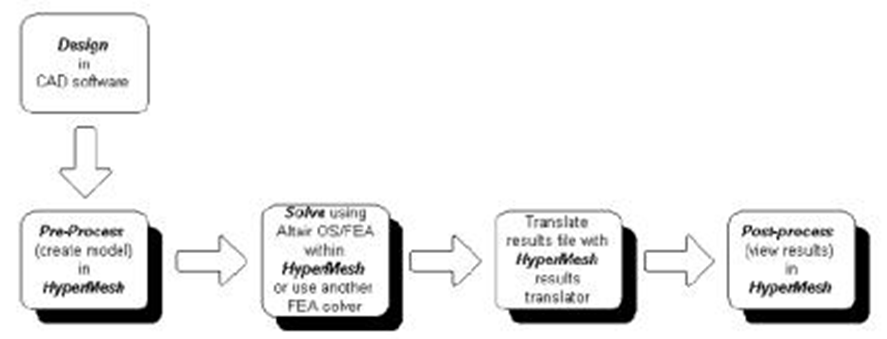
634ff6b2-15f1-40c1-aab0-0e0b455ab48f.png


  • HyperMesh窗口界面

HyperMesh的窗口界面包含五个主要区域:图形区(graphics area)、宏菜单(Macro Menu)、 表头栏(header bar)、主菜单(main menu)和永久菜单(Permanent Menu)。此外还可以使 用键盘上的功能键进入主菜单的二级菜单。下图是HyperMesh的主界面: 
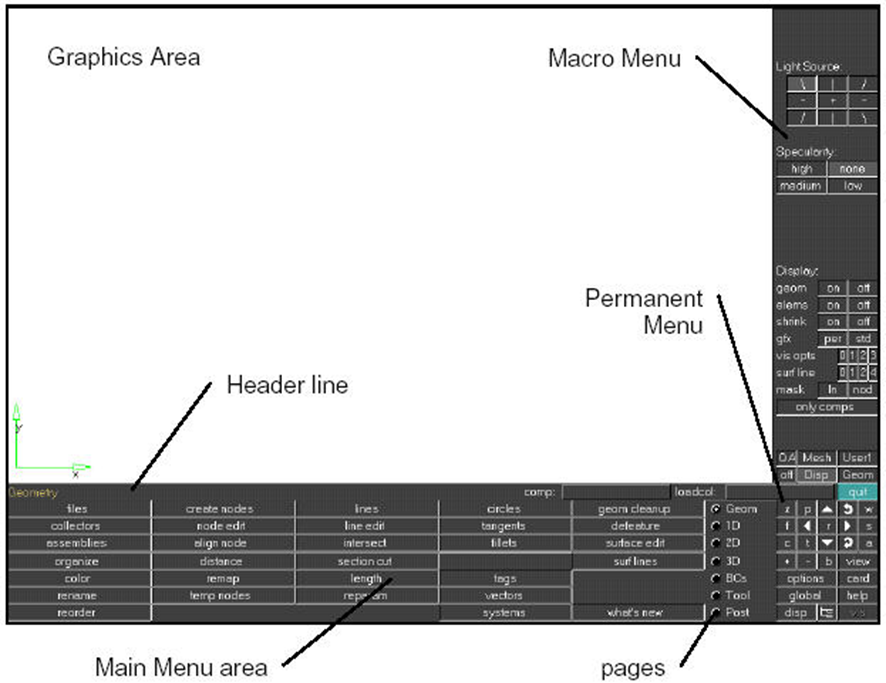
e5a2283a-4003-4e13-98d6-69a23caebab8.png


  • 图形区(Graphics Area)

图形区显示几何、有限元模型、XY曲线图和结果图。

  • 表头栏(Header Bar)

表头栏主要显示当前操作面板名称和模型的状态信息。此外,如果系统有提示信息,这些信息会暂时覆盖掉面板的名称和状态信息。

  • 主菜单(Main Menu)

主菜单内包括非常多的子菜单,HyperMesh根据其功能不同,将之分成七页:
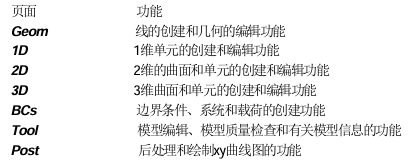
 image.png


  • 鼠标的操作

鼠标对于HyperMesh的使用是非常重要的,在几乎任何需要用户输入信息的地方都会用到它。在HyperMesh中可以使用双键或者三键鼠标。鼠标的按键有下列功能。
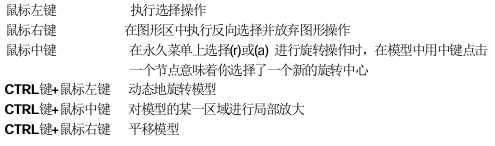
image.png

此外,用户还可以利用CTRL+C和CTRL+V的组合键来剪切和粘贴数字信息。

  • 宏菜单(Macro Menu)

用户可以在宏菜单区中个性化地设置HyperMesh界面,这种界面可以包含功能键、单选框和文本,用户可以用TCL/TK语言开发HyperMesh支持的宏与上述这些控件相关联。这个宏菜单的默认位置在屏幕的右边,在永久菜单的上方。

宏菜单的显示和可用的操作是由一个宏文件来控制的。而用户可以更改的属性包括: 

显示这个菜单的页面 

控件中显示的文字

菜单的位置和大小

在菜单标题栏中显示的帮助信息

调用的宏及其需要的可选参数

image.png


练习1.1: 打开数据文件

提取HyperMesh数据文件

1.从任何一个页面中选择files面板;

2. 点击单选按键并选择hm file子面板;这个单选框变成白色表示这个files/hm file 子面板已被激活。

3.双击file =并用浏览器选择bumper.hm这个文件;

4.点击retrieve按钮;

5.点击return退出files面板。
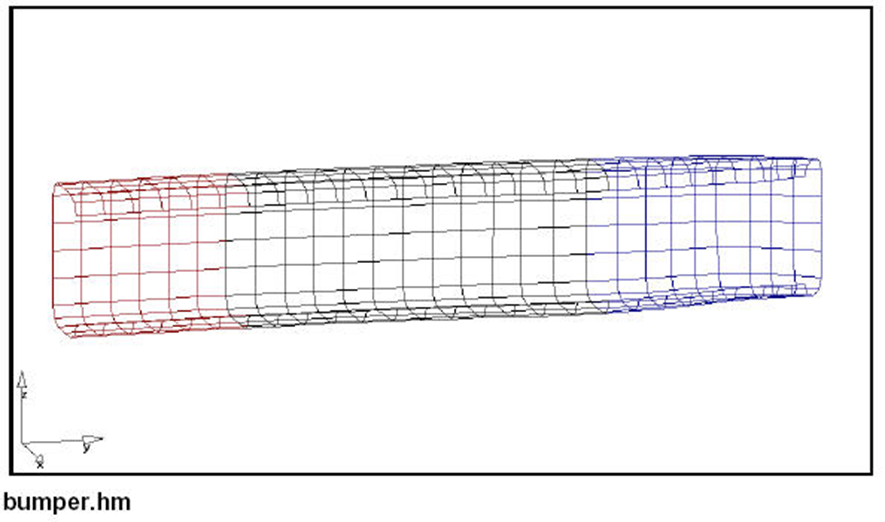
673c0ed1-51e4-4438-8cf9-dd3522d6bf7c.png

  • 永久菜单(Permanent Menu)

用户可以使用永久菜单(Permanent Menu)控制查看模型的视角,控制在图形区中需要显示哪些collectors,设置全局的模型参数并编辑与特定求解器有关的数据。

下面列举出永久菜单中的模型查看功能菜单,可以通过点击永久菜单上的相应按钮来改变图形区的的模型显示,这些功能也可以通过键盘上相同的字母或者加减号按键来实现。当然,还可以使用键盘的方向键来旋转模型。
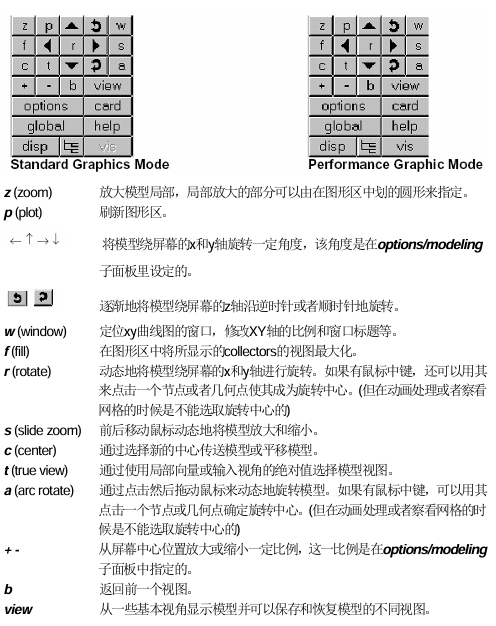
image.png


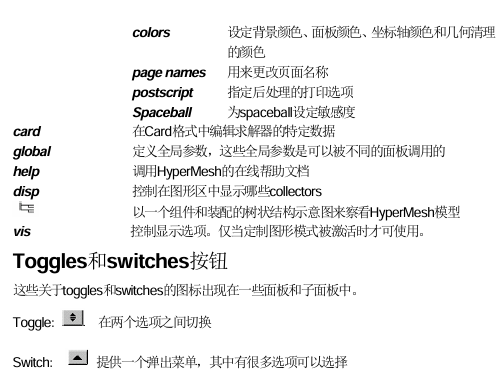
可以使用下面永久菜单中的项目进入一些面板,在这些面板中,可以设定全局参数、定制界面和控制屏幕显示等。
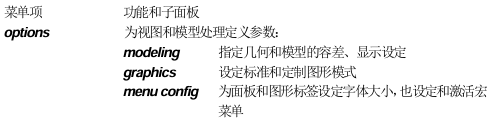
image.png


image.png


练习1.2: 显示单元和几何

在这个练习中,通过使用永久菜单中的display面板打开和关闭单元或几何的显示。

image.png


改变屏幕的显示

1.在永久菜单中,选择disp面板。

2.点击comps左边的开关(switch,如下图)。

 image.png

这样就出现了一个弹出菜单列表,列表中列出可以打开或关闭的collector的类型。当将鼠标指针移出弹出菜单以后,这个弹出菜单就关闭了。

3.从弹出菜单中选择comps以指定要显示的组件。一旦选定了comps,弹出菜单就关闭了。

4.点击elems左边的toggle键切换到geoms,这样几何类型的组件被激活。上面的图中可以看到toggle键的位置。

一个列表显示了包含几何的component collectors。在mid1_and_lines这个component collector前面的复选框中有一个标记,它表示该组件的几何现在显示在图形区内。

5.在mid1_and_lines这个组件前的复选框上或者该组件的名称上点击鼠标右键,这个复选框中就不再有白色标记了。该组件中的几何显示就被关闭。

6.在永久菜单上点击p刷新图形区。

7.点击toggle键将其切换到elems。

一个列表显示了包含单元的component collectors。在end1,end2, mid1_and_lines和 mid2这些component collector前面的复选框中有一个标记。 

8.在end1和mid1_and_lines这两个组件前的复选框上或者其名称上点击鼠标右键,其中就不再有白色标记了。这两个组件中的单元显示就被关闭。

9.在永久菜单上点击p刷新图形区。

10.在图形区中,点击一个蓝色的单元(在靠近其控制点的地方点击)。单元的控制点是 指其质心的那个点。于是相应的在end2之前的那个复选框中的白色标记也消失了。整个 end2这个collector的所有单元的显示都被关闭。 

11.在end2这个组件前的复选框上或是其名称上点击鼠标左键。复选框中出现了白色标记了。这两个组件中的单元显示重新被打开。

12.点击all这个按钮。所有的组件集中的所有单元都被显示出来,相应的复选框里也都有了标记。

13.点击return退出display面板。


使用模型浏览器控制模型的显示

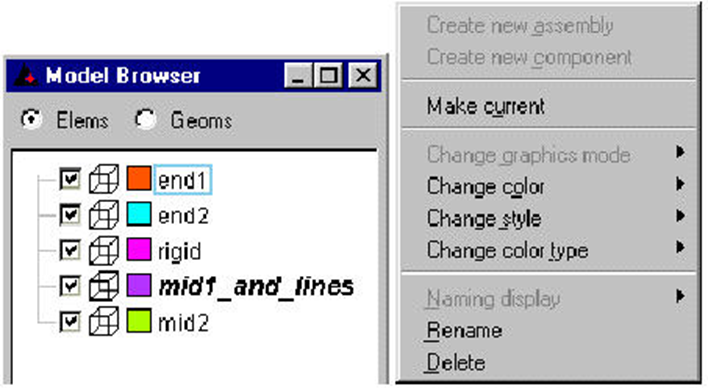
控制模型的显示属性的另一个方法是使用模型浏览器。通过这个方式,模型的层次展现在一个树状结构中。组件的显示属性,例如颜色、显示类型、名称和当前组件等,都可以通过一个菜单来设置。这个菜单可以用鼠标右键点击模型浏览器来激活。

1.点击永久菜单上的模型浏览器按钮image.png来激活模型浏览器。

模型浏览器出现一个新的窗口中。重新设置该窗口的大小或者为其重新定位的过程与原先的HyperMesh窗口无关。

2.点击模型浏览器顶部Elems旁边的单选键。

3.点击对应于某个组件的复选框可以控制该组件的显示,选中表示打开,去掉表示关闭。

4.在mid1_and_lines这个组件的名称上点击鼠标左键。 环绕这个组件名称的蓝色的光标表示它已经被选中了。 

5.点击鼠标右键。出现一个弹出菜单,这个菜单上有一系列可以应用于这个被选中的组件的选项。

6.选择Make current这个选项。于是mid1_and_lines这个组件的名称变成了粗斜体字母,它表示这个组件是当前被激活的组件。
36b39d53-1046-466e-9c97-f6b3482455b8.png


菜单上对这个组件可用的选项包括:激活该组件使之成为当前组件,改变其颜色,改变其 显示方式(仅当处于performance图形模式下),以及重命名或者删除该组件。

菜单上有些选项是不可用的,这是因为它们不能被用于指定的组件。这些不可用的选项包 括:在standard和performance这两种图形模式间切换,创建新的装配或组件,或者改变 名称的显示模式。要使用这些选项,在模型浏览器的窗口里(但不要在某个特定的组件名称上)点击鼠标右键。

7. 在组件列表之外点击鼠标右键,然后在弹出菜单中选择Create new assembly,如果 需要可以改变新建装配的名称。

装配是指组件的功能性群组,它被用来组织模型。在模型浏览器中,可以通过拖拽鼠标将 组件添加到一个装配中。  8. 将end1, end2 mid1_and_lines和mid2这些组件拖到这个新的装配中。在拖拽过程中, 当装配的名称出现高亮度时放开鼠标。  现在,点击这个装配对应的复选框就可以控制整个装配的显示了。同样,点击树状结构上 这个装配前面的减号就可以不显示装配中的组件。

9. 在组件列表之外点击鼠标右键,然后从弹出菜单中选择Change graphics mode,再 选择performance切换到定制的图形模式。 在performance图形模式中,可以点击组件当前显示方式的按钮,随后可以在出现的选项 里控制该组件的显示方式。同时还可以使用每个组件的Change style菜单来控制其显示方式。

10. 点击模型浏览器右上角的小“X”按钮关闭模型浏览器。 


更多内容见附件


免责声明:

本页面/内容部分素材来源于互联网公 开 信 息,旨在传递更多信息,不代表本平台立场。

版权归原作者或机构所有,如涉及侵权,请通过平台联系我们,我们将在核实后第一时间处理。

本平台对转载内容的真实性、准确性不作任何保证,用户需自行判断并承担使用风险。

附件

免费E2-Altair Hypermesh中文培训初级教程第一天-电子书.pdf
HyperMesh
著作权归作者所有,欢迎分享,未经许可,不得转载
首次发布时间:2026-04-10
最近编辑:6月前
仿真支持爱好者
在仿真的路上越走越远
获赞 333粉丝 27文章 318课程 0
点赞
收藏
作者推荐

学术论文-脉冲式点焊钨极气体保护焊过程中电弧 - 熔池耦合的瞬态统一模型

ATransientUnifiedModelofArc-WeldPoolCouplingsduringPulsedSpotGasTungstenArcWeldingA.Traidia1,2,F.Roger*,11ENSTAParistech,DepartmentofMechanicsUME2AREVANP,TechnicalCenter*Correspondingauthor:ENSTAParistech,DepartmentofMechanicsUME,Chemindelahunière,91761Palaiseau,FRANCE,frederic.roger@ensta-paristech.frAbstract:AtransientfiniteelementmodelhasbeendevelopedtostudytheheattransferandfluidflowduringpulsedspotGTAweldingonstainlesssteel.Temperaturefield,fluidvelocityandelectromagneticfieldsarecomputedinsidethecathode,arc-plasmaandanodeusingaunifiedMHDformulation.Theevolutionoftheheatfluxandcurrentdensityatthetopsurfaceoftheanodearestudiedduringtheweldingprocess.Theelectricheatingfluxattheanodewhichrepresentstheenergyabsorbedbytheworkpiecefromtheelectronscomingfromthecathodeisfoundtobethemajormechanismofheating.Theproposednumericalmodelalsopermitstostudythetimeevolutionoftheweldpooldimensionsforbothconstantandpulsedcurrent.Acomparisonshowsthattheuseofapulsedcurrentweldinggivesawideranddeeperweldshapethanthemeanconstantcurrentwelding.Thepresentworklaysafoundationforthefuturedevelopmentofathree-dimensionalmodelformovingtorcharcwelding.Keywords:Heattransfer,Fluidflow,Arcplasma,Unifiedmodel,Marangonieffect.1、IntroductionDuetothewidespreaduseofGTAweldinginthemanufacturingindustry,thenumericalsimulationofsuchaprocessiscurrentlyingreatprogress.Themaingoalistostudytheimpactoftheweldingparameters(weldingcurrent,arclength,pulsefrequency,weldingspeed…)onthefinalweldshapeinordertoimprovetheweldingqualityandincreaseproductivity.Thecomplexityofthenumericalmodelingisduethestrongcouplingsbetweenmanyphysicsinvolvedinthisprocess.Theionizationoftheshieldinggasensuresthecurrentflowbetweenthetwoelectrodes,thentheheatingJouleeffectcreatesathermalplasmacomposedofelectrons,ionsandneutralspeciesatalargetemperaturerange;from300Ktomorethan20000K.Theworkpieceisthenheatedfromboththearc-plasmaconduction,andtheelectronsflowatthetopsurface.Dependingonthemeltingtemperatureoftheworkpiece,aweldpoolisformedinwhichthefluidflowisgovernedbytheMarangonieffectatthetopsurface,thebuoyancyforcesandtheelectromagneticforcescreatedbythecurrentflow.Thefluidflowinsidetheweldpoolisalsostronglycoupledtothetemperaturefieldandthedeformationofthetopfreesurface.ManynumericalmodelsofspotGTAWareavailableintheliterature[1-5].Mostofthemconsideronlyonepartoftheweldingprocess[14](eitherthecathode,orthearcplasma,ortheanode)whichleadstofixsomeboundaryconditionsthatdonotrepresenttherealsituations.Thebestwaytodealwiththeproblemistotakeintoaccountthethreeparts(anode,cathodeandarc-plasma)inaunifiedformalism.Theinterfacesbetweentheplasmaandtheelectrodesarethenconsideredasinternalboundaries.ThisapproachwasproposedbyLowkeandTanakaetal[5]andgivessatisfyingresultsforconstantcurrentwelding.Inthepresentwork,aunifiedfiniteelementmodelisintroducedtakingintoaccountthethreepartsoftheweldingprocess.Thetime-dependentmodelcansimulatepulsedcurrentweldinginwhichtheweldingcurrentvarieswithtimeatagivenfrequencybetweentwoconstantvalues;thepeakcurrentandthebackgroundcurrent.Thispermitstostudythetransientevolutionofsomephysicalquantitiesatthetransitionbetweenthepeakandbackgroundtimesbutalsotocompareweldingunderpulsedcurrentwithweldingunderthemeancorrespondingconstantcurrent.2.Mathematicalformulation1.1GoverningequationsThemathematicalformulationisbasedonthefollowingassumptions:ThestudyisrestrictedtospotGTAW;anaxisymmetriccoordinatesystemisused.ThearccolumnisassumedtobepureargonatLocalThermodynamicEquilibrium.Thegasplasmaandmoltenmetalareincompressible.AweakcouplingisconsideredbetweenthefreesurfacedeformationandtheMagnetoHydrodynamic(MHD)calculations.Thetemperature,velocityandpressurefieldsarecalculatedinthethreedomainsusingtheclassicalconservationequationswritteninaunifiedtransientformalismasfollows:Whereisvelocity,Tistemperature,ρispressure,ρisdensity,isanequivalentspecificheatthattakesintoaccountthelatentheatoffusionistheliquidfractionassumedtovarylinearlywithtemperatureinthemushyzoneandequals1intheweldpooland0elsewhere.kisthermalconductivityandμistheviscosity.TheBoussinesqapproximationisusedtocomputetheconvectionforcesinsidetheweldpool.βisthemetalthermalexpansionandistakenasthesolidustemperature.IntheweldpoolthevolumetricheatsourceistheJouleeffectandtheenthalpicflux,andinthearcplasmawetakeinadditiontheradiationlosses,usuallyapproximatedby,whereisthenetemissioncoefficientofargonthatvarieswithtemperature.ThedeterminationoftheelectromagneticforcesandthejouleeffectinbotharcplasmaandworkpiecerequiresthecomputationofthecurrentdensityjandthemagneticfluxB.Toachievethis,thecoupledcurrentcontinuityandthemagneticpotentialequationsarecomputedasfunctionoftheelectricpotentialVandthemagneticpotentialvectorAasfollows:Thecurrentdensity,electricfieldandmagneticfluxarethencomputedfromVandAasfollows:Itisimportanttonoticethattheeddycurrentcreatedbythetimevariationoftheweldingcurrentistakenintoaccountintheaboveexpressions.Thefreesurfacedeformationφ(r)isdescribedbythefollowingPDEobtainedfrom[2]:Whereφisthefreesurfacedepression,Paisthearcpressure,γisthemoltenmetalsurfacetensionandλisaLagrangianmultiplierusedtotakeintoaccountthemassconservationconstraint:1.2BoundaryconditionsThecomputationaldomainisshowninFigure1.Asseentheworpieceismadeoftwosubdomainsinordertouseafinermeshsizefortheweldpoolformation.AlltheboundaryconditionsarelistedinTable1;themostimportantpointsarediscussedbelow;Attheinterfacebetweenarcplasmaandtheanode(GD)thefollowingconditionsmustbesatisfied[5]:Figure1.Computationaldomain(dimensionsinmm)Thefirstconditionshowsthatthenormalheatfluxattheanodeiscomposedbytheheatingconductionfluxfromtheplasma,theheatingelectricflux(whichrepresentstheenergytransferredfromtheelectronstotheanode)andthecoolingradiationlosses.istheanodeworkfunctionandistheStefan-Boltzmannconstant.ThesecondconditionmeansthatthetotalshearstressisthesumofthearcdragforceandtheMarangoniforce.andarerespectivelyalocaltangentvectorandthenormalvectortothetopfreesurface(nisdirectedtowardtheplasmadomain).isthesurfacetensioncoefficient,whichhasbeenreportedtohaveabigimpactontheflowdirectionsinsidetheweldpool[1-4].ItsdependenceontemperatureTandsulfuractivityisconsideredusingtheexpressiondevelopedbySahooandDebRoyetal[6]asfollows:Alongtheinterfacebetweenthearcplasmaandthecathode(HIJB),thenormaldiscontinuityoftheheatfluxisexpressedasfollows:WhereiVandcarerespectivelytheargonionizationpotentialandthecathodeworkfunction.ijandejarerespectivelytheioncurrentandelectroncurrentcalculatedfrom:arerespectivelytheRichardson’sconstant,theeffectiveworkfunctionforthermionicemissionandtheelementarycharge.Table1:Boundaryconditions3.NumericalsimulationresultsThenumericalmodelisappliedtoanAISI304stainlesssteeldiskcontaining290ppmsulfurwith8mmthickness.ThethermophysicalpropertiesofAISI304ssarelistedintheappendix.Thepropertiesofpureargonaretakenfrom[7].Thegasinflowrateisfixedto30L/min.Table2liststheotherweldingparameters.Table2:WeldingparametersFigure2presentsthetimeevolutionofthecomputedsolutionattheendofthebackgroundtime(left)andthepeaktime(right)everyfiveperiods.Itisrepresentedthetemperaturefieldandtemperaturecontoursinsidethearcplasmaandtheelectrode,thenormalizedvelocityfieldandstreamlinesinsidethemoltenweldpool.Duringthepeaktimethearcisbell-shapedandthemaximumoftemperatureandvelocityfieldsarehigherthanduringthebackgroundtime.Theobtainedvaluesforthemaximumofplasma-jetvelocityandplasmatemperatureareingoodagreementwiththeliterature,infactfora150Acontinuouscurrentwelding17000Kforthemaximumtemperatureand150m/sforthemaximumvelocityarereviewed[5].Wecanalsonoticethatthevariationsoftemperatureandvelocityfieldsinsidetheplasmacolumnbetweenthepeaktimesarenegligible;thisisalsothecaseforthebackgroundtimes.Thedynamicoftheweldpoolflowisstudiedbyconsideringthestreamlinesofthevelocityfield.WecanclearlyidentifyineachfiguretwovorticesnamedAandB.TheyresultsfromtheMarangonieffectatthetopsurfaceoftheweldpool,thesizeofeachvortexisrelatedtobothtemperaturedistributionatthesurfaceandsulfurcontentoftheworkpiece.Detailsaboutthedynamicvariationofthesevorticesandtheirinfluenceontheweldpoolevolutionareavailableinourpreviousworks[4].Figure3showstheanodicheatfluxdistributionduringthetransitionfromthelastpeaktime(t=14.5s)tothelastpeaktime(15s).Duringthebackgroundtimethemaximumofanodicfluxisaround43W/mm².Thetransitionisthenveryfast;inapproximately15μstheheatfluxseemstostabilizeespeciallyatthecenterofthediskandreachesamaximumof56.6W/mm².Thenumericalmodelpermitstostudytheenergytransferbetweenthearcplasmaandtheworkpiece.Figure4showstheradialevolutionoftheheatfluxattheanodeatthelastpeakandbackgroundtimes(t=14.5sandt=15s).Ineachfigureitisrepresentedthetotalheatfluxanditselementarycontributions,namely;theelectricflux,theconductionfromthearcplasmaandtheradiationlosses.Figure2.MHDsolutionsatbackgroundtimes(left)andpeaktimes(right)fordifferentperiodsFigure3.EvolutionoftheanodicheatfluxatthetransitionbetweenthebackgroundtothepeaktimeFigure4.AnodicheatfluxanditselementarycontributionsatthelastperiodofheatingTheelectricfluxisfoundtobethemostsignificantfactorinbothpeakandbackgroundtimes.Itrepresentsaround80%ofthetotalenergytransferredtotheworkpiece.Thecontributionoftheconductiveheatfluxfromtheplasmarepresentaround30%andthecoolingradiationlossesareunder10%ofthetotalheatflux.Figure5showsthetimeevolutionoftheweldpoolhalf-widthanddepthforthepulsedcurrent80/160Aandthecontinuousmeancurrent120AEventhoughthetwocasesareenergeticallyequivalent,thepulsedcaseproducesadeeperandwiderweldpoolthanthecontinuouscase,especiallyfortheweldpooldepth.Thisconclusiongoeswithwhatiscommonlyobservedbywelders.Figure5.Evolutionoftheweldpoolsizeforthepulsedcurrent80/160Aandthemeancurrent120A4.ConclusionsAtransientunifiedmodelofpulsedspotGTAWhasdevelopedusingCOMSOLMultiphysics.Thenumericalsimulationallowedabetterunderstandingoftheheattransferbetweenthearcplasmaandtheelectrodes.Theheatingthermionicemissionattheanodewasfoundtobethemostimportantheatingeffect.Theresultsshowedthatforagivenlevelofenergy,itismoreinterestingtouseapulsedcurrentweldingthanthemeanconstantcurrenttogetabetterweldsize.5.ReferencesW.H.KimandS.J.Na.Int.J.HeatMassTran.,41,3213-3227(1998)H.G.Fan,H.L.TsaiandS.J.Na.Int.J.HeatMassTran.,44,417-428(2001)F.Lu,S.Yao,S.LouandY.Li.Comput.Mater.Sci.,29,371-378(2004)A.Traidia,F.RogerandE.Guyot.Int.J.Therm.Sci.,49,1197-1208(2010)M.TanakaandJ.J.Lowke.J.Phys.D:Appl.Phys.,40,R1-R23(2007)P.Sahoo,T.DebRoy,M.T.McNallan.Metall.Trans.B.,19B,483-491(1988)P.Fauchais,M.BoulosandE.Pfender,Thermalplasma,fundamentalsandapplications,(1994)6.AcknowledgementsThisresearchwassupportedbytheTechnicalCenterofweldingatAREVANP,FRANCE.TheauthorsaregratefultoLahceneCherfa,AlexanderChidleyandCatherineHolmfortheirhelpontheresultsprocessing.AppendixTable3:Materialpropertiesoftheusedmaterials.免责声明:本页面/内容部分素材来源于互联网公开信息,旨在传递更多信息,不代表本平台立场。版权归原作者或机构所有,如涉及侵权,请通过平台联系我们,我们将在核实后第一时间处理。本平台对转载内容的真实性、准确性不作任何保证,用户需自行判断并承担使用风险。
未登录
还没有评论
课程
培训
服务
行家
VIP会员 学习计划 福利任务
下载APP
联系我们
帮助与反馈