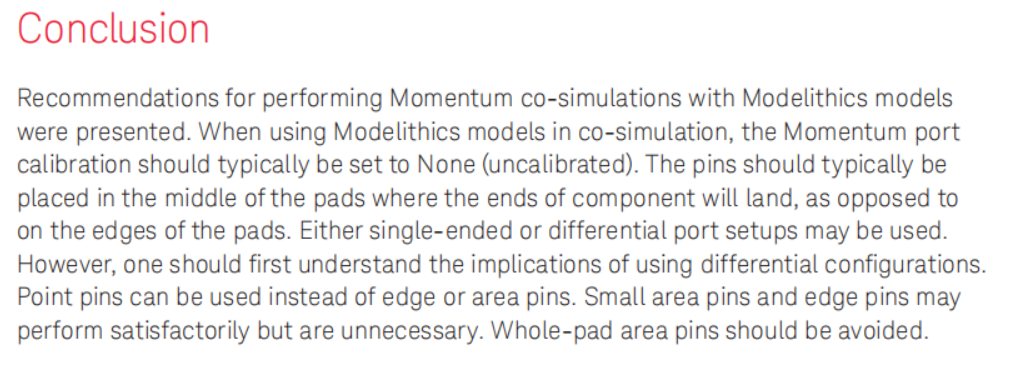
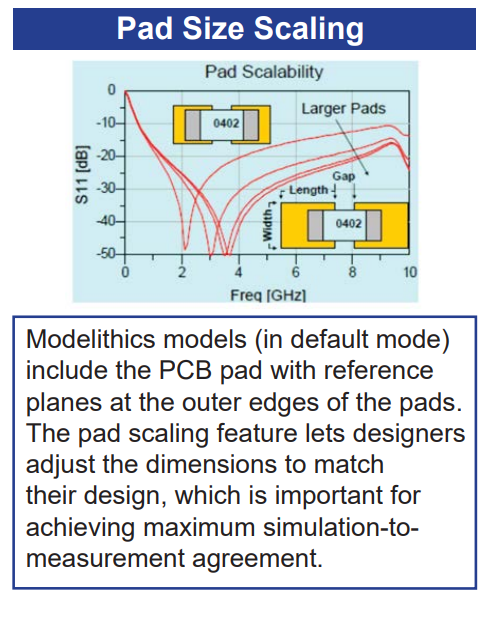
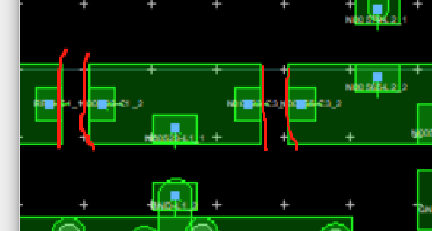
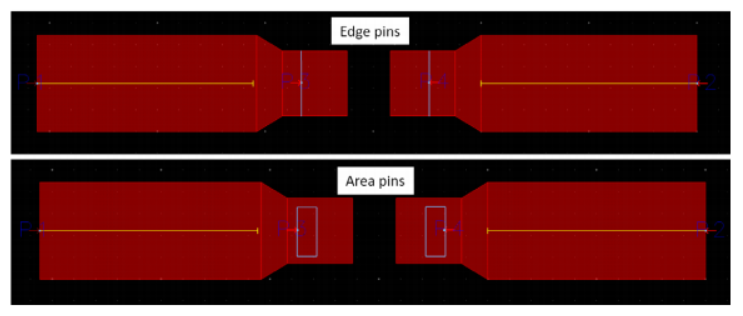
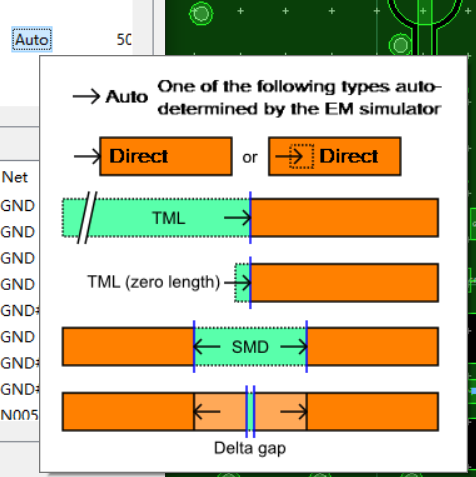
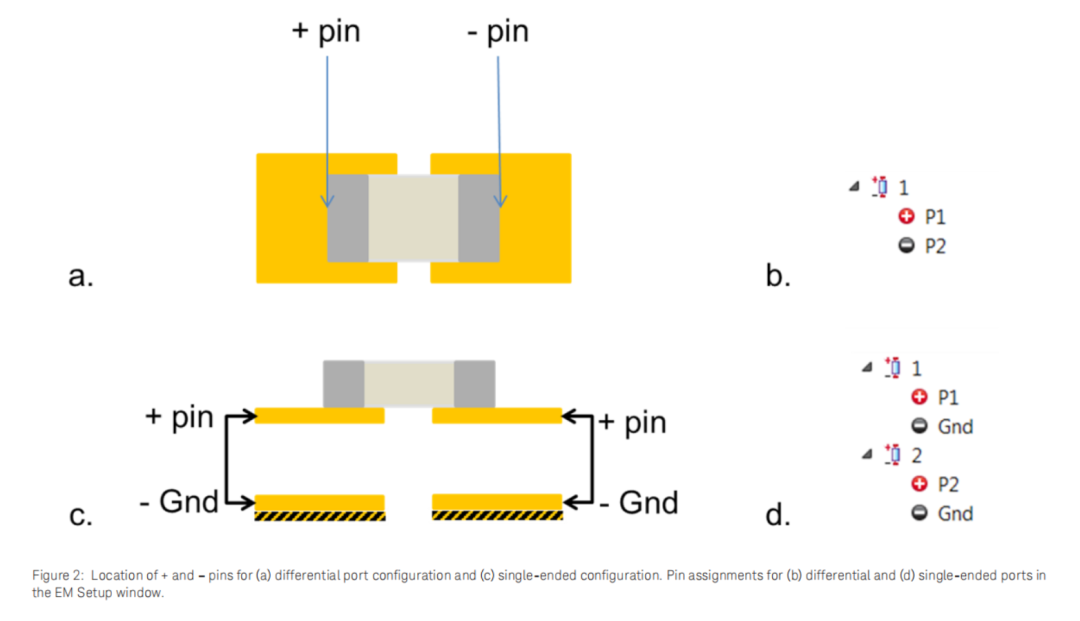
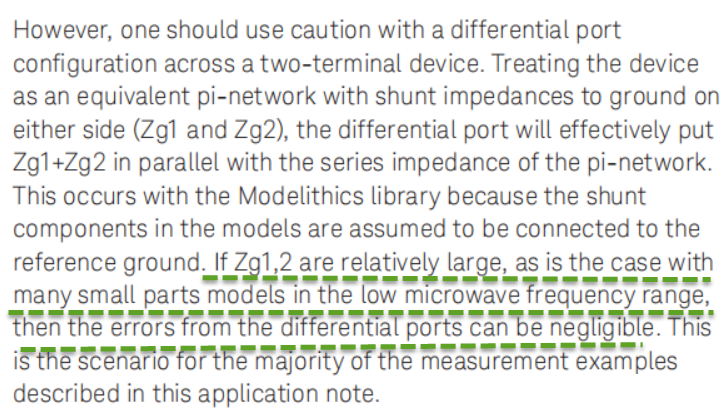
今天阅读了Keysight的应用文档,题目是: 这篇文档,如题,主要讲解了基于Modelithics Models的在Momentum上各种端口的设置,最后,给了如下结论。可以分句来读一下。Recommendations for performing Momentum co-simulations with Modelithics models were presented. 表示说,这个推荐是基于Momentum和Modelithics models的;文中使用的Modelithics model中设置的模式都是2,当选用这个模式时,模型中整个焊盘的效应被去除掉了,然后考虑的就是layout上面的焊盘。不得不说,真的很严谨啊。毕竟这个焊盘的影响,也不容小觑哦。从村田下载的designkit中,肯定是已经包含了焊盘的影响的,然后我在仿真的时候,又新建了焊盘,而且这个焊盘,大概率还比村田测试用的焊盘要大,比如我现在是搞成这样。但是文档中,是特地把器件的焊盘都缩小了。想到这,纠结。2GHz的就先这样吧,主打个低成本。等10GHz的时候,再好好考虑这些事。好在10GHz的时候,集总器件也用的少了。When using Modelithics models in co-simulation, the Momentum port calibration should typically be set to None (uncalibrated).表示说,在使用模式为2的Modelithics model时,Momentum port端口设置成none,是比较OK的。通篇阅读下来,在设置成none时,和测试结果最吻合。这个none模式,在后来的版本中改成了direct,我现在用的是2022版,不知道更新的版本有没有改变。在2022版本的feed type中,还有一个Auto,当在设置界面悬停鼠标时,会看到这个,意思是自动档的。不过看help文件的话,会有指出目前的Auto只指向direct.The pins should typically be placed in the middle of the pads where the ends of component will land, as opposed to on the edges of the pads.这个是说,端口的位置应该是放在焊盘的中间位置,即器件的端点处。Either single-ended or differential port setups may be used. However, one should first understand the implications of using differential configurations.上面所说的单端和差分端口如下图所示。在有的情况下,单端端口和差分端口都能获得类似的结果,不过差分端口有时候会引入误差。原因如下。Point pins can be used instead of edge or area pins. Small area pins and edge pins may perform satisfactorily but are unnecessary. Whole-pad area pins should be avoided.点管脚的效果OK。不过,回到第一句,Recommendations for performing Momentum co-simulations with Modelithics models were presented. 以上都是基于上述测试状态下得到的结果。所以,也不能说,上述的结论是适用于任何情况。ADS里面出来这么多pin的方式,肯定是有相应的使用场景的。 来源:加油射频工程师