首页/文章/ 详情

数值传热学第二版_陶文铨

2月前浏览847

第2版前言

《数值传热学》第1版自1988年发行以来,蒙国内广大同行与读者的 厚爱,纷纷采用作为研究生教学的教材或参考书;不少海外华人学子,也 常把本书作为传热问题数值计算的参考用书。本书并两次被中国科学时 报公布为全国引频次数最高的前20本专著之一,先后重印两次,总发行  量7000余册,对促进我国的计算传热学的教学与研究工作的开展起到了 一 定的作用。在这10余年中,随着计算机工业的突飞猛进的发展,流动 与传热问题数值计算的方法也有了飞速的进步,很有必要对第1版的内 容作一修订。2000年教育部研究生工作办公室批准推荐本书作为全国 的研究生教材,趁此机会,笔者对本书第1版的内容作了较大的修改。

在修订本书时,笔者仍将它定位在研究生学习流动与传热的一本人 门性教材的层次上,旨在使读者通过本书的学习,能够较好地攀握一种数  值计算方法,熟练地使用目前已在我国高等学校广泛使用的教学程序,并  在此基础上开发适用于更复杂问题的计算软件或能高效地使用现代商业  软件,获得所需要的结果。因此,在众多的数值离散方法中,本书着重介 绍发展成熟、应用广泛的有限容积法;在有限容积法的区域离散、方程离  散、压力与速度耦合关系的处理、代数方程的求解等环节方面,笔者也作 了必要的限定:区域离散方法不涉及非结构化网格;方程离散中不引入高  阶组合格式;压力与速度耦合方法方面着重于SIMPLE   系列算法;代数  方程求解方法不介绍共轭梯度型的一些方法。和第1版中一样,本书不  涉及辐射换热问题的数值解。这样有所为、有所不为地组织内容的目的 在于使初学者能在有限的时间内较好地掌握一种有效的数值方法,不仅 对总体内容有透彻的了解,而且也能知道必要的实施细节。根据作者近  20年来的教学经验,这是学习数值计算的一种有效方法。

在上述界定的范围内,本书对近10余年中发展出来的或广泛应用的 方法作了必要充实与完善,删去了一部分内容简单或应用不广的方法和相应的文献,增加了这10余年中有代表性的文献350余篇。各 章 的 主 要  修改如下。在绪论一章中,增加了描写传热与流动向题的控制方程、边界  条件及控制方程分类的系统介绍。对区域与方程离散化及离散方程误差  与性能分析两章(第2,3章)在保持原来的基本内容情况下对叙述方式作  了改进,也增加了近年来的一些表示方式。第1版中导热问题数值计算  方法与管道内充分发展对流换热的计算两章合并成1章(第4章),以节  省篇幅。第5章(对流一扩散方程的离散格式)增加了离散格式的重要性  及两种离散方式的介绍,以使读者能对这一问题有一个总体的了解,在高  阶格式讨论中增加了延迟修正方法、QUICK 的源项表示方法,同时介绍 了三维对流一扩散方程的离散方程,本章中剧去了文献中很少应用的斜  迎风格式、局部分析解与CONDIF  格式的介绍。第6章(求解柄圆型流  动与换热问题的原始变量法)删去了 PUMPIN  算法,增加了SIMPLEX,      及加速SIMPLER   算法的内容,同时引人了同位网格上SIMPLE  算法。 按照数值计算的顺序,第2版中把离散方程的求解安排在第7章,并且增  加了有关采用多重网格求解的内容。在涡量—流函数法一章(第8章)的  介绍中,保留了基本的内容,删去了二维通用方程离散的部分,使篇幅得  以精简。鉴于工程数值计算中大量遇到的是椭圆型问题,第2版中删去  了边界层型问题数值解的全部内容(原第9章)。从第1章到第8章是本  书的基本部分,学时较少的课程可以把教学内容主要限在这8章。由于  工程问题中的流动与换热大多属于湍流范围,第9章关于溜流模型的介  绍此次修订作了较大的增补,引入了非线性k-e    模型,RNGk-e     模 型 , 多尺度k-e    模型及二阶矩模型等内容。在网格生成技术(第10章)的介  绍中,删去了第1版中关于三角形网格及一般正交曲线坐标系的介绍,着  重在用代数方程及微分方程法生成网格方法的介绍,同时叙述的顺序也  作了调整,沿着网格生成、计算平面求解的顺序来开展,结合实例增加了  利用计算平面的结果进行数据整理的介绍,并对块结构化网格作了简要  说明。本版第11章命名为“专题”,一个目的是通过三个典型常见的问  题,使读者对如何运用已具有的知识求解较复杂的实际问题有进一步的  体会与训练,任课教师可以根据自己从事数值模拟的经历对内容做相应  的选择或增删;同时通过对基准解、数值计算误差分析及商业软件的介绍  进一步扩大数值计算及其应用的知识面。考虑到过去10余年中我国计  算传热学的发展情况,并为了节省篇幅,第1版中的附录均已删去。读者  如果需要实施压力与速度耦合算法的教学程序,可通过电子邮件向笔者索取。

本书中所引的笔者及其研究生的工作都是在国家自然科学基金、教 育部博士学科点专项基金以及国家重点基础研究项目(G2000026303)资 助下进行的,笔者在此深表谢意。

每当笔者完成一篇论文或一本书稿时,总是情不自禁地想起指导笔  者走上传热学与数值传热学研究道路的导师,上海交通大学杨世铭教授  和美国明尼苏达大学EM    Sparrow 教授,杨世铭教授曾热情地为本书第1 版作序,Sparrow 教授则鼓励笔者写出英文的书稿,笔者在此向两位导师  表示深深的敬意。笔者感谢教育部研究生工作办公室批准推荐本书作为  研究生教材,感谢西安交通大学研究生院及西安交通大学出版社为出版  本书第1版及第2版所给予的支持与帮助,特别是总编辑杨洪森教授和  责任编辑朱兆雪编审,为了第2版的早日问世给笔者提供了许多方便,朱  兆雪编审详细地审阅了书稿,避免了不少错误,使本书增色不少。清华大  学工程力学系过增元教授和陈熙教授对本书第1版和第2版的出版给予  了热情的帮助,过增元教授对第2版的修改提出了宝贵的建议,陈熙教授  指出了第1版中个别欠妥之处,笔者衷心地感谢他们。笔者的同事,西安  交通大学能源与动力工程学院的王秋旺、何雅玲两位教授给笔者的写作  提供了不少支持与帮助,笔者所在的cfd-nht     及强化传热研究组对笔者  的修改大纲提出了许多改进意见,研究生届治国、曾 敏 ,同事王育清为本  书的出版事务提供了不少帮助,笔者在此向他们一并表示谢意。笔者还  要感谢过去10余年中所指导过的博士研究生们,是他们在读期间及毕业  后的出色工作,丰富了本书的内容。例如关于QUICK  格式延迟修正实  施方式中源项的表达式是杨茉教授在目本作研究时完成的,关于促进  SIMPLER  算法收敛速度的方法是宇波博士在日本九州大学做博士后研  究时提出的,这些内容都已收集在第2版中。最后笔者要感谢自己的妻  子与儿子,是她(他)们为笔者提供了有利于写作的环境,并给予了精神上  的支持与鼓励,使得笔者能在较短期内完成本书第2版的修改工作。

作者才疏学浅,加之时间匆促,书中错误和不足之处在所难免,敬希 读者批评指正。


陶文铨

2001年5月

wqtao@xjtu.edu.cn


第1章  绪论

流动与热交换现象大量地出现在自然界及各个工程领域中,其具体 的表现形式多种多样。从现代楼宇的暖通空调过程到自然界风霜雨雪的  形成,从航天飞机重返大气层时壳体的保护到微电子器件的有效冷却,从 现代汽车流线外型的确定到紧凑式换热器中翅片形状的选取,无不都与  流动和传热过程密切相关;而各种生产电力的方法几乎都是以流体流动 及传热作为其基本过程的。所有这些变化万千的流动与传热过程都受最  基本的3个物理规律的支配,即质量守恒、动量守恒及能量守恒。本章的 基本目的是从数值传热学的角度,向读者介绍在流动与传热问题中这些  守恒定律的数学表达式——偏微分方程(称为控制方程,governing equa-   tions),   使一个过程区别于另一个过程的单值性条件(初始条件及边界条 件,initial   and    boundary   conditions),不同形式的控制方程对数值计算结  果的影响,以及用数值方法对控制方程进行求解的基本思想和常用的数  值方法。最后介绍本书的主要内容。

1.1     描写流动与传热问题的控制方程

设在如图1-1所示的三维直角坐标系中有一对流换热过程,流体的 速度矢量U 在三个坐标上的分量分别为u,b,w,       压力为p,   流体的密 度为 p 。这里,为一般化起见,u,D,w,p        及p 都是空间坐标及时间的函 数 。对图中所示的微元体积drdydz,     应用质量守恒定律、动量守恒定律 及能量守恒定律,可得出三个守恒定律的数学表达式。

1.1.1 质量守恒方程(mass conservation equation)

对图1 - 1中固定在空间位置的微元体,质量守恒定律可表示为:

[单位时间内微元体中流体质量的增加]=[同 一 时间间隔内流人该 微元体的净质量]
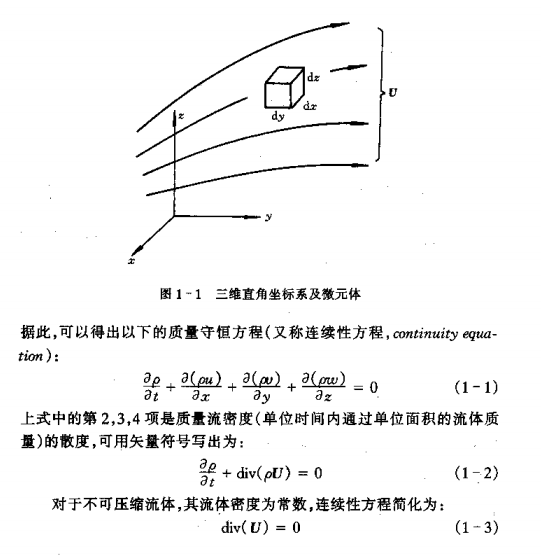
image.png

1.1.2   动量守恒方程( momentum cnservwarion equation)

对图1-1所示的微元体分别在三个坐标方向上应用Newton 第 2 定 律( F =ma  )在流体流动中的表现形式:

[微元体中流体动量的增加率]=[作用在微元体上各种力之和]

并引人Newton 切应力公式及 Stokes的表达式,可得3个速度分量的动

量方程如下[1]:

u 一动量方程
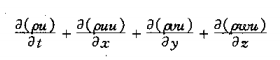
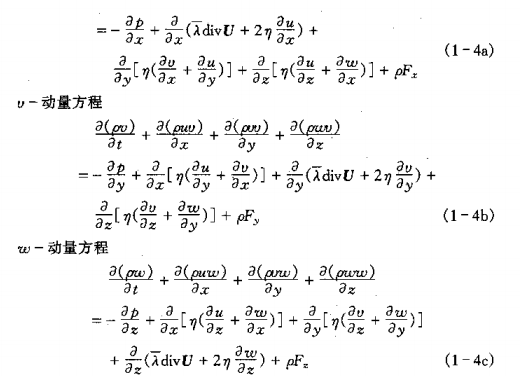
image.png

image.png

其中η为流体的动力粘度,X称为流体的第2分子黏度,对气体可取为 -2/31。

在数值传热学中常常将上述3式等号后的分子粘性作用项做如下变 化,以 u- 动量方程为例:
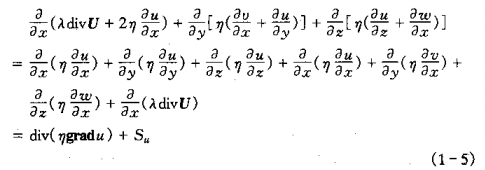
image.png

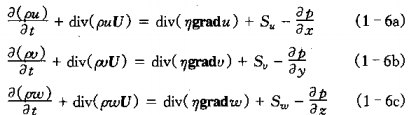
据此,上述动量方程可以进一步写成以下矢量形式:

image.png

其中 S,s,S            为3个动量方程的广义源项,其表达式可对照式(1-5)得出如下:
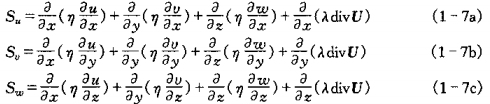
image.png

对于粘性为常数的不可压缩流体,Sₙ=S,=S=0,           于是式(1-6)简化成 为 :
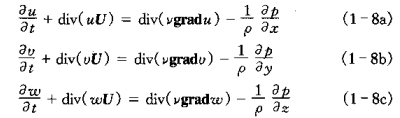
image.png

其中v 为流体的运动粘度。

式(1-6)~(1-8)称为Navier-Stokes 方程。


1.1.3  能量守恒方程(energy conservation equation)

对图1-1所示的微元体应用能量守恒定律:

[微元体内热力学能的增加率]=[进入微元体的净热流量]+[体积 力与表面力对微元体做的功]

再引入导热Fourier 定律,可得出用流体比焙 h 及温度T 表示的能量方 程:

image.png

其中 image.png是流体的导热系数,Sh 为流体的内热源,①为由于粘性作用机械 能转换为热能的部分,称为耗散函数(dissipation funcztion), 其计算式如 下[2:

image.png

式(1-9)中pdivU 系表面力对流体微元体所做的功,一般可以忽略;同时对理想气体,液体及固体可以取h=c,T,     进一步取c,  为常数,并把耗散函数φ纳人到源项S   中(S₇=S+φ),          于是可得:
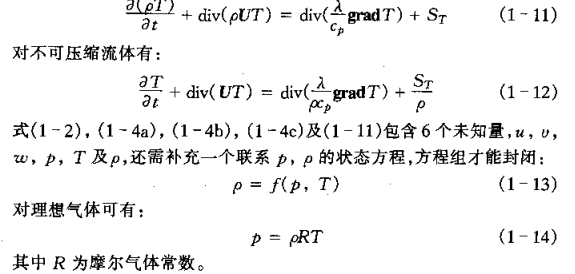
image.png

1.1.4 控制方程的通用形式

在流动与传热问题求解中所需求解主要变量(速度及温度等)的控制 方程都可以表示成以下通用形式31:

image.png

式中 ∮为通用变量,可以代表 u,D,w    , T  等求解变量;P,  为广义扩散  系数;S;为广义源项。这里引人“广义”二字,表示处在I;,  与 Ss 位置上  的项不必是原来物理意义上的量,而是数值计算模型方程中的一种定义,不同求解变量之间的区别除了边界条件与初始条件外,就在于 P, 与S的表达式的不同。式(1-15)也包括了质量守恒方程,只要令多=1,S=0即可。在计算传热学的一些文献中常常在给出式(1-15)这样的通用形式后,以表格的形式给出所求解变量的P, 与 S。的表达式。

1.1.5 几点说明

对于上述控制方程要做以下几点说明:

1. 式(1-4)是三维非稳态 Navier-Stokes 方程,无论对层流或湍流 都是适用的。但是对于湍流,如果直接求解三维非稳态的控制方程,需要 采用对计算机的内存与速度要求很高的直接模拟方法(direct  numerical simalation) ,  目前无法应用于工程计算。 工程中广为采用的是对非稳态  Navier -Stokes方程做时间平均的方程,并且还需要补充能反映湍流特性 的其它方程。这些方程也可以纳人式(1-15)的形式中,将在第9章中介绍。

2. 当流动与换热过程伴随有质交换现象时,控制方程中还应增加组 分守恒定律。设组分1的质量百分数为m,  在引人质扩散的Fick 定律后,可得

image.png

式中R₂ 是单位容积内组分1的产生率( kg/(s·m³)    ),P; 是组分1的扩散 系数。显然式(1-16)也可以归人式(1-15)的模式中去。

3. 在式(1-11)及式(1-12)中,虽然假定了c, 为常数,但这并不意  味着式(1-11)等只能用于cp为常数的情形。对于变物性的问题(cp与  温度有关),我们可以用上一次迭代或上一个时层的温度来确定其值,使  cp 仍能随着温度的变化面改变,只是在迭代或时间的层次上稍有滞后。 对于稳态的问题,当整个计算过程收敛时,这一差别也就消失。

4. 在传热学的3种热量传递方式中,导热与对流可以由以上控制方 程来描写。如果流体本身是辐射性的介质(如高温烟气),则除了导热与 对流以外,不相邻的流体微团之间及流体与壁面之间还有辐射换热,辐射 换热需要用积分方程来描述。本书中将不涉及这类问题,有关辐射换热 的数值计算可参见文献[4,5]。


原资料见附件

免责声明:

本页面/内容部分素材来源于互联网公 开 信 息,旨在传递更多信息,不代表本平台立场。

版权归原作者或机构所有,如涉及侵权,请通过平台联系我们,我们将在核实后第一时间处理。

本平台对转载内容的真实性、准确性不作任何保证,用户需自行判断并承担使用风险。

附件

免费Q31-数值传热学第二版_陶文铨.pdf
非线性湍流通用航天汽车暖通电力UM多尺度控制管道
著作权归作者所有,欢迎分享,未经许可,不得转载
首次发布时间:2026-07-27
最近编辑:2月前
仿真支持爱好者
在仿真的路上越走越远
获赞 333粉丝 27文章 318课程 0
点赞
收藏
作者推荐

流体力学基础(第六版)核心内容整理(Fundamentals of FluidMechanics)

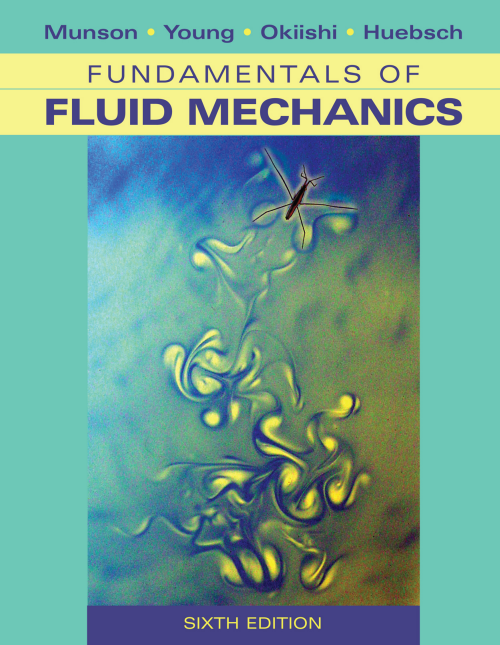
流体力学基础(第六版)核心内容整理(FundamentalsofFluidMechanics)摘要:本文为流体力学经典教材《FundamentalsofFluidMechanics》第六版,面向工科本科入门课程。全书分流体静力学、伯努利方程、控制体积分析、可压缩流、叶轮机械等十二核心章节,系统讲解流体基础物性、量纲分析、边界层、管道流动等核心理论。教材配套159段流体实景视频、超1300道分层习题,创新采用“已知-求解-点评”标准化例题格式,同时提供WileyPLUS线上数字化学习平台,内置交互式动画、自动批改题库与FlowLab简易CFD工具。书中兼顾SI与英制两套单位,结合冰山、水黾、空化等工程实例,兼顾理论推导与工程仿真实操,是流体力学入门权威教学用书。AchievePositiveLearningOutcomesWileyPLUScombinesrobustcoursewithinteractiveteachingandlearningresourcesallinoneeasy-to-usesystem.Ithashelpedoverhalfamillionstudentsandinstructorsachievepositivelearningoutcomesintheircourses.WileyPLUScontainseverythingyouandyourstudentsneed—andnothingmore,including:Theentiretextbookonline—withdynamiclinksfromhomeworktorelevantsections.Studentscanusetheonlinetextandsaveuptohalfthecostofbuyinganewprintedbook.Automatedassigning&gradingofhomework&quizzes.Aninteractivevarietyofwaystoteachandlearnthematerial.Instantfeedbackandhelpforstudents…available24/7.“WileyPLUShelpedmebecomemoreprepared.ThereweremoreresourcesavailableusingWileyPLUSthanjustusingaregular[printed]textbook,whichhelpedoutsignificantly.Veryhelpful...andveryeasytouse.”—StudentVictoriaCazorla,DutchessCountyCommunityCollegeSeeandtryWileyPLUSinaction!DetailsandDemo:www.wileyplus.comWhyWileyPLUSforEngineering?WileyPLUSofferstoday’sEngineeringstudentstheinteractiveandvisuallearningmaterialstheyneedtohelpthemgraspdifficultconcepts—andapplywhatthey’velearnedtosolveproblemsinadynamicenvironment.Arobustvarietyofexamplesandexercisesenablestudentstoworkproblems,seetheirresults,andobtaininstantfeedbackincludinghintsandreadingreferenceslinkeddirectlytotheonlinetext.Studentscanvisualizeconceptsfromthetextbylinkingtodynamicresourcessuchasanimations,videos,andinteractiveLearningWare.SeeandtryWileyPLUSinaction!DetailsandDemo:www.wileyplus.comWileyPLUScombinesrobustcoursemanagementtoolswiththecompleteonlinetextandalloftheinteractiveteaching&learningresourcesyouandyourstudentsneedinoneeasy-to-usesystem.“Ilovedthisprogram[WileyPLUS]andIhopeIcanuseitinthefuture.”—AnthonyPastin,WestVirginiaUniversityAlgorithmicquestionsallowagroupofstudentstoworkonthesameproblemwithdifferingvalues.Studentscanalsoreworkaproblemwithdifferingvaluesforadditionalpractice.MultiPartProblemsandGoTutorialsleadstudentsthroughaseriesofsteps,providinginstantfeedbackalongtheway,tohelpthemdevelopalogical,structuredapproachtoproblemsolving.Or,theycanlinkdirectlytotheonlinetexttoreadaboutthisconceptbeforeattemptingtheproblemagain—withorwithoutthesamevalues.WileyiscommittedtomakingyourentireWileyPLUSexperienceproductive&enjoyablebyprovidingthehelp,resources,andpersonalsupportyou&yourstudentsneed,whenyouneedit.It’sallhere:www.wileyplus.comTECHNICALSUPPORT:AfullysearchableknowledgebaseofFAQsandhelpdocumentation,available24/7LivechatwithatrainedmemberofoursupportstaffduringbusinesshoursAformtofilloutandsubmitonlinetoaskanyquestionandgetaquickresponseInstructor-onlyphonelineduringbusinesshours:1.877.586.0192FACULTY-LEDTRAININGTHROUGHTHEWILEYFACULTYNETWORK:Registeronline:www.wherefacultyconnect.comConnectwithyourcolleaguesinacomplimentaryvirtualseminar,withapersonalmentorinyourfield,orataliveworkshoptosharebestpracticesforteachingwithtechnology.1STDAYOFCLASSANDBEYOND!ResourcesYou&YourStudentsNeedtoGetStarted&UseWileyPLUSfromthefirstdayforward.2-MinuteTutorialsonhowtosetup&maintainyourWileyPLUScourseUserguides,linkstotechnicalsupport&trainingoptionsWileyPLUSforDummies:Instructors’quickreferenceguidetousingWileyPLUSStudenttutorials&instructiononhowtoregister,buy,anduseWileyPLUSYOURWileyPLUSACCOUNTMANAGER:YourpersonalWileyPLUSconnectionforanyassistanceyouneed!SETUPYOURWileyPLUSCOURSEINMINUTES!SelectedWileyPLUScourseswithQuickStartcontainpre-loadedassignments&presentationscreatedbysubjectmatterexpertswhoarealsoexperiencedWileyPLUSusers.Interested?SeeandtryWileyPLUSinaction!DetailsandDemo:www.wileyplus.comSixthEditionFundamentalsofFluidMechanicsBRUCER.MUNSONDONALDF.YOUNGDepartmentofAerospaceEngineeringandEngineeringMechanicsTHEODOREH.OKIISHIDepartmentofMechanicalEngineeringIowaStateUniversityAmes,Iowa,USAWADEW.HUEBSCHDepartmentofMechanicalandAerospaceEngineeringWestVirginiaUniversityMorgantown,WestVirginia,USAToErikandallotherswhopossessthecuriosity,patience,anddesiretolearnPublisher:DonFowleyEditorialAssistant:MarkOwensAcquistionsEditor:JenniferWelterMediaEditor:LaurenSapiraMarketingManager:ChristopherRuelProductionManager:DorothySinclairProductionEditor:SandraDumasSeniorDesigner:MadelynLesureProductionManagementServices:IngraoAssociates/SuzanneIngraoCover:photoshowsthedevelopmentofvorticeswhichthewaterstriderusesformovingonthesurfaceofwaterbythetransferofmomentumfromthemovementofitslegstotheshedvortices(i.e.rowing).Thefluiddynamicsarevisualizedbyaddingthymolbluetothewatersurface.Formoreonwaterstriders,seethefollowinginthistext:Problem1.103inChapter1;FluidsintheNewstitled“Walkingonwater”inSect.1.9;andVideoV10.3“Waterstrider”inChapter10.PhotocourtesyofDavidL.HuandJohnW.M.Bush,MIT.Thisbookwastypesetin10/12TimesRomanbyAptara®,Inc.,andprintedandboundbyR.R.Donnelley/JeffersonCity.ThecoverwasprintedbyR.R.Donnelley/JeffersonCity.Thepaperinthisbookwasmanufacturedbyamillwhoseforestmanagementprogramsincludesustainedyieldharvestingofitstimberlands.Sustainedyieldharvestingprinciplesensurethatthenumberoftreescuteachyeardoesnotexceedtheamountofnewgrowth.Thisbookisprintedonacid-freepaper.∞Copyright©2009,2006,2002,1999,1994,1990byJohnWiley&Sons,Inc.Allrightsreserved.Nopartofthispublicationmaybereproduced,storedinaretrievalsystemortransmittedinanyformorbyanymeans,electronic,mechanical,photocopying,recording,scanningorotherwise,exceptaspermittedunderSections107or108ofthe1976UnitedStatesCopyrightAct,withouteitherthepriorwrittenpermissionofthePublisherorauthorizationthroughpaymentoftheappropriateper-copyfeetotheCopyrightClearanceCenter,222RosewoodDrive,Danvers,MA01923,(978)750-8400,fax(978)646-8600.RequeststothePublisherforpermissionshouldbeaddressedtothePermissionDepartment,JohnWiley&Sons,Inc.,111RiverStreet,Hoboken,NJ07030-5774,(201)748-6011,fax(201)748-6008.Toorderbooksorforcustomerservicecall1-800-CALL-WILEY(225-5945).Munson,BruceR.,Young,DonaldF.,Okiishi,TheodoreH.,Huebsch,WadeW.FundamentalsofFluidMechanics,SixthEditionISBN978-0470-26284-9PrintedintheUnitedStatesofAmerica.10987654321AbouttheAuthorsBruceR.Munson,ProfessorEmeritusofEngineeringMechanicsatIowaStateUniversity,receivedhisB.S.andM.S.degreesfromPurdueUniversityandhisPh.D.degreefromtheAerospaceEngi-neeringandMechanicsDepartmentoftheUniversityofMinnesotain1970.PriortojoiningtheIowaStateUniversityfacultyin1974,Dr.MunsonwasonthemechanicalengineeringfacultyofDukeUniversityfrom1970to1974.From1964to1966,heworkedasanen-gineerinthejetenginefuelcontroldepartmentofBendixAerospaceCorporation,SouthBend,Indiana.Dr.Munson’smainprofessionalactivityhasbeenintheareaoffluidmechanicseducationandresearch.Hehasbeenresponsibleforthedevelopmentofmanyfluidmechanicscoursesforstudiesincivilengineering,mechanicalengineering,engineeringscience,andagriculturalengineeringandistherecipientofanIowaStateUniversitySuperiorEngineeringTeacherAwardandtheIowaStateUniversityAlumniAssociationFacultyCitation.Hehasauthoredandcoauthoredmanytheoreticalandexperimentaltechnicalpapersonhy-drodynamicstability,lowReynoldsnumberflow,secondaryflow,andtheapplicationsofviscousin-compressibleflow.HeisamemberofTheAmericanSocietyofMechanicalEngineers.DonaldF.Young,AnsonMarstonDistinguishedProfessorEmeritusinEngineering,receivedhisB.S.degreeinmechanicalengineering,hisM.S.andPh.D.degreesintheoreticalandappliedmechanicsfromIowaStateUiversity,andhastaughtbothundergraduateandgraduatecoursesinfluidmechanicsatIowaStateformanyyears.InadditiontobeingnamedaDistinguishedProfessorintheCollegeofEngineer-ing,Dr.YounghasalsoreceivedtheStandardOilFoundationOutstandingTeacherAwardandtheIowaStateUniversityAlumniAssociationFacultyCitation.Hehasbeenengagedinfluidmechanicsresearchformorethan35years,withspecialinterestsinsimilitudeandmodelingandtheinterdisciplinaryfieldofbiomedicalfluidmechanics.Dr.Younghascontributedtomanytechnicalpublicationsandistheauthororcoauthoroftwotextbooksonappliedmechanics.HeisaFellowofTheAmericanSocietyofMechan-icalEngineers.TedH.Okiishi,ProfessorEmeritusofMechanicalEngineeringatIowaStateUniversity,joinedthefacultytherein1967afterreceivinghisundergraduateandgraduatedegreesfromthatinstitution.From1965to1967,Dr.OkiishiservedasaU.S.ArmyofficerwithdutyassignmentsattheNationalAeronauticsandSpaceAdministrationLewisResearchCenter,Cleveland,Ohio,whereheparticipatedinrocketnozzleheattransferresearch,andattheCombinedIntelligenceCenter,Saigon,RepublicofSouthVietnam,wherehestudiedseasonalriverfloodingproblems.ProfessorOkiishiandhisstudentshavebeenactiveinresearchonturbomachineryfluiddy-namics.Someoftheseprojectshaveinvolvedsignificantcollaborationwithgovernmentandindus-triallaboratoryresearcherswithtwooftheirpaperswinningtheASMEMelvilleMedal(in1989and1998).Dr.Okiishihasreceivedseveralawardsforteaching.Hehasdevelopedundergraduateandgradu-atecoursesinclassicalfluiddynamicsaswellasthefluiddynamicsofturbomachines.Heisalicensedprofessionalengineer.HisprofessionalsocietyactivitiesincludehavingbeenavicepresidentofTheAmericanSocietyofMechanicalEngineers(ASME)andoftheAmericanSocietyforEngineeringEducation.HeisaLifeFellowofTheAmericanSocietyofMechanicalEn-gineersandpasteditorofitsJournalofTurbomachinery.HewasrecentlyhonoredwiththeASMER.TomSawyerAward.WadeW.Huebsch,AssociateProfessorintheDepartmentofMechanicalandAerospaceEngineer-ingatWestVirginiaUniversity,receivedhisB.S.degreeinaerospaceengineeringfromSanJoseStateUniversitywhereheplayedcollegebaseball.HereceivedhisM.S.degreeinmechanicalengi-neeringandhisPh.D.inaerospaceengineeringfromIowaStateUniversityin2000.Dr.Huebschspecializesincomputationalfluiddynamicsresearchandhasauthoredmultiplejournalarticlesintheareasofaircrafticing,roughness-inducedflowphenomena,andboundarylayerflowcontrol.Hehastaughtbothundergraduateandgraduatecoursesinfluidmechanicsandhasdevelopedanewundergraduatecourseincomputationalfluiddynamics.Hehasreceivedmulti-pleteachingawardssuchasOutstandingTeacherandTeacheroftheYearfromtheCollegeofEngi-neeringandMineralResourcesatWVUaswellastheRalphR.TeetorEducationalAwardfromSAE.HewasalsonamedastheYoungResearcheroftheYearfromWVU.HeisamemberoftheAmericanInstituteofAeronauticsandAstronautics,theSigmaXiresearchsociety,theSocietyofAutomotiveEngineers,andtheAmericanSocietyofEngineeringEducation.PrefaceThisbookisintendedforjuniorandseniorengineeringstudentswhoareinterestedinlearningsomefundamentalaspectsoffluidmechanics.Wedevelopedthistexttobeusedasafirstcourse.Theprinci-plesconsideredareclassicalandhavebeenwell-establishedformanyyears.However,fluidmechanicseducationhasimprovedwithexperienceintheclassroom,andwehavebroughttobearinthisbookourownideasabouttheteachingofthisinterestingandimportantsubject.Thissixtheditionhasbeenpre-paredafterseveralyearsofexperiencebytheauthorsusingthepreviouseditionsforintroductorycoursesinfluidmechanics.Onthebasisofthisexperience,alongwithsuggestionsfromreviewers,col-leagues,andstudents,wehavemadeanumberofchangesinthisedition.Thechanges(listedbelow,andindicatedbythewordNewindescriptionsinthispreface)aremadetoclarify,update,andexpandcer-tainideasandconcepts.NewtoThisEditionInadditiontothecontinualeffortofupdatingthescopeofthematerialpresentedandimprovingthepresentationofallofthematerial,thefollowingitemsarenewtothisedition.Withthewide-spreaduseofnewtechnologiesinvolvingtheweb,DVDs,digitalcamerasandthelike,thereisanincreasinguseandappreciationofthevarietyofvisualtoolsavailableforlearning.Thisfacthasbeenaddressedintheneweditionbytheinclusionofnumerousnewillustrations,graphs,photographs,andvideos.Illustrations:Thebookcontainsmorethan260newillustrationsandgraphs.Theseillustrationsrangefromsimpleonesthathelpillustrateabasicconceptorequationtomorecomplexonesthatillustratepracticalapplicationsoffluidmechanicsinoureverydaylives.Photographs:Thebookcontainsmorethan256newphotographs.Somephotosinvolvesituationsthataresocommontousthatweprobablyneverstoptorealizehowfluidsareinvolvedinthem.Othersinvolvenewandnovelsituationsthatarestillbafflingtous.Thephotosarealsousedtohelpthereaderbetterunderstandthebasicconceptsandexamplesdiscussed.Videos:Thevideolibraryforthebookhasbeensignificantlyenhancedbytheadditionof80newvideosegmentsdirectlyrelatedtothetextmaterial.Theyillustratemanyoftheinterestingandprac-ticalapplicationsofreal-worldfluidphenomena.Therearenow159videos.Examples:Alloftheexamplesarenewlyoutlinedandcarriedoutwiththeproblemsolvingmethodof“Given,Find,Solution,andComment.”Learningobjectives:Eachchapterbeginswithasetoflearningobjectives.Thisnewfeaturepro-videsthestudentwithabriefpreviewofthetopicscoveredinthechapter.Listofequations:Eachchapterendswithanewsummaryofthemostimportantequationsinthechapter.Problems:Approximately30%newhomeworkproblemshavebeenaddedforthisedition.Theyareallnewlygroupedandidentifiedaccordingtotopic.Typically,thefirstfewproblemsineachgrouparerelativelyeasyones.Inmanygroupsofproblemsthereareoneortwonewproblemsinwhichthestudentisaskedtofindaphotograph/imageofaparticularflowsituationandwriteaparagraphdescribingit.EachchaptercontainsnewLifeLongLearningProblems(i.e.,oneaspectofthelifelonglearningasinterpretedbytheauthors)thataskthestudenttoobtaininformationaboutagiven,newflowconceptandtowriteabriefreportaboutit.FundamentalsofEngineeringExam:AsetofFEexamquestionsisnewlyavailableonthebookwebsite.原资料见附件免责声明:本页面/内容部分素材来源于互联网公开信息,旨在传递更多信息,不代表本平台立场。版权归原作者或机构所有,如涉及侵权,请通过平台联系我们,我们将在核实后第一时间处理。本平台对转载内容的真实性、准确性不作任何保证,用户需自行判断并承担使用风险。
有附件
未登录
还没有评论
课程
培训
服务
行家
VIP会员 学习计划 福利任务
下载APP
联系我们
帮助与反馈