

首页/文章/ 详情

fluent边界条件(一)

1月前浏览276

定义边界条件概述

边界条件包括流动变量和热变量在边界处的值。它是FLUENT分析得很关键的一部分,设定边界条件必须小心谨慎。

边界条件的分类:进出口边界条件:压力、速度、质量进口、进风口、进气扇、压力出口、压力远场边界条件、质量出口、通风口、排气扇;壁面、repeating, and pole boundaries:壁面,对称,周期,轴;内部单元区域:流体、固体(多孔是一种流动区域类型) ;内部表面边界:风扇、散热器、多孔跳跃、壁面、内部。(内部表面边界条件定义在单元表面,这意味着它们没有有限厚度,并提供了流场性质的每一步的变化。这些边界条件用来补充描述排气扇、细孔薄膜以及散热器的物理模型。内部表面区域的内部类型不需要你输入任何东西。) 

下面一节将详细介绍上面所叙述边界条件,并详细介绍了它们的设定方法以及设定的具体合适条件。周期性边界条件在本章中介绍,模拟完全发展的周期性流动将在周期性流动和热传导一章中介绍。

使用边界条件面板

边界条件(Figure 1)对于特定边界允许你改变边界条件区域类型,并且打开其他的面板以设定每一区域的边界条件参数

菜单:Define/Boundary Conditions...
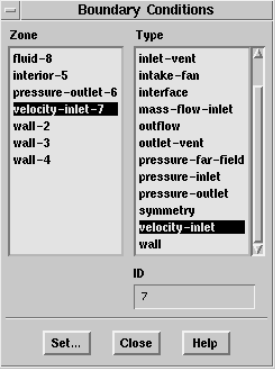
image.pngFigure 1: 边界条件面板


改变边界区域类型

设定任何边界条件之前,必须检查所有边界区域的区域类型,如有必要就作适当的修改。比方说:如果你的网格是压力入口,但是你想要使用速度入口,你就要把压力入口改为速度入口之后再设定。

改变类型的步骤如下:: 

1.在区域下拉列表中选定所要修改的区域

2.在类型列表中选择正确的区域类型

3.当问题提示菜单出现时,点击确认
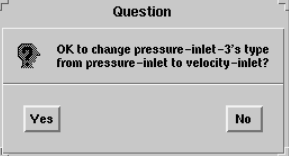
image.png

确认改变之后,区域类型将会改变,名字也将自动改变 (如果初始名字时缺省的请参阅边界条件区域名字一节),设定区域边界条件的面板也将自动打开。

!注意:这个方法不能用于改变周期性类型,因为该边界类型已经存在了附加限制。创建边界条件一节解释了如何创建和分开周期性区域。需要注意的是,只能在图一中每一个类别中改变边界类型(注意:双边区域表面是分离的不同单元区域.)
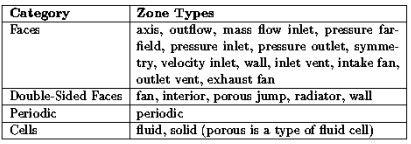
image.pngFigure 1: 区域类型的分类列表


设定边界条件

在FLUENT中,边界条件和区域有关而与个别表面或者单元无关。如果要结合具有相同边界条件的两个或更多区域请参阅合并区域一节。 

设定每一特定区域的边界条件,请遵循下面的步骤: 

1.在边界条件区域的下拉列表中选择区域。2.点击Set...按钮。或者,1.在区域下拉列表中选择区域。

2.在类型列表中点击所要选择的类型。或者在区域列表中双击所需区域.,选择边界条件区域将会打开,并且你可以指定适当的边界条件

在图像显示方面选择边界区域

在边界条件中不论你合适需要选择区域,你都能用鼠标在图形窗口选择适当的区域。如果你是第一次设定问题这一功能尤其有用,如果你有两个或者更多的具有相同类型的区域而且你想要确定区域的标号(也就是画出哪一区域是哪个)这一功能也很有用。要使用该功能请按下述步骤做:

1.用网格显示面板显示网格。2.用鼠标指针(默认是鼠标右键——参阅控制鼠标键函数以改变鼠标键的功能)在图形窗口中点击边界区域。在图形显示中选择的区域将会自动被选入在边界条件面板中的区域列表中,它的名字和编号也会自动在控制窗口中显示


改变边界条件名字

每一边界的名字是它的类型加标号数(比如pressure-inlet-7)。在某些情况下你可能想要对边界区域分配更多的描述名。如果你有两个压力入口区域,比方说,你可能想重名名它们为small-inlet和large-inlet。(改变边界的名字不会改变相应的类型)

重名名区域,遵循如下步骤:

1.在边界条件的区域下拉列表选择所要重名名的区域。

2.点击Set...打开所选区域的面板。3.在区域名字中输入新的名字4.点击OK按钮。

注意:如果你指定区域的新名字然后改变它的类型,你所改的名字将会被保留,如果区域名字是类型加标号,名字将会自动改变。

边界条件的非一致输入

每一类型的边界区域的大多数条件定义为轮廓函数而不是常值。你可以使用外部产生的边界轮廓文件的轮廓,或者用自定义函数(UDF)来创建。具体情况清参阅相关内容


流动入口和出口

FLUENT有很多的边界条件允许流动进入或者流出解域。下面一节描述了每一种边界条件的类型的使用以及所需要的信息,这样就帮助你适当的选择边界条件。下面还提供了湍流参数的入口值的确定方法。


使用流动边界条件

下面对流动边界条件的使用作一概述

对于流动的出入口,FLUENT提供了十种边界单元类型:速度入口、压力入口、质量入口、压力出口、压力远场、质量出口,进风口,进气扇,出风口以及排气扇。 

下面是FLUENT中的进出口边界条件选项:

速度入口边界条件用于定义流动入口边界的速度和标量

压力入口边界条件用来定义流动入口边界的总压和其它标量。

质量流动入口边界条件用于可压流规定入口的质量流速。在不可压流中不必指定入口的质量流,因为当密度是常数时,速度入口边界条件就确定了质量流条件。

压力出口边界条件用于定义流动出口的静压(在回流中还包括其它的标量)。当出现回流时,使用压力出口边界条件来代替质量出口条件常常有更好的收敛速度。

压力远场条件用于模拟无穷远处的自由可压流动,该流动的自由流马赫数以及静态条件已经指定了。这一边界类型只用于可压流。

质量出口边界条件用于在解决流动问题之前,所模拟的流动出口的流速和压力的详细情况还未知的情况。在流动出口是完全发展的时候这一条件是适合的,这是因为质量出口边界条件假定出了压力之外的所有流动变量正法向梯度为零。对于可压流计算,这一条件是不适合的。

进风口边界条件用于模拟具有指定的损失系数,流动方向以及周围(入口)环境总压和总温的进风口。

进气扇边界条件用于模拟外部进气扇,它具有指定的压力跳跃,流动方向以及周围(进口)总压和总温。

通风口边界条件用于模拟通风口,它具有指定的损失系数以及周围环境(排放处)的静压和静温。

排气扇边界条件用于模拟外部排气扇,它具有指定的压力跳跃以及周围环境(排放处)的静压。


决定湍流参数

在入口、出口或远场边界流入流域的流动,FLUENT需要指定输运标量的值。本节描述了对于特定模型需要哪些量,并且该如何指定它们。也为确定流入边界值最为合适的方法提供了指导方针。


使用轮廓指定湍流参量

在入口处要准确的描述边界层和完全发展的湍流流动,你应该通过实验数据和经验公式创建边界轮廓文件来完美的设定湍流量。如果你有轮廓的分析描述而不是数据点,你也可以用这个分析描述来创建边界轮廓文件,或者创建用户自定义函数来提供入口边界的信息。一旦你创建了轮廓函数,你就可以使用如下的方法:

Spalart-Allmaras模型:在湍流指定方法下拉菜单中指定湍流粘性比,并在在湍流粘性比之后的下拉菜单中选择适当的轮廓名。通过将m_t/m和密度与分子粘性的适当结合, FLUENT为修改后的湍流粘性计算边界值。

k-e模型:在湍流指定方法下拉菜单中选择K和Epsilon并在湍动能(Turb. Kinetic Energy)和湍流扩散速度(Turb. Dissipation Rate)之后的下拉菜单中选择适当的轮廓名。

雷诺应力模型:在湍流指定方法下拉菜单中选择K和Epsilon并在湍动能(Turb. Kinetic Energy)和湍流扩散速度(Turb. Dissipation Rate)之后的下拉菜单中选择适当的轮廓名。在湍流指定方法下拉菜单中选择雷诺应力部分,并在每一个单独的雷诺应力部分之后的下拉菜单中选择适当的轮廓名。


湍流量的统一说明

在某些情况下流动流入开始时,将边界处的所有湍流量指定为统一值是适当的。比如说,在进入管道的流体,远场边界,甚至完全发展的管流中,湍流量的精确轮廓是未知的。

在大多数湍流流动中,湍流的更高层次产生于边界层而不是流动边界进入流域的地方,因此这就导致了计算结果对流入边界值相对来说不敏感。然而必须注意的是要保证边界值不是非物理边界。非物理边界会导致你的解不准确或者不收敛。对于外部流来说这一特点尤其突出,如果自由流的有效粘性系数具有非物理性的大值,边界层就会找不到了。

你可以在使用轮廓指定湍流量一节中描述的湍流指定方法,来输入同一数值取代轮廓。你也可以选择用更为方便的量来指定湍流量,如湍流强度,湍流粘性比,水力直径以及湍流特征尺度,下面将会对这些内容作一详细叙述。

湍流强度I定义为相对于平均速度u_avg的脉动速度u^'的均方根。

小于或等于1%的湍流强度通常被认为低强度湍流,大于10%被认为是高强度湍流。从外界,测量数据的入口边界,你可以很好的估计湍流强度。例如:如果你模拟风洞试验,自由流的湍流强度通常可以从风洞指标中得到。在现代低湍流风洞中自由流湍流强度通常低到0.05%。. 

对于内部流动,入口的湍流强度完全依赖于上游流动的历史,如果上游流动没有完全发展或者没有被扰动,你就可以使用低湍流强度。如果流动完全发展,湍流强度可能就达到了百分之几。完全发展的管流的核心的湍流强度可以用下面的经验公式计算:
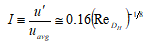
image.png

例如,在雷诺数为50000是湍流强度为4%

湍流尺度l是和携带湍流能量的大涡的尺度有关的物理量。在完全发展的管流中,l被管道的尺寸所限制,因为大涡不能大于管道的尺寸。L和管的物理尺寸之间的计算关系如下: 

image.png

其中L为管道的相关尺寸。因子0.07是基于完全发展湍流流动混合长度的最大值的,对于非圆形截面的管道,你可以用水力学直径取代L。

如果湍流的产生是由于管道中的障碍物等特征,你最好用该特征长度作为湍流长度L而不是用管道尺寸。 

注意:公式并不是适用于所有的情况。它只是在大多数情况下得很好的近似。对于特定流动,选择L和l的原则如下:

对于完全发展的内部流动,选择强度和水力学直径指定方法,并在水力学直径流场中指定L=D_H。

对于旋转叶片的下游流动,穿孔圆盘等,选择强度和水力学直径指定方法,并在水力学直径流场中指定流动的特征长度为L 

对于壁面限制的流动,入口流动包含了湍流边界层。选择湍流强度和长度尺度方法并使用边界层厚度d_99来计算湍流长度尺度l,在湍流长度尺度流场中输入l=0.4 d_99这个值

湍流粘性比m_t/m直接与湍流雷诺数成比例(Re_t ?k^2/(e n))。Re_t在高湍流数的边界层,剪切层和完全发展的管流中是较大的(100到1000)。然而,在大多数外流的自由流边界层中m_t/m相当的小。湍流参数的典型设定为1 < m_t/m <10。

要根据湍流粘性比来指定量,你可以选择湍流粘性比(对于Spalart-Allmaras模型)或者强度和粘性比(对于k-e模型或者RSM)。


原资料见附件


免责声明:


本页面/内容部分素材来源于互联网公 开 信 息,旨在传递更多信息,不代表本平台立场。

版权归原作者或机构所有,如涉及侵权,请通过平台联系我们,我们将在核实后第一时间处理。

本平台对转载内容的真实性、准确性不作任何保证,用户需自行判断并承担使用风险。

附件

免费Q20-fluent边界条件(一).pdf
Fluent
著作权归作者所有,欢迎分享,未经许可,不得转载
首次发布时间:2026-07-17
最近编辑:1月前
仿真支持爱好者
在仿真的路上越走越远
获赞 333粉丝 22文章 318课程 0
点赞
收藏
作者推荐

含液滴与颗粒的多相流(第二版)核心内容梳理

含液滴与颗粒的多相流(第二版)核心内容梳理(MultiphaseFlowswithDropletsandParticles)摘要:本文聚焦液滴与颗粒多相流体系内颗粒间、颗粒与壁面相互作用理论,是多相流数值模拟核心基础章节。系统阐述硬球、软球(DEM)两类碰撞模型:硬球通过冲量方程求解碰撞前后速度,计算高效;软球采用弹簧-阻尼类比,完整捕捉碰撞形变全过程,适配密相体系。同时介绍液桥、静电力、范德华力等颗粒黏附作用力,推导对应理论公式,分析颗粒团聚机理。还建立颗粒与壁面碰撞冲量模型,区分不同滑动工况下速度求解方法,探讨近壁流体润滑阻力、颗粒冲蚀效应,给出各类模型适用工况与数值计算要点,为流化床、气力输送等密相多相流仿真提供理论支撑。PrefaceSincethepublicationofthefirsteditionofMultiphaseFlowuithDropletsandParticlesin1998therehavebeenimportantadvancesinthescienceandtechnologyofdispersedphaseflows.Theintentofthesecondeditionistoincludetheseadvanceswhileretainingtheorganized,pedagogicalapproachofthefirstedition.Theprimarychangeistheintroductionofanewchapter,Chapter7,ontheeffectofthedispersedphaseparticlesontheturbulenceofthecarrierphase.Theotherchaptershavebeenmodifiedandrevisedtoreflectthenewmaterial.Chapter4hasbeenupdatedtoincludethenewinformationonparticledragandheattransfer.InChapter6,areassessmentoftheyolume-averagedconservationequationshasbeenmadewithrespecttothegeneralapplicabilityofthe“two-fluid”concept.Chapter8,ontheequationsforthedispersedphase,hasbeencompletelyrewrittentoincludethecurrenttechniquesformodelingdiluteanddenseflows.Chapter9.onnumericalmodeling,hasalsobeenrewrittentoincludeDNSandLESaswellasvolume-averagedequationsforthek-EandReynoldsstressmodels.Theexerciseshavebeenexpandedandasolutionmanualisavailabletosupporttheuseofthebookinaninstructionalenvironment.ThefirsteditionofMultiphaseFlowwithDropletsandParticlesincludedaFORTRANcomputerprogramforthemultiphaseflowofparticlesinaquasi-one-dimensionalductbasedontheconservativevariableapproach.Thishasnotbeenincludedinthesecondedition.Shouldanyonewantthedescriptionofthemodelandtheprogram,theycancontacttheseniorauthor(CTC)directly.Severalbooksonorrelatingtodispersedphaseflowshaveappearedsince1998.In2006MichaelidespublishedPartieles,Bubbles,and.Drops:TheirMotion,HeatandMassTransfer,whichisanextensionoftheclassicwork,Bubbles,DropsandParticles(Clift,GraceandWeber,1978).Michaelides&#39;bookprovidesanexcellentresourceonparticle-fluidinteractions.Also,in2006,theMutiphaseFlouHandbookappeared,whichhasseveralchaptersdevotedtodispersedphaseflows.In2007,ComputationalMethodsforMulti-phaseFlowswaspublishedbyProsperettiandTryggvason.Thisbookreviewsvariousnumericaltechniquesssuchasimmersed-boundary,lattice-Boltzmannandboundary-integralmethodsfordetailedanalysisoffluid-particleflowsys-tems.Finallyin2009.BrennenpublishedFundamentalsofMultiphaseFlow,whichgivesanexcellentbackgroundonfundamentalsandfocusesprimarilyonbubblyflows.AuthorsClaytonT.CroweisProfessorEmeritusatWashingtonStateUniversity(WSU)inPullman,WA,retiringfromtheuniversityin2001.HereceivedhisPh.D.fromtheUniversityofMichiganinAnnArbor.MI.in1962.Forsevenyearsheworkedintherocketindustry,beforejoiningtheDepartmentofMe-chanicalEngineeringofWSUin1969.HeistheprimaryauthorofEngineeringFluidMechanicscurrentlyinits9thedition,coauthorofMultiphaseFlowofDroplelsandParticles(1998),andeditoroftheMultiphaseFlowHandbook(2006).HereceivedtheASMEFluidsEngineeringAwardin1995andtheInternationalPrizeforMultiphaseFlowsin2001.In2009ASMErecognizedProfessorCroweforhiscontributionstotheSociety,andin2010hereceivedtheWSUEmeritusSocietyAwardforExcellence.JohnD.SchwarzkopfiscuirrentlyastaffscientistintheX-Theoreti-calDesign(XTD)DivisionoftheLosAlamosNationalLaboratoryinLosAlamos,NM.HereceivedhisPh.D.inmechanicalenigineeringfronWash-ingtonStateUniversityin2008.Hisgraduateworkaddressedturbulencemodulationinparticle-ladenflows.PriortoreceivinghisPh.D.,heworkedintheelectronicscoolingindustryforsevenyears:heisthecoauthoronapatentinthisarea.Currentlyheisinvolvedwithcodedevelopmentandvalidation.MartinSommerfeldiscurrentlyProfessorofMechanicalProcessEngi-neeringattheMartin-LutherUniversityofHalle-WittenberginGermany.HereceivedhisDipl.-Ing.degreein1981andhisDr,-Ing.degreein1984fromtheUniversityofAachen,Germany.BeforehispromotiontoprofessoratMartin-LutherUniversityheledaresearchgroupontwo-phaseflowattheUniversityofErlangeninGermany.Hehasperformeddetailedexperimentalstudiesofmultiphaseflowsutilizingadvanceddigitalimageanalysesanidphase-Doppleranemometry.In1997hereceivedtheDECHEMAAwardforhiscontributionstomultiphaseflowmeasurements,modeling,andnumericalpredictions.Hiscurrentactivitiesincludedevelopmentofmodelsforflowaroindagglomer-ates,experimentalanalysiswithmodernopticalinstrumentation,anddirectnumericalsimulation.YutakaTsujiretiredfromOsakaUniversity,Japan,in2007.Afterre-ceivinghisDEfromOsakaUniversityin1974,hedirectedhisattentiontonumericalanalysisandmeasurementsoffuid-solidflows.Hehasbeentherecipientofseveralprestigiousawards,suchastheJSMEMetalin1992andtheAIChEThomasBaronAwardin1999,honoringhiscontributionstothefield.SinceretirementhehasbecomethemanagingdirectoroftheHosokawaPowderTechnologyFoundationpromotingpowderandparticletechnology.Heisalsotheeditor-in-chieffortheKONAPowderandParticleIournal.AcknowledgmentsProfessorCroweacknowledgestheideasandinsightsprovidedbyhisstu-dentsandcolleaguesoverthemanyyearshewasactivelyinvolvedwithmul-tiphaseflowstudiesandactivities.HeisparticularlythankfulforthesupportoftheOwenScienceLibraryatWashingtonStateUniversityinprovidingac-cessibilitytotheliteraturethroughelectronicaccessandinterlibraryloans.Heacknowledgesthecontinuousloveandsupportofhiswife,Jeannette,twoincrediblesons,KevinandChad(andBrenda),andtworemarkablestep-daughters,MarciaandMaryAnn,andtheirfamilies.Dr.Schwarzkopfacknowledgesthecontributionsofhisteachersandcol-leagues.HeisthankfulforsupportprovidedbyLosAlamosNationalLabora-tory.Heisalsoindebtedtohisfamilyandfriendsfortheircontinuedsupportandencouragement.ProfessorTsujiacknowledgestheassistanceandcontributingresearchofformerstudentsinhislaboratory.Thesepeopleinclude:Dr.ToshitsuguTanaka,ProfessoratOsakaUniversity,Japan;Dr.ToshihiroKawa-guchi,AssociateProfessorofKansaiUniversity,Japan,andDr.TakuyaTsuji,AssociateProfessoratOsakaUniversity.ClaytonT.CroweJohnD.SchwarzkopfMartinSommerfeldYutakaTsujiChapter1IntroductionTheflowofparticlesanddropletsinfluidsisasubcategoryofmulticomponent,multiphaseflows.Theflowofmulticomponent,multiphasemixturescoversawidespectrumofflowconditionsandapplications.Acomponentisachemicalspeciessuchasnitrogen,oxygen,waterorFreon.Aphasereferstothesolid,liquidorvaporstateofthematter.Examplesofsingleandmulticomponent,multiphaseflowsareprovidedinTable1.1.Theflowofair,whichiscomposedofamixtureofgases(nitrogen,oxy-gen,etc.),isthebestexampleofasingle-phasemulticomponentflow.Itiscommonpracticetotreatthesetypesofflowsastheflowofasinglecompo-nentwithaviscosityandthermalconductivitywhichrepresentsthemixture.Suchanapproachispracticalunlessthemajorconstituentsofthecomponentgaseshavesignificantlydifferentmolecularweights.Inthiscasethemomen-tumassociatedwiththediffusionalvelocitiesmaybeimportant.Also,themulticomponentnatureofairwillbeimportantathightemperatureswheredissociationoccurs,oratverylowtemperatureswheresomespeciesmaycon-denseout.Theflowofmixturesofliquidsisalsoanimportantindustrialapplication.Forexample,waterissometimesusedtoflushoilfromawellwhichgivesrisetoamulticomponentsingle-phaseflow.Ifthetwoliquidsaremiscible,thenthemixturewillbetreatedasasingle-phasewithmodifiedproperties.Iftheliquidsareimmiscible.thentheliquidcannotberegardedashomogeneousandtreatmentoftheflowproblembecomesmuchmorecomplex.Inthissituationonemayhave“globs”ofoilinthewaterorforhighoilcontent,globsofwatercarriedbytheoil.Themixturesoftwoliquidsaregenerallyreferredtoasemulsions.Single-component,multiphaseflowsaretypicallytheflowofaliquidwithitsvapor.Themostcornnonexampleisstean-waterflowswhicharefoundinawidevarietyofindustries.Anotherexampleofsingle-component,multiphaseflowsarerefrigerantsinarefrigerationsystem.Theflowoffluidsofasinglephasehasoccupiedtheattentionofscientistsandengineersformanyyears.Theequationsforthemotionandthermalpropertiesofsingle-phasefluidsarewellaccepted(Navier-Stokesequations)andclosed-formsolutionsforspecificcasesarewelldocumented.Themajordifficultyisthemodelingandquantificationofturbulenceanditsinfluenceonmass,momentumandenergytransfer.Thestate-of-theartformultiphaseflowsisconsiderablymoreprimitiveinthatthecorrectformulationofthegoverningequationsisstillsubjecttodebate.Forthisreason,thestudyofmultiphaseflowsrepresentsachallengingandpotentiallyfruitfulareaofendeavorforthescientistorengineer,Multiphaseflowscanbesubdividedintofourcategories:gas-liquid,gas-solid,liquid-solidandthree-phaseflows.ExamplesofthesefourcategoriesareshowninTable1.2.Agas-liquidfowcanassumeseveraldifferentconfig-urations.Forexample,themotionofbubblesinaliquidinwhichtheliquidisthecontinuousphaseisagas-liquidflow.Ontheotherhand,themotionofliquiddropletsinagasisalsoagas-liquidflow.Inthiscase,thegasisthecontinuousphase.Also,aseparatedflowinwhichtheliquidmovesalongthebottomofapipeandthegasalongthetopisalsoagas-liquidflow.Inthissituationbothphasesarecontinuous.Thefirsttwoexamples,bubblesinaliquidanddropletsinagas,areknownasdispersedphaseHowssinceonephaseisdispersedandtheotheriscontinuous.Bydefinition,onecanpassfrononepointtoanotherinthecontinuousphasewhileremaininginthesamemedium.Onecannotpassfrononedroplettoanotherwithoutgoingthroughthegas.Gas-solidflowsareusuallyconsideredtobeagaswithsuspendedsolidparticles.Thiscategoryincludespneurnatictransportaswellasfnidizedbeds.Anotherexampleofagas-solidflowwouldbethemotionofparticlesdownachuteorinclinedplane.Theseareknownasgranularflows.Particle-particleandparticle-wallinteractionsaremuchmoreimportantthantheforcesduetotheinterstitialgas.Iftheparticlesbecomemotionless,theproblemreducestoflowthroughaporousmediuminwhichtheviscousforceontheparticlesurfacesistheprimarymechanismaffectingthegasflow.Anexampleisapebble-bedheatexchanger.Itisnotappropriatetorefertoflowinaporousmediumasagas-solidflowsincethesolidphaseisnotininotion.Gas-solidflowisanotherexampleofadispersedphaseflowsincetheparticlesconstitutethedispersedphaseandthegasisthecontinuousphase.Liquid-solidflowsconsistofflowsinwhichsolidparticlesarecarriedbytheliquidandarereferredtoasslurryflows.Slurryflowscoverawidespec-trumofapplicationsfromthetransportofcoalsandorestotheflowofmud.Theseflowscanalsobeclassifiedasdispersedphaselowsandarethefocusofconsiderableinterestinengineeringresearch.Onceagainitisnotappropriatetorefertothemotionofliquidthroughaporousmediumasaliquid-solidflowsincethesolidphaseisnotinmotion.Three-phaseflowsarealsoenicounteredinengineeringproblems.Forexam-ple,bubblesinaslurryflowgivesrisetothepresenceofthreeplhasesflowingtogether.Thereislittleworkreportedintheliteratureonthree-phaseflows.Thesubjectofthisbookistheflowofparticlesordropletsinafuid,specificallytheflowofparticlesand/ordropletsinaconveyinggasaswellasparticlesinaconveyingliquid.Theotherareaofdispersedphaseflows,namely,bubblyflows.willnotbeaddressedhere.Theflowofparticlesanddropletsinfuidshasawideapplicationinin-dustrialprocesses.Theremovalofparticulatematerialfromexhaustgasesisessentialtothecontrolofpollutantsgeneratedbypowerplantsfiredbyfossilfuels.Theefficientcombustionofdropletsandcoalparticlesinafurnacede-pendsontheinteractionofparticlesordropletswithair.Thegenerationofmanyfoodproductsdependsonthedryingofliquiddropletstopowdersinhightemperaturegasstreams.Thetraiisportofpowdersinipipesisconimontomanychemicalandprocessingindustries.Formanyyears.thedesignofsystemswithparticle/dropletflowswasbasedprimarilyonempiricism.However,moresophisticatedmeasurementtechniqueshaveledtoimprovedprocessconitrolandevaluationoffundamen-talparameters.Increasedcomputationalcapabilityhasenabledthedevelop-mentofnumericalmodelsthatcanbeusedtocomplemenitengineeringsystemdesign.Theimprovedunderstandingofthisisarapidlygrowingfieldoftech-nologywhichwillhavefar-reachingbenefitsinupgradingtheoperationandefficiencyofcurrentprocessesandinsupportingthedevelopmentofnewandinnovativeapproaches.AcurentstatusofmultiphaseflowtechnologyinindustrialapplicationscanbefoundintheMultiphaseFlouHandbook:(Crowe.2006).1.1IndustrialapplicationsTheobjectiveofthisbookistoprovideabackgroundinthisimportantareaoffluidmechanicstoassistthosenewtothefieldandtoprovidearesourcetothoseactivelyinvolvedinthedesignanddevelopmentofmultiphasesys-tems.Inthischapter,examplesofmultiphaseflowsinindustrialandenergyconversionprocessesareoutlinedtoillustratethewideapplicationofthistechnology.1.1.1SpraydryingManyproductssuchasfoods,detergentsandpharmaceuticalsareproducedthroughspraydrying(Masters,1972).Thisisaprocessinwhichaliquidmaterialisatomized,subjectedtohotgasesanddriedintotheformofapowder.ThegeneralconfigurationofacountercurrentflowspraydryerisshowninFigure1.1.Aslurryorconcentratedmixtureisintroducedatthetopofthedryerandatomizedintodroplets.Hotgasesarefedintothebottomwithaswirlcomponentandmoveupwardthroughthedryer.Thedropletsaredriedastheyfallthroughthehotrisinggasestoformapowderwhichiscollectedatthebottomandremovedasthefinalproduct.Accumulationofthedriedproductonthewallistobeavoidedbecauseofuncontrolleddryingandthepossibilityoffire.Also.inthecaseoffoodproduction,theproductcannotbecometoohottoavoidalteringthetaste.Thegas-droplet(particle)flowwithinthedryerisverycomplex.Theswirlingmotionofthegasestransportstheparticlestowardthewallwhichmayleadtoimpingementandaccumulation.Thetemperaturedistributioninthedryerwilldependonthelocalconcenitrationofthedropletsastheyfallthroughthedryer.Highlocalconcentrationswilldepressthelocalgastemperatureandleadtolesseffectivedrying.Theresultmaybeanon-uniformlydriedproductreducingproductquality.Eventhoughspraydryingtechnologyhasbeencontinuouslyimprovedthroughtheyears,itisstilldifficulttoscaleupmodelstoprototypeoper-ation.Itisalsodifficulttodetermine,withoutactualtesting,howmodifyingthedesignofaconventionaldryerwillaffectperformance.Therehavebeensignificantprogress(Verdurmenetal.,2004)inthedevelopnentofnumericalandanalytictoolsthatadequatelysimulatethegas-dropletfowfieldinthedryer.Suchmodelsoranalysescouldbeeffectivelyusedtoimprovetheeffi-ciencyofcurrentdesigns,predictoff-designperformaniceandserveasatoolforscale-upofpromisingbench-scaledesignstoprototypeoperation.1.1.INDUSTRIALAPPLICATIONS1.1.2PollutioncontrolTheremovalofparticlesanddropletsfromindustrialeffluentsisaveryim-portantapplicationofgas-particleanddropletflows(JorgensenandJohnsen,1981).Severaldevicesareusedtoseparateparticlesordropletsfromgases.Iftheparticlesaresufficientlylarge(greaterthan50microns),asettlingcham-bercanbeusedinwhichthecondensedphasesimplydropsoutoftheflowinggasandiscollected.Forsmallerparticles(~5microns),thecyclonesepara-torshowninFigure1.2isused.Thegas-particleflowentersthedeviceinatangentialdirectionasshown.Theresultingvortexmotionintheseparatorcausestheparticlestomigratetowardthewallduetocentrifugalaccelerationandthenfalltowardthebottomwheretheyareremoved.Thegasescon-vergetowardthecenterandformavortexflowwhichexitsthroughthetop.Theperformanceofthecycloneisquantifiedbythe“cutsize”whichistheparticlediameterabovewhichalltheparticlesarecollected.Yearsofexperi-enceincyclonedesignhaveresultedin“standard”designsthat,undernormaloperatingconditions,havepredictableperformance.Numericalmodelingorotherapproachesareneededtodesigncyclonesforspecialapplicationssuchashot-gascleanup.Theparticlesissuingfrompowerplantsoperatingwithfossilfuelsareontheorderofamicronindiameter.Intheseapplications,theelectrostaticprecipitatorisgenerallyused.ThetopviewofaconventionalelectrostaticprecipitatorisshowninFigure1.3.Thehighvoltageappliedtothewirescre-atesacoronawithchargedions.Theseionstravelalongtheelectriclinesofforcetotheparticlesandaccumulateontheparticles.TheresultingchargedparticlesaremovedtowardthewallbyCoulombforcesanddepositedonthewall.Periodicallytheplatesarevibrated(rapped)andtheparticlesfallintoacollectionbin.Thefluidmechanicsoftheelectrostaticprecipitatorisquitecomplex.Theparticle-fluidinteractionobviouslyinfluencestheparticlecon-centrationandthechargedensity.These,inturn,affecttheelectricfield.Flowturbulenceisalsointroducedbythestructuralribsinthesystem.Elec-trostaticprecipitatorsarestilldesignedusingempiricalformulasbecauseofthecomplexityofthefluid-particle-electricalfieldinteractions.Anotherpollutioncontroldeviceisthewetgasscrubberwhichisdesignedtoremoveparticulateaswellasgaseouspollutants.ScrubberscomeinmanyconfigurationsbuttheventuriscrubbershowninFigure1.4representsasimpledesign.Dropletsareintroducedupstreamoftheventuriandtheparticlesarecollectedonthedroplets.Thedroplets,beingmuchlargerthantheparticles,canbemoreeasilyseparatedfromtheflow.Sulfurdioxidecanalsoberemovedbyusingdropletsmixedwithlime.Thesulfurdioxideisabsorbedonthesurfaceofthedroplets.Thesedropletsarecollected,thesulfurproductsareremovedandthedropletsarereusedinthescrubber.原资料见附件免责声明:本页面/内容部分素材来源于互联网公开信息,旨在传递更多信息,不代表本平台立场。版权归原作者或机构所有,如涉及侵权,请通过平台联系我们,我们将在核实后第一时间处理。本平台对转载内容的真实性、准确性不作任何保证,用户需自行判断并承担使用风险。
有附件
未登录
还没有评论
课程
培训
服务
行家
VIP会员 学习计划 福利任务
下载APP
联系我们
帮助与反馈